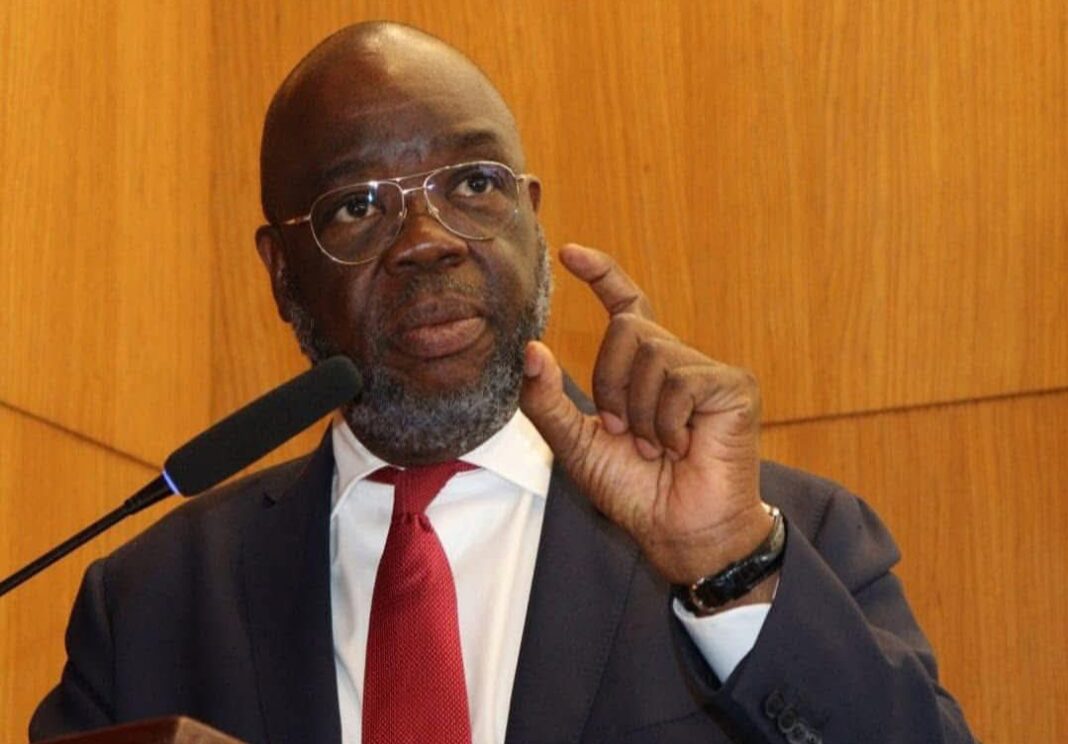
MONROVIA, LIBERIA – In what appears to be a political clash wrapped in victimhood, Bomi County Senator Edwin Melvin Snowe, Jr. issued a strongly statement on Sunday, May 25, 2025, condemning the Liberian government’s May 24, 2025, statement containing allegations against him. Snowe, currently serving as a member of the ECOWAS Parliament, says the government has falsely accused him of making statements intended to destabilize the country while on official duty in Sweden. But while Snowe plays the role of the aggrieved, Liberia is left grappling with a deeper question: who gets to claim moral high ground in a country battling to restore public trust?
Snowe’s statement, marked by outrage and defiance, labeled the government’s accusation as “baseless, malicious, and politically motivated.” He characterized the situation as a calculated attack meant to silence opposition voices. In response, he announced the early termination of his ECOWAS assignment to return home and face what he called a “grave and defamatory” allegation.
To the untrained eye, Snowe’s response may seem principled, a noble stand for democratic values and rule of law. But to many Liberians, including outspoken activist Martin Kollie, the senator’s claim to integrity rings hollow. Kollie, never one to mince words, took to social media, writing, “When I see Edwin Melvin Snowe presenting himself as a ‘Man of Integrity’ in Liberia, I can just laugh. When, where, and how he became a ‘pontiff’? Snowe is not even fit to be a disciple of Lucifer. He’s everything that’s wrong with Liberia.”
That scathing remark echoes a broader sentiment among ordinary Liberians who have watched, with weariness, the rebranding of politicians with deeply checkered pasts. Snowe’s career has not been without controversy. From his early days in Charles Taylor’s inner circle to his survival through various political storms, he has often represented the entrenched political class many citizens blame for the country’s stagnation.
Snowe wants Liberians to believe that this is simply a smear campaign, an attempt by the Boakai administration to silence critical voices. But many are asking whether this is not also an act of political theater. After all, Snowe is no stranger to the sharp tools of political maneuvering. His survival in the shifting sands of Liberian politics has always depended on his ability to switch allegiances and reposition himself as both victim and power broker.
This is not to absolve the government of wrongdoing if the accusations are indeed unfounded. Accusing a sitting senator of incitement or treason is a serious matter and must be handled with transparency and due process. Reckless statements by the Ministry of Information, if not backed by credible evidence, only serve to deepen polarization and mistrust. But Snowe’s indignation, delivered with such righteous conviction, invites skepticism in a country tired of politicians who speak of democracy while embodying its very betrayal.
Senator Snowe is right to invoke the principles of democracy, freedom of expression, and constitutional protections. These are sacred values that should protect every Liberian, whether in government or opposition. But these values also demand honesty, accountability, and a record that can stand up to scrutiny. Snowe’s sudden appeal to international bodies, from ECOWAS to the UN, may be a strategic move, but it should not deflect attention from the question of whether his own conduct in the past and present meets the standard of the integrity he now so passionately claims.
As he returns to Liberia, the senator says he wants a “full-scale and comprehensive investigation.” That’s a call the nation should welcome, if it leads not only to clarity about these recent accusations but also to a broader reckoning with the political culture that has allowed both government and opposition figures to treat accountability as optional.
The Liberian people deserve leaders who do not hide behind official titles to escape scrutiny. Snowe may cry victim today, but Liberia has not forgotten the footprints he has left in its troubled political history. If this is truly about justice, let it be thorough, transparent, and fair. But if this is political theater, the audience is exhausted.