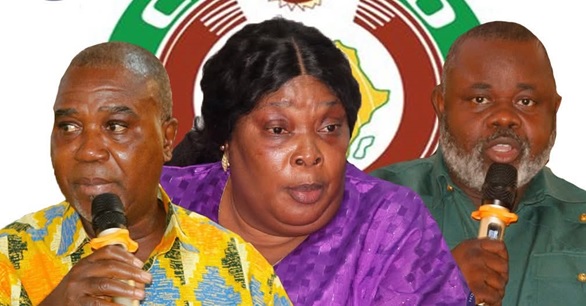
MONROVIA, LIBERIA – The political temperature in Monrovia has surged once again following a strongly worded press release from the Liberian Delegation to the ECOWAS Parliament, dated May 27, 2025, which both defends and calls for an impartial investigation into allegations levied against Senator Edwin Melvin Snowe Jr. The statement strikes a careful balance, asserting the need for due process while simultaneously praising Senator Snowe’s regional leadership and achievements. This moment places Liberia at a crossroads between transparency and loyalty, between democratic integrity and political self-preservation.
Senator Snowe, a longtime political figure and current head of Liberia’s delegation to ECOWAS, is facing serious allegations that have sparked controversy at home. Though the government has not officially confirmed the nature of the allegations, widespread reports suggest they include insinuations of remarks deemed destabilizing to the Liberian state. Snowe, in a forceful personal response, described the government’s actions as reckless and tantamount to an accusation of treason. Now, the ECOWAS Delegation has stepped into the fray, urging the Liberian Senate to launch a full-scale investigation.
The press statement highlights that Senator Snowe has consistently demonstrated professionalism, dignity, and commitment to Liberia’s national interests. It notes that under his leadership, Liberia has benefited from increased ECOWAS attention, especially following the withdrawal of Mali, Niger, and Burkina Faso from the regional bloc. Snowe has pushed for Liberia to host a major ECOWAS institution, a move that could bring jobs, investment, and enhanced regional visibility. He has also championed infrastructure initiatives, advocated for the free movement of people, and pushed for youth and women empowerment within West Africa. According to the Delegation, these efforts are yielding tangible gains for Liberians.
Still, the broader context cannot be ignored. In today’s fragile political climate, where polarization often overshadows dialogue, even the most seasoned public officials are not immune to scrutiny or suspicion. The call for an impartial investigation is therefore not just a gesture of procedural correctness but a test of Liberia’s democratic maturity. Can the Senate rise above partisanship to conduct a credible probe? Will this moment be used to fortify public trust or merely to settle political scores?
The ECOWAS Delegation’s press release also speaks to a growing regional concern: the erosion of democratic norms through unchecked accusations and the politicization of justice. It reiterates that due process must be the guiding principle. Senator Snowe, like any other citizen, deserves a full opportunity to respond to allegations in a fair setting. At the same time, Liberians deserve transparency and assurance that their leaders are held to account, regardless of rank or influence.
If the government’s accusations are substantiated, then national security protocols must follow through with clarity and legality. But if they are politically motivated, then such a smear not only undermines the rights of the accused but also damages the credibility of the administration and emboldens a culture of fear and silence. Liberia cannot afford either outcome if it wants to deepen democratic governance and rebuild fragile institutions.
This episode also raises questions about Liberia’s posture within ECOWAS and the broader diplomatic community. Snowe’s standing in regional affairs is not insignificant. His current role as Chair of the ECOWAS Committee on Peace, Security, and the African Peer Review Mechanism places him at the heart of West Africa’s governance framework. Any stain on his reputation, fair or not, could reverberate beyond Monrovia and complicate Liberia’s standing in diplomatic circles.
For now, the ball rests in the court of the Liberian Senate. It must act swiftly, transparently, and above all, fairly. The ECOWAS Delegation’s statement should not be mistaken as blind loyalty to a colleague but rather as a nuanced intervention that acknowledges both the gravity of the accusations and the significance of safeguarding institutional credibility.
In a nation where democratic institutions are still rebuilding after decades of civil strife and corruption, how Liberia responds to this challenge will speak volumes. The true measure of leadership is not only found in defending friends or punishing foes but in upholding justice, even when it is politically inconvenient.