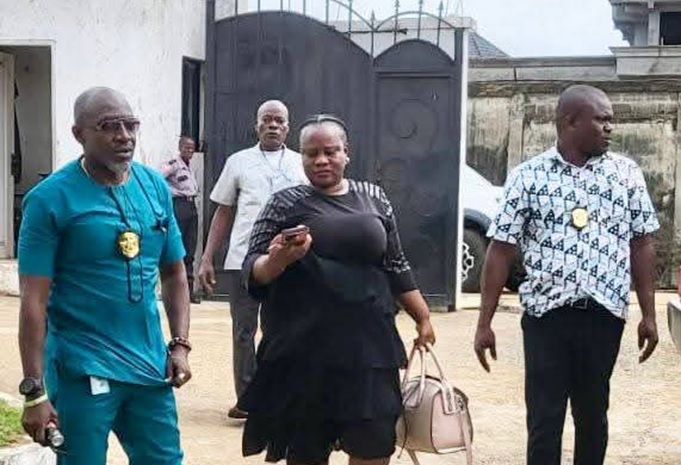
MONROVIA – In a country where the future of the next generation hinges on the integrity of its educators and the functionality of its public institutions, the unfolding saga involving Madam Sonita Dangan, Head of Instruction and Curriculum at the Monrovia Consolidated School System, is as troubling as it is symbolic. On May 28, 2025, the Liberia Anti-Corruption Commission (LACC) confirmed that Madam Dangan had to be forcibly brought in for questioning after failing to honor a formal written invitation. She stands at the center of an ongoing investigation into allegations of financial malpractice and the misuse of entrusted property within one of Liberia’s most critical public systems, education.
This is not just a case of a public servant evading accountability. It is a powerful reflection of a broken system in which those tasked with building young minds are suspected of exploiting the very institutions designed to uplift Liberia’s youth. The LACC, in a statement that was both measured and firm, made it clear that its invitation to Madam Dangan was in line with standard legal procedure. She was offered every opportunity to voluntarily appear and explain her role in the alleged mismanagement of public resources. Her refusal to comply forced the Commission to act. And while her testimony may yet prove her innocence, her unwillingness to cooperate from the outset only raises more questions.
That the LACC must now compel educators to cooperate with anti-corruption investigations should deeply concern every Liberian. When our education system becomes entangled in financial misconduct, it is not just about money, it is about dreams deferred, futures compromised, and trust betrayed. Every dollar stolen from the school system is a desk not bought, a book not printed, a lesson not taught. Corruption in education is a direct assault on national development.
But what makes this moment even more critical is how the system responds. The LACC’s insistence on legal process, its commitment to transparency, and its assertion that all individuals will be accorded full rights throughout the investigation is commendable. The Commission is walking a narrow path in a country where the pursuit of justice too often clashes with political interest and entrenched impunity. Yet in this case, it has taken a bold step forward, signaling that no one, not even senior figures in the education sector, can ignore the call for accountability.
Still, the public must ask hard questions. What systemic gaps allowed such alleged malpractice to occur in the first place? Where were the oversight mechanisms that should have flagged any misuse of funds or property within the Monrovia Consolidated School System? And what precedent will be set by this investigation? These are not questions for the LACC alone. They are questions for the Ministry of Education, for local communities, for lawmakers, and ultimately for the Boakai administration, which has promised to clean up government.
The stakes are high. If this investigation is allowed to unravel into partisan finger-pointing or bureaucratic stonewalling, the damage to public confidence will be irreversible. But if it is handled with integrity and diligence, it could become a turning point in Liberia’s long and painful struggle to separate public service from personal gain.
For too long, Liberia’s children have paid the price for a system that privileges connection over competence and impunity over accountability. The case of Madam Dangan is more than an isolated incident; it is a litmus test for whether Liberia is serious about reforming not only its governance institutions but also its cultural tolerance for corruption in high places.
This investigation should not be reduced to a political spectacle or a momentary headline. It should be a wake-up call to every public servant, especially those in education, that public office is a public trust, not a personal benefit scheme. The future of Liberia depends on whether its institutions can hold the line when tested and whether its citizens demand that they do.