
In the heart of Grand Cape Mount County, where the forest meets the gold-rich soil, Liberia’s largest industrial mine has become the center of a storm that reaches far beyond its concession fence. Bea Mountain Mining Corporation, the Turkish-owned operator of the New Liberty Gold Mine, is once again under fire, this time not only for environmental pollution or community unrest, but for an allegation that could redefine the debate over who truly controls Liberia’s buried wealth.
On September 20, 2025, journalist Charles B. Yates triggered public alarm when he alleged that Bea Mountain operates a hidden airstrip within its concession. His claim, made on Facebook, was simple but explosive, stating that the company may be using the airstrip to airlift gold, and possibly diamonds or “other strange minerals,” out of Liberia without any government oversight. “Are you aware,” Yates wrote, “that Bea Mountain has a private airstrip in the middle of the jungle, with no one from the government here to check what they are carrying?”
The allegation drew swift response. Anderson D. Miamen, Executive Director of the Center for Transparency and Accountability in Liberia (CENTAL), warned that if true, the airstrip raises urgent questions about mineral smuggling and state failure. “The government of Liberia needs to swiftly act, including informing the public about the facts and circumstances,” he said, calling for an independent investigation involving all relevant agencies. Miamen’s warning underscored a larger truth: Liberia’s fragile governance cannot afford another scandal that reinforces the perception of exploitation over accountability.
The airstrip controversy comes on top of a troubling economic record. According to Liberia Extractive Industries Transparency Initiative (LEITI) reconciliations, Bea Mountain exported about 11,046 kilograms of gold, valued at over US$576 million in a recent reporting period, nearly half of Liberia’s total exports. These figures are staggering, yet the returns to Liberia’s treasury fall dramatically short of expectations. The mismatch is glaring. While export values soar, government receipts from Bea Mountain remain a fraction of that wealth. Experts point to possible undervaluation at export, transfer pricing maneuvers, and weak enforcement of tax and royalty obligations. For ordinary Liberians, the math is simpler: gold leaves the ground, but little returns to communities or public services.
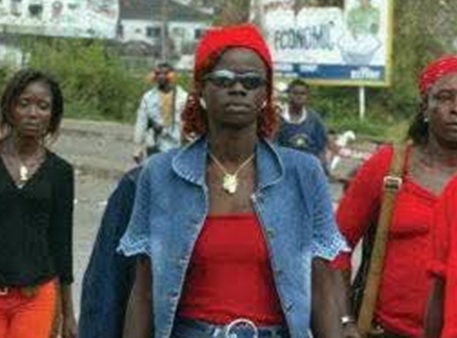
If numbers tell one story, lived experience tells another. Residents of Kinjor and surrounding areas have long complained of water contamination, damaged farms, and loss of fisheries tied to Bea Mountain’s operations. Civil society organizations and journalists have documented chemical spills, poor waste management, and forced relocations. The DayLight and EPA reports cite contamination incidents that have directly impacted food security. These grievances boiled over in early 2024 when protests around the mine turned violent, leaving fatalities, arrests, and destruction in their wake. For the young people who took to the streets, the fight was not merely about tailings or toxic rivers, it was about dignity and survival in the face of a mine that seemed to enrich outsiders while leaving locals trapped in poverty.
Bea Mountain has attempted to counter criticism through corporate social responsibility projects, including water towers, road maintenance, and community assistance. Government institutions, from the EPA to the Liberia Revenue Authority, have also praised the company at times. But these gestures are dwarfed by the magnitude of the mine’s revenues and the scale of its impacts. Inspections and tax recognition do not erase recurring pollution, nor do they close the yawning gap between export value and national revenue.
This is why the secret airstrip claim resonates so powerfully. If planes are indeed lifting consignments of gold or diamonds without state oversight, then Liberia is facing not just an environmental or social crisis, but a direct challenge to its sovereignty. The specter of minerals leaving the country “under cover of night” reinforces the worst fears of citizens, that the nation’s resources are being plundered with complicity or negligence from those meant to regulate. For a country that has endured decades of exploitation, from foreign concessions to warlords trading natural wealth for arms, the allegations strike a nerve. They tap into a deep well of mistrust, that Liberia’s leaders too often look away while the nation’s riches are smuggled out.
The path forward requires more than another round of official statements. It demands structural reform. The government must urgently investigate the airstrip claims, with findings published publicly and transparently. Anything less fuels suspicion. LEITI’s reconciliations should be expanded into full forensic audits of Bea Mountain’s contracts, exports, and tax filings, tracing money across borders. EPA oversight must shift from reactionary to proactive, with independent monitoring and binding penalties for violations. Binding development agreements and independent grievance panels should replace voluntary CSR. Communities must have enforceable rights, not handouts. Finally, all concession agreements should be published in full, reducing the secrecy that enables elite capture.
Bea Mountain is more than a mine. It is a test case for Liberia’s resource governance. If allegations of secret airstrips, mineral smuggling, and revenue gaps are left unaddressed, the country risks cementing a reputation as a place where wealth is extracted but not shared, where communities are displaced but not empowered, and where environmental damage is tolerated as the cost of foreign investment. The gold beneath Liberia’s soil has the potential to fuel transformation. But without transparency, accountability, and justice, it will instead deepen inequality and mistrust. The controversy over Bea Mountain’s alleged airstrip is not just about one company; it is about whether Liberia can finally break the cycle of exploitation and demand a fair deal for its people.