Liberia stands on the edge of another high-stakes gamble with its natural resources, and the stakes could not be higher. The return of Nigerian oil tycoon Prince Arthur Eze, a man whose name is etched in Liberia’s history for one of the most lopsided oil deals in the country’s past, casts a dark shadow over President Joseph Nyuma Boakai’s promise of transparency and accountability. To many Liberians, Eze’s re-emergence is not a story of investment, but a painful reminder of how easily the nation’s wealth can be handed to foreign interests while its people remain in poverty.
Recently, Liberian investigative journalist Charles Yates sounded the alarm in a scathing post on his official Facebook page under the caption: Dealing With The Same Criminal? Yates wrote: “After duping our country in 2010 in millions, Nigerian oil tycoon Prince Arthur Eze has sufficed again in Liberia under the Joseph Nyuma Boakai UP-administration in similar circumstances. Eze is one of the richest men in Nigeria with questionable business dealings. He was awarded 3 oil blocks for US$200,000 each in 2010 in Liberia and flipped them over to Chevron for US$250 million in the same year for over US$200 million. This was the worst oil transaction ever in human history. Suddenly, the Boakai/UP’s government that promised a change is doing business with the same crook.”
Yates further alleged that Eze’s ties with the current Unity Party government are more than just transactional. “Sources say Eze allegedly financed the UP campaign and after election, JNB continues to use Eze’s private jet as his friend plus other offers that violate Liberia’s public code of conduct,” Yates asserted.
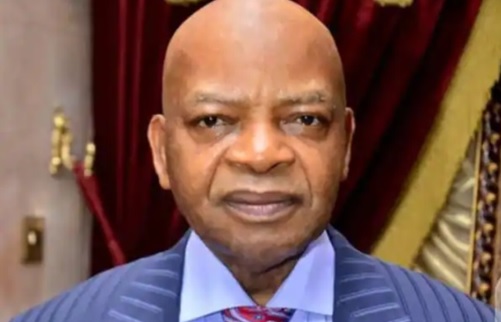
The concerns stem not just from the allegations but from Eze’s established track record across Africa. Prince Arthur Eze, born in 1948 in Anambra State, Nigeria, is both a businessman and a traditional prince. He studied mechanical and chemical engineering at California State University, Long Beach, before venturing into oil and aviation. In 1991, he founded Atlas Oranto Petroleum, which has since grown into one of Africa’s largest privately held oil exploration companies, holding 22 oil and gas licenses across more than 10 African countries, including Nigeria, Equatorial Guinea, The Gambia, Ghana, and now Liberia.
He once ran Triax Airlines (1992 to 2000) and is known for wielding immense political influence. His philanthropy, including schools, hospitals, and infrastructure, has earned him accolades, yet his name has also been tied to questionable deals. In 2010, his acquisition of three Liberian offshore blocks for US$200,000 each, later flipped to Chevron in a transaction reportedly valued at US$150 million or more, remains one of Liberia’s most criticized oil agreements.
Eze’s personal wealth is estimated in the billions of dollars, with some outlets ranking him among Nigeria’s richest men. His business empire is powerful, but so is his reputation for leveraging relationships with African leaders to secure lucrative contracts.
In September 2025, President Joseph Boakai announced four new Production Sharing Contracts (PSCs) between the Liberia Petroleum Regulatory Authority (LPRA) and Atlas/Oranto Petroleum. The blocks LB-15, LB-16, LB-22, and LB-24 carry a signature bonus of US$12 million each, with estimated investments of US$200 million per block. The administration has hailed the deal as a milestone for Liberia’s oil sector revival.
At the signing ceremony in Paris, President Boakai promised: “Our goal is to ensure that Liberia’s resources are managed with transparency and responsibility. These contracts will be implemented with strict standards of environmental protection, strong local participation, and clear accountability so that Liberians benefit directly from the opportunities created.”
But critics are far from convinced. Memories of the 2010 transaction linger, especially given the collapse of the National Oil Company of Liberia (NOCAL) in the aftermath of poor oversight, mismanagement, and alleged corruption. The heart of the matter is not merely whether Liberia should court foreign investors. It is whether Liberia has the institutional strength to negotiate fair deals, enforce transparency, and protect its resources from being siphoned off by a handful of elites and their foreign partners.
The fact that Prince Arthur Eze is once again central to Liberia’s oil story illustrates both opportunity and risk. His company has the capital and technical capacity to explore offshore resources. But his past dealings raise questions about Liberia’s vulnerability to manipulation and short-changing.
Eze himself is no stranger to controversy. In Nigeria, his influence has drawn criticism, while in other African countries, his dealings have sometimes been described as opaque. While his philanthropy paints him as a benevolent businessman, his business maneuvers reveal a pattern of leveraging power and connections to secure outsized profits.
Liberia’s oil and gas potential could transform its economy, but only if contracts are negotiated fairly, managed transparently, and enforced vigorously. If history repeats itself, the nation risks enriching a few individuals while leaving the majority in poverty.
The National Legislature is now tasked with ratifying the new PSCs. This is not a mere procedural step but a critical moment to scrutinize terms, ensure compliance with local content requirements, and demand safeguards against exploitation. The mistakes of 2010 must not be repeated.
For President Boakai, who campaigned on the promise of accountability and reform, this is a defining test. Aligning his administration’s credibility with a businessman like Prince Arthur Eze, whose past dealings in Liberia remain controversial, risks undermining public trust. If Liberia cannot defend its resources now, the dream of the ARREST Agenda, including accountability, revenue growth, and sustainable development, will remain just a dream.
Prince Arthur Eze’s return to Liberia is not just about oil; it is about whether Liberia is prepared to break free from a cycle of questionable deals that enrich the few while impoverishing the many. His wealth, influence, and reach are undeniable. But so too are the questions about his methods.
Liberians must demand transparency, legislative scrutiny, and adherence to the law in this new chapter. Anything less would mean the painful lessons of 2010 were in vain, and the promise of resource-driven prosperity remains elusive.