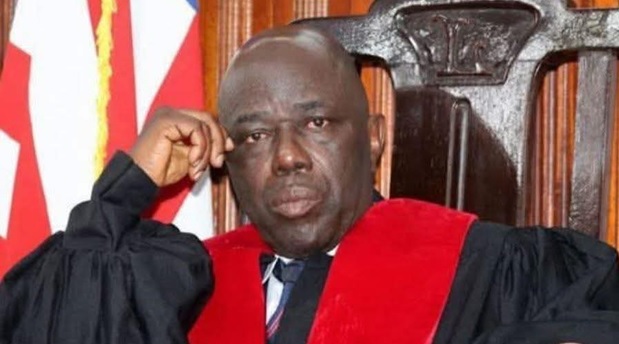

Chief Justice Yamie Quiqui Gbeisay’s recent defense of his decision to recommend his son, Willeyon Y. Gbeisay, for an associate magistrate position reveals a troubling disregard for ethics, transparency, and the public trust that the judiciary depends upon. In a statement on Sunday, September 28, 2025, Gbeisay challenged the National Association of Trial Judges of Liberia (NATJL) to produce any legal authority preventing a sitting Chief Justice from recommending a relative for appointment, insisting that his son’s recommendation reflected capability and interest in public service, not favoritism. He dismissed the association’s concerns as speculative and emphasized that “the Judiciary must operate on the basis of law, not innuendo.”
This response, however, exposes a fundamental misunderstanding, or convenient neglect, of the ethical standards that govern public service. The 2014 Code of Conduct for public officials explicitly prohibits nepotism, defining the appointment, employment, promotion, or advocacy for relatives within the same agency as illegal and subject to serious sanctions, including dismissal, suspension, or prohibition from government service for up to five years. By framing the NATJL’s legitimate concerns as mere speculation, the Chief Justice sidesteps the spirit of these rules, prioritizing personal interest over institutional integrity.
The implications of this stance are deeply alarming. The judiciary is a cornerstone of Liberia’s democracy, and its credibility rests on merit, fairness, and public confidence. Endorsing appointments that flout professional and ethical standards, especially in the highest office of the Supreme Court, erodes trust in the courts and sets a dangerous precedent for the next generation of judicial officers. It sends a signal that connections and family ties can outweigh training, competence, and adherence to established recruitment processes.
By reducing a serious ethical concern to a debate over legal technicalities, Chief Justice Gbeisay risks undermining decades of effort to professionalize Liberia’s magistracy. Law students, aspiring judges, and legal professionals who have invested years in formal education and rigorous training are left questioning whether merit matters at all. The principle that the law must be applied equally to all, without fear or favor, is compromised when those at the top of the judiciary appear above the ethical standards they are sworn to uphold.
Liberia’s courts must be institutions of justice, impartiality, and credibility. Leadership that condones nepotism, whether by intention or negligence, threatens these foundational principles. Chief Justice Gbeisay’s response is not merely a personal defense; it is a clarion call for reflection on the state of the judiciary itself. If Liberia is to safeguard the independence and integrity of its legal system, adherence to ethical standards, transparency, and merit-based appointments cannot be optional; they must be non-negotiable.
The time for serious accountability and corrective action is now. Public confidence in the judiciary cannot survive rhetoric alone; it requires concrete adherence to law, ethics, and the principles of fairness. Anything less risks turning Liberia’s highest court into a symbol of privilege and nepotism rather than a bastion of justice.