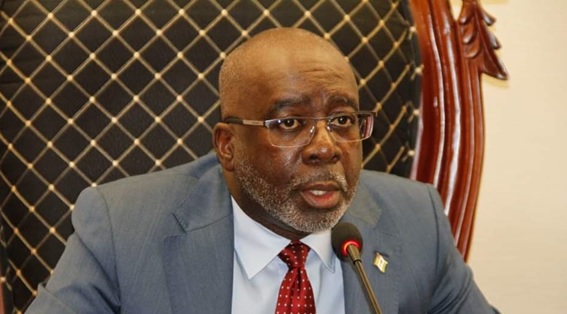
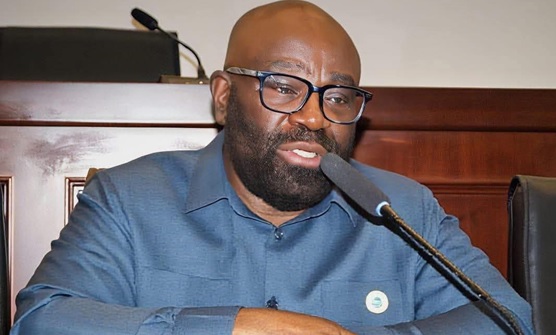
CAPITOL HILL, MONROVIA – Acting Minister of State for Presidential Affairs, Samuel Stevquoah, faced a tough confirmation hearing before the Liberian Senate on Tuesday, October 21, 2025, where lawmakers scrutinized his readiness to ensure transparency and accountability in government projects, including a controversial report of a so-called “presidential villa” in Lofa County.
Nominated by President Joseph Nyuma Boakai to replace the late Sylvester Grisby, Stevquoah was pressed by Montserrado County Senator Abraham Darius Dillon on whether public funds were being used to construct a private retreat in the President’s home county. Stevquoah categorically denied any knowledge of the project but promised to investigate if confirmed. “I am not aware of any such project,” he said. “However, if confirmed, I will look into the matter and ensure the Legislature receives accurate information.”
Senator Dillon did not let the matter drop, warning that opaque handling of projects linked to the Presidency risks eroding public trust. “The Liberian people deserve to know how public funds are being used and whether any project tied to the Executive Mansion is properly accounted for,” Dillon said.
The hearing took a more concerning turn when Stevquoah revealed the shocking state of the long-delayed renovation of the Executive Mansion, the symbolic seat of Liberia’s Presidency. According to the acting minister, the project is only 40 percent complete, with some floors boarded up, electrical wiring exposed, and leaking ceilings in areas used for official functions. “When you are in the parlor of the Executive Mansion, where important programs are held, water filters from the roof while the programs are ongoing,” he reported.
Stevquoah’s testimony highlighted a pattern of repeated failure by successive administrations to safeguard national assets. The Acting Minister said that the President’s plan to move back into the Mansion has been stalled due to its deteriorating condition, forcing him to continue residing in his private home.
Senator James Biney, Chair of the Senate Committee on Executive, criticized past governments, including former Presidents Ellen Johnson Sirleaf and George Weah, for neglecting the historic structure. “The same promise Madam Sirleaf made and didn’t complete, the same with President Weah,” Biney said. “So this time, the Ministry of State should begin factoring into the budget what needs to be done to finish the renovation work on the Mansion.”
The hearing, which raised questions about transparency, project management, and accountability, underscores growing public frustration with how Liberia’s government handles critical infrastructure projects. Stevquoah, meanwhile, seeks the Senate’s endorsement but faces the dual challenge of assuring lawmakers and citizens that the Ministry of State will act responsibly under his leadership.