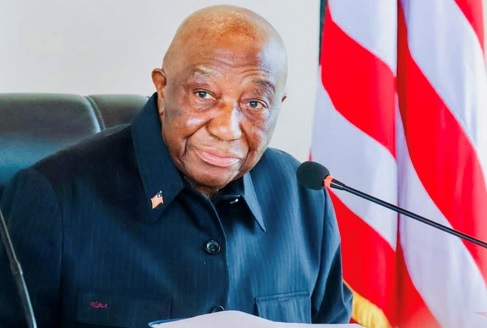
MONROVIA – President Joseph Nyuma Boakai on Friday, October 31, 2025, issued Executive Order No. 155 establishing the Carbon Markets Authority (CMA), a powerful new agency charged with steering Liberia’s participation in global carbon markets, regulating climate finance, and coordinating national emissions-reduction efforts. The creation of the Authority marks one of the administration’s most far-reaching policy moves, signaling an aggressive shift toward monetizing Liberia’s natural assets while strengthening compliance with international climate commitments.
The Executive Order opens with a stark acknowledgment that climate change poses severe risks to Liberia’s forests, coastal communities, agriculture, water supplies, and economic stability. Rising temperatures, worsening weather patterns, and biodiversity loss have placed heavy strains on rural communities already suffering from declining support from international development partners. According to the order, these pressures threaten food security, health services, and overall national development, making a unified institutional response necessary.
Through Executive Order No. 155, the Carbon Markets Authority becomes the central government institution for developing climate finance policy, coordinating carbon-credit initiatives, and ensuring Liberia’s full participation in voluntary and compliance carbon markets. The Authority is further tasked with overseeing national adherence to the Paris Agreement and Liberia’s Nationally Determined Contributions. Within twelve months, the CMA must present a comprehensive Climate and Carbon Act to the Legislature to formalize the nation’s climate market architecture.
The governance structure places significant authority in the office of a Presidential Envoy on Climate Action, who will serve as Chief Executive Officer of the Authority with plenipotentiary powers. The President will also appoint a Chief Operations Officer and Chief Financial Officer, all of whom must possess demonstrated expertise in climate policy, international negotiations, finance, environmental science, or project management. The CEO will report directly to the President, ensuring central oversight from the Executive Mansion.
The CMA will draw its technical staff from relevant ministries and agencies, while also supervising the Blue Economy Secretariat to strengthen Liberia’s marine and coastal climate programs. The Authority has the power to hire private-sector specialists and registry system operators to meet global transparency and compliance standards.
The Executive Order grants the Authority supremacy over all previous laws or directives related to climate finance or carbon market development. Every ministry, agency, and commission engaged in climate-related work must now report to the CMA. Its core duties include drafting legislation, coordinating Liberia’s climate finance partnerships, and managing the country’s participation in international carbon markets.
The order outlines a wide project scope for the Authority, covering forestry and land use, blue-carbon ecosystems, renewable energy, energy efficiency, waste management, agriculture, livestock, and climate-smart urban development. These sectors are expected to generate substantial emissions-reduction credits capable of boosting national revenue.
A central feature of the new framework is the creation of the National Carbon Registry, which must be activated within twelve months. The Registry will track the issuance, transfer, and retirement of carbon credits and comply with Article 6.2 of the Paris Agreement, the UNFCCC Enhanced Transparency Framework, and CORSIA standards. All carbon-related data will remain the sovereign property of the Republic of Liberia. Quarterly public reports will disclose transaction volumes, market performance, and fiscal projections.
The Executive Order also establishes the Liberian Carbon Investment Fund (LCIF), a national climate finance trust fund operating as a sub-entity of the CMA. The LCIF will hold and invest all revenues from carbon markets in trust for the Liberian people. It will maintain separate accounts and operate under the oversight of the Public Finance Management Act to ensure transparency, accountability, and proper fiscal management.
Initial operational funding for the CMA will come from the Ministry of Finance and Development Planning, while additional revenues will be generated from registry fees, transaction charges, climate-related public-private partnerships, emissions-related taxes and levies, and international climate finance agreements. A Fiscal Oversight Board, comprising representatives from the Ministry of State, Ministry of Finance, Central Bank of Liberia, Environmental Protection Agency, Forestry Development Authority, the CMA, and members of the private sector and civil society, will supervise the fund’s financial management. Annual audits by the General Auditing Commission are mandatory.
Revenues collected will be dedicated to climate-resilient development projects such as rural electrification, clean water systems, healthcare improvements, infrastructure upgrades, digital public services, and green-economy vocational training. Additional funding will support smallholder agroforestry, biodiversity conservation, and reforestation efforts. The LCIF’s long-term investment strategy prohibits depletion of the fund through annual budgeting, limiting withdrawals to a percentage of annual returns.
The Authority must operate within Liberia’s existing legal and environmental frameworks, including the EPA Act, Community Rights Law, Land Rights Act, Revenue Code, Public Finance Management Act, and the Paris Agreement. The Executive Order specifically protects community and private carbon rights, reaffirming that landowners and customary communities retain ownership and usufruct rights over trees, biomass, and blue-carbon ecosystems.
With the signing of Executive Order No. 155, President Boakai has positioned climate finance at the center of Liberia’s development strategy. The Carbon Markets Authority now carries the weighty responsibility of transforming Liberia’s natural resources into sustainable revenue streams while ensuring environmental integrity and accountability.