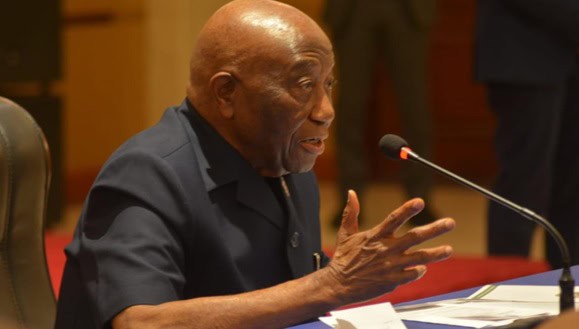
MONROVIA – President Joseph Nyuma Boakai has issued Executive Order No. 156, extending the expired Executive Order No. 135, which institutes protective and stimulative measures for Liberia’s local manufacturing industry. The new order seeks to consolidate the gains achieved under the previous directive and further boost economic growth by safeguarding domestic industries from the rising threat of imported goods. The measure takes immediate effect and reflects the government’s ongoing commitment to advancing local commerce and creating sustainable employment.
According to the Executive Order released this week, the decision stems from the government’s alignment with Pillar One of President Boakai’s ARREST Agenda, which emphasizes agriculture, roads, rule of law, education, sanitation, and tourism. The order reinforces the administration’s pledge to protect Liberian-made products from unfair competition posed by imported substitutes that threaten the survival of local businesses. It also underscores the President’s constitutional authority to issue directives in the public interest when urgent economic matters cannot await the normal legislative process.
President Boakai’s latest action introduces a “Local Industry Development Surcharge” on the importation of specific goods and raw materials that are believed to undermine the viability of domestic manufacturers. The order mandates that importers of items such as flour, biscuits, soap, soft drinks, steel rods, PVC pipes, plywood, and detergents pay revised surcharge rates intended to level the playing field for local producers. The surcharge rates and product categories are listed in Appendix I of the Executive Order and will be enforced through the Ministry of Finance and Development Planning (MFDP).
Under the new rate structure, flour imports will now face a surcharge of $0.45 per kilogram, up from $0.25, while biscuit imports will attract a rate of $0.20 per kilogram. For soap, both bar and liquid forms, a surcharge of $0.45 per kilogram has been maintained pending a review of local sale prices. Additionally, importers of PVC pipes and fittings will now pay a 25 percent surcharge, a significant increase from the previous 10 percent. The order also maintains a $50 per ton export levy on metal scraps and a $200 per ton charge on steel rods, aimed at discouraging the mass exportation of raw materials needed for domestic production.
The President emphasized that all beneficiaries of these protective tariffs must comply with the Liberia Revenue Authority’s (LRA) fiscal requirements. This clause is intended to ensure transparency and accountability in the implementation of the surcharge policy while preventing revenue leakages. The MFDP has been tasked with ensuring timely communication of the applicable rates and product categories to relevant stakeholders, including importers, manufacturers, and customs officials.
The Executive Order also establishes price guidelines for certain locally produced goods to prevent inflationary effects that could harm consumers. For instance, the order specifies that locally manufactured flour should not exceed $35 per 50 kg bag, while the wheat brand should be sold at $3.50 per 50 kg bag. Similarly, eggs are to be sold at no more than $50 per carton, ensuring that protection for local manufacturers does not translate into exorbitant prices for the Liberian public.
Economic analysts see the move as part of President Boakai’s broader economic reform strategy to revitalize the domestic market and reduce Liberia’s overreliance on imports. By prioritizing local manufacturing, the government aims to promote value addition, create jobs, and retain more wealth within the country. Supporters of the decision believe that sustained implementation of these measures could lead to industrial expansion and a gradual shift toward self-sufficiency in key sectors such as food processing, construction materials, and consumer goods.
However, critics argue that while protectionist policies are beneficial in theory, their success depends largely on the efficiency of enforcement and the competitiveness of local industries. Some business leaders have cautioned that without strong quality control mechanisms, Liberian-made products may fail to meet market expectations, leading to consumer dissatisfaction. Others warn that the increased surcharges could raise import costs and trigger price hikes if domestic supply falls short of demand.
President Boakai’s Executive Order No. 156 comes at a time when Liberia’s economy faces persistent challenges, including trade imbalances, currency depreciation, and unemployment. By extending the order, the President signals his determination to tackle structural weaknesses through targeted interventions that empower local industries. The administration hopes the new measures will attract private investment, encourage innovation, and stimulate productivity across multiple sectors.
As the Executive Order takes effect, attention now turns to how well the Ministry of Finance, the LRA, and the Ministry of Commerce and Industry will coordinate its enforcement. For manufacturers and importers alike, the coming months will test whether the government’s renewed industrial protection strategy will yield tangible economic benefits or face the same implementation hurdles that have plagued previous policy initiatives.