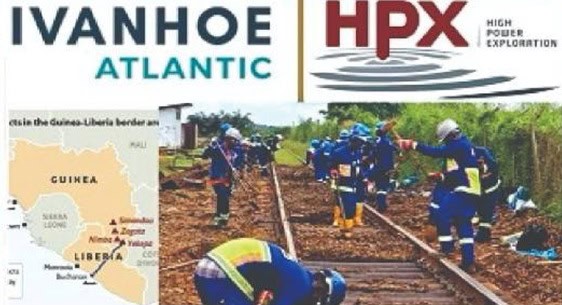
MONROVIA – A heated controversy has erupted in Liberia over the proposed rail access agreement between the government and Ivanhoe Liberia, formerly known as HPX. The agreement, valued at approximately $1.8 billion, would grant the company access to Liberia’s Yekepa–Buchanan railway, a critical corridor for transporting iron ore from Guinea’s Nimba region. Civil society groups have raised alarm, claiming the government’s negotiation process lacks transparency and risks compromising national sovereignty.
One Voice Liberia, a leading advocacy group, has called for a more cautious and inclusive negotiation approach. The organization warns that officials appear to be repeating past mistakes, pushing deals that favor foreign investors without adequate public engagement. In a statement shared widely in Liberian media, they stressed that ordinary citizens remain largely unaware of the deal’s terms. (FrontPage Africa)
Adding to the scrutiny, four prominent civil society organizations, the Coalition for Transparent Development, the Center for Public Accountability, Liberia Civil Rights Network, and the Partnership for Equitable Resource Governance, issued a joint statement questioning the legitimacy of the agreement’s signing. They criticized the government for failing to formally communicate the deal domestically, with initial acknowledgment coming from a U.S. embassy press release rather than Liberian authorities.
The dispute has also pitted Ivanhoe against ArcelorMittal Liberia (AML), the current operator of the heavy-haul rail line. AML has warned the government that facilitating the HPX access could violate its existing Mineral Development Agreement, potentially leading to legal challenges. AML maintains that its infrastructure investments justify priority rights over the rail corridor.
HPX argues that it will increase competition and efficiency, but AML contends that the company is demanding access without matching the substantial investments already made. AML has invested heavily in upgrading rail infrastructure and insists it supports a multiuser model, provided that operational control remains fair and secure.
Complicating matters further, AML reportedly blocked an Environmental and Social Impact Assessment (ESIA) team from accessing parts of the railway twice, despite the team having official government authorization. Critics argue this obstruction undermines public oversight and raises questions about AML’s commitment to equitable access.
Economic analysts in Liberia have raised concerns that prioritizing the HPX deal could favor foreign Guinean ore over domestic mining initiatives. They argue that this could marginalize local operators and distort Liberia’s mining economy. Civil society advocates continue to call for strong safeguards to ensure that Liberian interests remain central to any agreement.
Diplomatic considerations add another layer of complexity. Leaked communications suggest that Guinea’s government has yet to formally approve the transit of ore through Liberia. Observers warn that proceeding without explicit consent could embroil Liberia in a regional diplomatic dispute.
This controversy mirrors broader trends in Africa’s mining and rail sectors, where disputes over infrastructure control frequently surface. In Guinea, the Simandou iron ore project has experienced prolonged legal and political battles over licenses and investor control. Similarly, in South Africa, Transnet has faced court challenges regarding rail access agreements with Chinese firms, demonstrating that rail infrastructure remains a strategic flashpoint.
Liberia stands at a crossroads. The government could generate substantial revenue and position the country as a regional transshipment hub. However, experts warn that a poorly negotiated deal could replicate historical concessions where sovereignty and long-term economic benefits were sacrificed for immediate gains.
As the Legislature reviews the agreement, civil society groups, media analysts, and international observers are calling for heightened scrutiny and transparency. The government’s decision will not only shape Liberia’s mining sector but could also serve as a benchmark for the country’s handling of foreign investment in critical infrastructure.