
MONROVIA – As the ruling Unity Party (UP), headed by President Joseph Nyuma Boakai, prepares to return to its former headquarters in Congo Town from its temporary offices on Broad Street opposite the Sacred Heart Cathedral, serious questions are resurfacing over claims that the party spent a staggering US$11 million to acquire the property. The allegation, publicly raised by Montserrado County District #10 Representative Yekeh Y. Kolubah, has renewed scrutiny over the UP’s financial practices, accountability, and its broader ambition to construct a permanent national headquarters.
Rep. Kolubah, who is currently touring the southeast with his political movement, the National Movement to Liberate Liberia from Criminals and Crooks, has used his engagements to press concerns about government integrity. Speaking on Saturday, November 22, 2025, in Greenville, Sinoe County, he told residents that the Boakai-led government had “reportedly spent US$11 million” to purchase the Congo Town building. He reminded the audience that the Unity Party was previously evicted for unpaid rent, a history he argues contradicts the sudden capacity to finance a multimillion-dollar real estate acquisition.
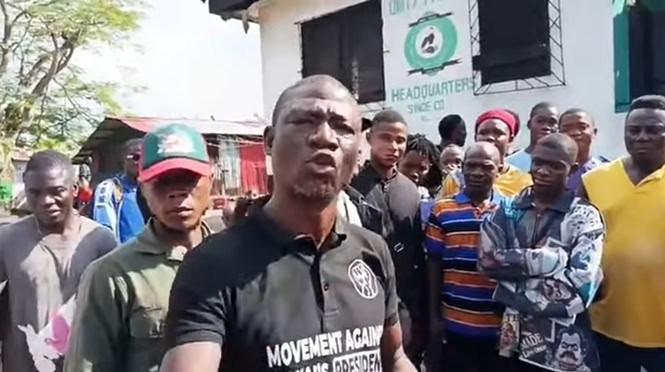
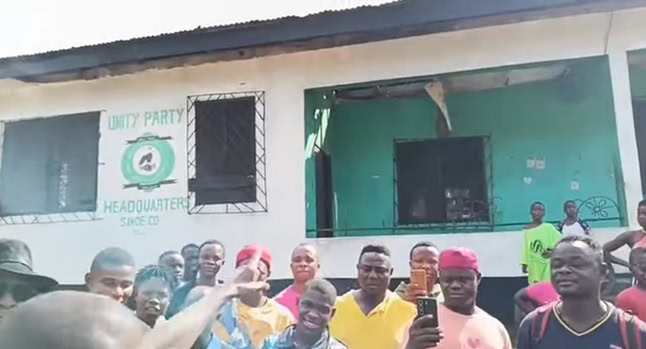
Kolubah further emphasized that the Broad Street office is only a temporary space and that the move back to Congo Town represents a politically symbolic return overshadowed by financial uncertainty. He also criticized the deplorable state of the Unity Party’s headquarters in Greenville, describing the building as being in “very bad shape,” with a collapsing ceiling, leaky roof, and rainwater penetrating nearly every room.
During the same address, Rep. Kolubah shifted to the growing national controversy surrounding the US$10 million presidential villa project in Foya, Lofa County, accusing President Boakai of “stealing public money” to fund the construction. His remarks have further fueled debate about whether state resources are being used to support political or personal infrastructure tied to the administration.
Kolubah’s claims may draw the attention of civil society actors, who might say the Unity Party must now provide a full financial trail for the Congo Town property. The central question that could be raised by transparency advocates is simple: “How did the Unity Party purchase the building?” They could argue that the government and the ruling party must address these concerns openly to prevent deepening public distrust at a time when financial accountability remains a major national concern.
The UP formally announced its return to the Congo Town headquarters in November 2025, describing it as a symbolic “homecoming of unity, strength, and renewal.” Party officials say they regained access to the property through negotiations with the landowner following the earlier eviction over unpaid rent. While the party portrays the move as a reconnection to its roots, critics argue that symbolism cannot replace clear answers about ownership and financing.
Skepticism has grown partly because the return comes only weeks after the party launched a nationwide fundraising campaign to build a new permanent headquarters. The fundraising committee, chaired by Deputy Minister Cornelia Wonkeleh Kruah, was tasked with mobilizing support. This timing raises doubts about whether the US$11 million claim is credible, or whether the Congo Town building is even fully owned by the party. The lack of clarity, observers say, strengthens the argument that the alleged expenditure deserves a thorough public investigation.
If the Unity Party did indeed spend US$11 million on the property, the party must produce financial records, deeds, receipts, and other supporting documents to verify the transaction. Many Liberians question why a party that recently struggled to pay rent would suddenly undertake a multimillion-dollar purchase without disclosing the source of funds.
To date, UP officials have neither confirmed nor denied the US$11 million figure. They have remained focused on promoting the symbolic significance of the return, but the absence of documentation leaves the party exposed to allegations of mismanagement and financial opacity, claims that directly challenge President Boakai’s stance on good governance.
While some UP partisans dismiss Rep. Kolubah’s comments as routine opposition rhetoric, others contend that the concerns extend far beyond political rivalry. The matter touches on a broader governance issue: How do political parties in Liberia manage money, assets, and the public trust, especially when those parties control the state?
As preparations intensify for the December 6, 2025 “homecoming” celebration, senior UP officials, including Vice President Jeremiah Kpahn Koung and Party Chairman Rev. J. Luther Tarpeh, have launched a major cleanup and rehabilitation campaign at the Congo Town premises. Though presented as both physical restoration and political renewal, the effort does little to dispel lingering doubts surrounding the alleged purchase.
Whether the Unity Party will address Rep. Kolubah’s US$11 million claim remains uncertain. For many Liberians, however, the issue has outgrown partisan theater. It now stands as a critical test of transparency and accountability, and whether the ruling party’s return to Congo Town represents genuine renewal or merely another public relations gesture masking deeper financial inconsistencies.