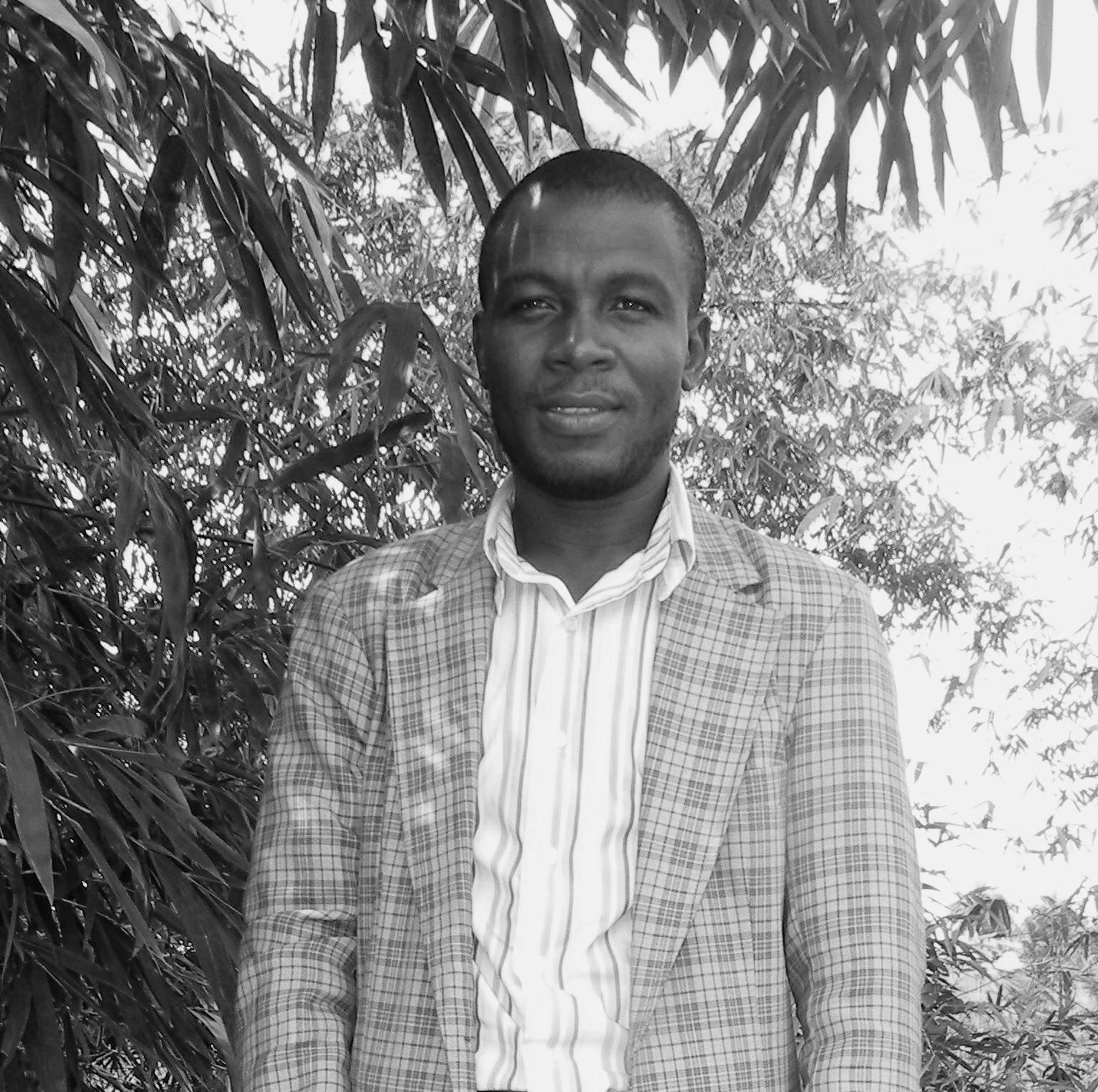
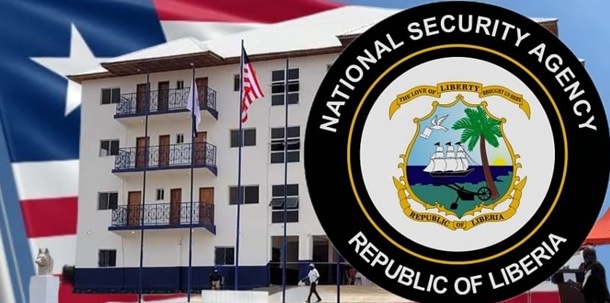
MONROVIA – Liberian activist and exiled campaigner Martin K. N. Kollie has launched one of his strongest accusations yet against successive Liberian administrations, alleging that presidents from Ellen Johnson Sirleaf to George Weah and now Joseph Boakai have used the National Security Agency (NSA) as a channel to divert tens of millions of dollars without transparency. In his Budget Analysis #3 for fiscal year 2026, Kollie argues that Liberians have been “robbed for 17 years” under the guise of intelligence spending, insisting that nearly US$190.4 million allocated to the NSA remains largely unexplained and shielded from public scrutiny.
Kollie said his latest assessment draws from approved national budgets covering NSA expenditures from 2010 to 2026, a period he describes as “the clearest window into how national security financing has been manipulated.” He noted that the data reveal a consistent pattern of rising allocations with no publicly available audits. According to Kollie, “Successive regimes have used the NSA to rob Liberia and Liberians of tens of millions. Ellen did it. Weah did it. Boakai is doing it too.”
His report traces the NSA’s legal origins to the 1974 Executive Law, emphasizing that the agency’s role was never intended to operate in secrecy from accountability mechanisms. The framework, he said, provided the basis for intelligence operations but also obligated the agency to maintain auditable financial records. He argued that administrations have deliberately ignored this requirement despite explicit statutory language.
The expenditure breakdown in Kollie’s analysis paints a staggering progression. He reports that the NSA spent US$61,115,700 under Ellen Johnson Sirleaf, US$79,833,768 under George Weah, and US$49,385,382 in just three years under President Joseph Boakai. The cumulative total of US$190,334,850 over 17 years represents what he describes as “an intelligence budget with no intelligence justification.” Kollie maintained that the figures demonstrate systemic abuse rather than legitimate national security needs.
Part of Kollie’s concern centers on the dramatic spikes in specific years. The lowest NSA expenditure occurred in 2010 at US$1.7 million, while the highest, US$28.3 million, was recorded in 2023 under President Weah. Kollie said this jump represents a 1,513.74% increase, which he argued cannot be reasonably attributed to operational needs. He further warned that if President Boakai maintains current spending patterns, “he will have spent at least US$98.7 million just on the NSA alone by 2029.”
Kollie emphasized that officials within both the Sirleaf and Boakai administrations have perpetuated the narrative that the NSA “cannot be audited” due to the sensitive nature of intelligence work. He described this claim as a “blatant lie,” writing that it has been repeated for nearly two decades. “Today, he too now agrees that ‘NSA cannot be audited,’” Kollie said of President Boakai, adding that this contradicts Boakai’s 2023 campaign promise to subject the agency to a financial audit.
To support his argument, Kollie cites Section 2.56 of the 1974 Executive Law, which clearly states that the NSA’s accounts “shall be audited yearly or as circumstances may require by an auditor appointed by the President of Liberia.” He pointed out that even major Western intelligence agencies, including the CIA and NSA in the United States, undergo financial audits under legally defined restrictions. “So, who told them that the NSA cannot be audited?” he asked.
Kollie also referenced what he described as the testimony of a former Deputy NSA Director, who allegedly told him that much of the money allocated for intelligence “goes right back to the Executive Mansion.” He argued that this internal source provides further confirmation that inflated NSA budgets have been used as a covert financing vehicle for political and personal expenditures. He presented the claim as part of what he believes is entrenched institutional corruption.
The activist questioned why the draft 2026 national budget proposes increasing NSA spending from US$14.8 million to US$22.1 million, especially when the Executive Protection Service alone already costs US$9.19 million annually. He noted the existence of intelligence units in multiple security agencies, including the Liberia National Police, Armed Forces of Liberia, Liberia Immigration Service, Liberia Drug Enforcement Agency, and city police departments. “So, why give the NSA alone a whopping US$22.1 million when millions of Liberians are jobless and poor?” Kollie asked.
He added that Liberia has one of the lowest terrorism risk profiles in the world, referring to its 0.00 score on the Global Terrorism Index, and argued that such a security environment does not justify what he views as disproportionate intelligence spending. According to Kollie, the notion that Liberia requires extraordinary security financing is “an excuse used to cover organized theft.”
In his concluding call to action, Kollie urged President Boakai to keep his campaign promise by auditing the NSA and cutting its budget by at least 50 percent. “It cannot be business as usual,” he asserted, insisting that the Liberian people voted for transparency and accountability. He warned that failing to audit the NSA constitutes a betrayal of public trust. “The NSA cannot continue to be used as a cash cow. The institutionalized thievery has to stop. The people are watching,” Kollie said.
Kollie’s latest report is expected to fuel ongoing public debate about transparency in Liberia’s security sector and the true extent of executive power over intelligence financing. His allegations amplify growing concerns among civil society groups that the country’s fiscal discipline, anti-corruption commitments, and governance standards remain compromised despite promises of reform from the current administration.