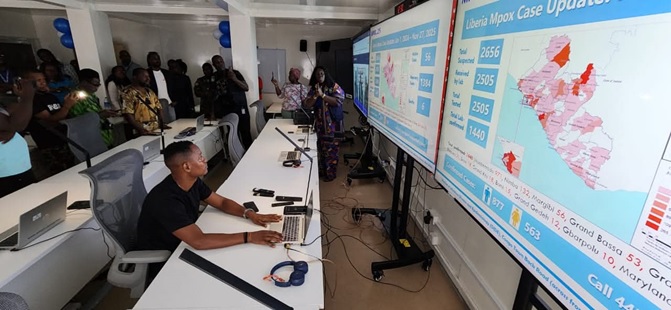
MONROVIA – The National Public Health Institute of Liberia (NPHIL) on Friday, November 28, 2025, dedicated its newly refurbished and fully equipped National Public Health Emergency Operations Center (NPHEOC) at its Congo Town headquarters, marking a major step forward in the country’s efforts to strengthen emergency preparedness, coordination, and response.
Speaking at the ceremony, NPHIL’s Interim Director-General, Dr. Sia Wata Carmanor, described the dedication as an important milestone in Liberia’s public health sector. She said the upgraded operations center will serve as a national hub for coordination, information exchange, and management of public health emergencies. Dr. Carmanor extended appreciation on behalf of the Government of Liberia, the Ministry of Health, and NPHIL to the Africa Centres for Disease Control and Prevention (Africa CDC) for supporting the initiative, emphasizing that the investment aligns with World Health Organization (WHO) requirements for member states to maintain functional public health emergency operations centers under the International Health Regulations.
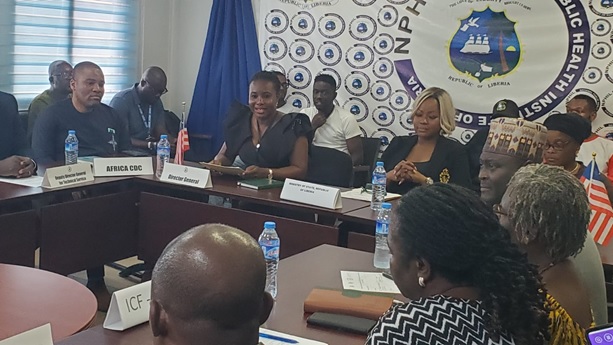
She recalled Liberia’s determination to strengthen its emergency response systems following the devastating 2014–2016 Ebola outbreak, noting that the country answered the global call for preparedness by establishing the PHEOC immediately after the crisis. Since its creation, she said, the center has played a vital role in containing infectious diseases and coordinating both human and material resources during national health threats.
Liberia currently operates 16 Public Health Emergency Operations Centers, one at the national level and one in each of the 15 counties. The national center is hosted by NPHIL, while county-level PHEOCs work directly with the County Health Teams, forming a unified network for outbreak detection, response, and recovery.
Dr. Carmanor highlighted the PHEOC’s core responsibilities, including communication, logistics, information management, and surveillance. The center manages data flow to support timely decision-making, tracks and investigates epidemics, and allocates critical resources such as personnel, supplies, and funding. She added that the PHEOC also plays a central role in risk communication, helping maintain public confidence during crises while facilitating collaboration among government, health institutions, and humanitarian partners. Through training programs, simulations, and recovery planning, the operations center continues to strengthen Liberia’s health systems and preparedness capabilities.
She noted that modern infrastructure and information communication technology are essential components for ensuring effective coordination and response, and the new equipment provided by Africa CDC demonstrates its commitment to helping NPHIL remain a center of excellence in West Africa. Dr. Carmanor reaffirmed NPHIL’s dedication to global health security through enhanced coordination and collaboration with partners. She extended thanks to all institutions contributing to Liberia’s emergency preparedness and called for continued cooperation to protect the health of Liberians and the wider region.
Also speaking at the event, Madam MacDella Cooper, Advisor to the President of Liberia, conveyed President Joseph Nyuma Boakai’s appreciation to Africa CDC for what she described as a strategic investment in Liberia’s public health future. She reaffirmed the government’s commitment to supporting Africa CDC’s mandate to safeguard the health and security of the African continent.
Representing the Minister of Health, Dr. Louise M. Kpoto, the Deputy Minister for Administration, Martha Morris, performed the official ribbon-cutting. She praised Africa CDC for its contribution and pledged the Ministry of Health’s continued collaboration with NPHIL to build a more unified and resilient public health system capable of responding swiftly and effectively to health emergencies nationwide.