MONROVIA – Liberia is confronting a sobering reality as Sweden announced it will end all bilateral cooperation by 2026 and close its embassy in Monrovia, signaling the conclusion of a decades-long partnership that shaped the country’s post-war recovery and democratic institutions. The announcement, made on Thursday, December 4, 2025, took many Liberians by surprise, prompting reflection on the nation’s failure to anticipate this strategic shift. Analysts argue that the repercussions of Sweden’s exit will extend across Liberia’s infrastructure, governance, and civil society sectors.
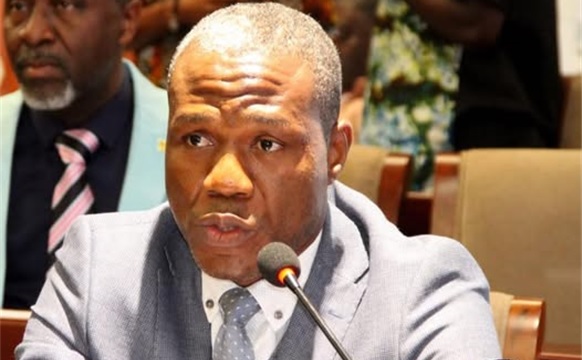
Former Education Minister George Kronnisanyon Werner described the development as “a quiet earthquake,” emphasizing that its tremors have been building over years. Werner traced his appreciation of Sweden’s engagement to the early days of President Ellen Johnson Sirleaf’s administration, highlighting a visit to the Dag Hammarskjöld Center, where he observed Sweden’s principled leadership in peace, justice, and global governance. Subsequent trips with President Sirleaf underscored the depth of Sweden’s moral authority, illustrating why the country was more than just a donor, it was a partner in Liberia’s post-conflict recovery.
During the years that followed, Sweden became Liberia’s second-largest bilateral donor, second only to the United States. Werner recalled that Swedish support was critical in reforming Liberia’s civil service. As Director-General of the Civil Service Agency, he witnessed Sweden contribute approximately five million dollars to strengthen recruitment systems, clean payrolls, and rebuild professional standards. “Sweden did not just fund projects; they invested in Liberia’s ability to govern itself,” Werner noted, highlighting the profound impact of Swedish support.
The first public signs of Sweden’s retreat emerged nearly a month ago when the Folke Bernadotte Academy (FBA), Sweden’s leading peace and security institution, closed its Liberia program. The ceremony in Monrovia, attended by Presidential Advisor Koffi Woods, marked the end of two decades of engagement that had bolstered mediation programs, transitional justice efforts, and community peace structures. Werner stressed that such withdrawals are rarely routine, describing FBA’s departure as a critical early warning of a broader strategic shift that Liberia failed to act upon.
The rationale for Sweden’s exit is closely tied to domestic political shifts in Stockholm. Over the past two years, a new center-right coalition reshaped Sweden’s foreign aid priorities, emphasizing fewer bilateral partners, reduced aid spending, and stronger alignment with European security and migration policies. Werner argued that while Sweden’s withdrawal reflects its internal political recalibration, Liberia’s failure lay in not anticipating and strategically responding to these signals, leaving the nation unprepared for the consequences.
Liberia’s seat on the United Nations Security Council, a rare diplomatic platform, offered a unique opportunity to influence Sweden’s decision. Werner criticized the government for failing to leverage this position, noting that Liberia could have presented a principled, evidence-based case for continued cooperation. “We did none of this,” Werner wrote. “In global diplomacy, silence is not neutral. Silence is surrender.”
The exit of Swedish aid is expected to affect governance and oversight mechanisms across Liberia. While Sweden’s support did not directly build infrastructure, it underpinned the systems that ensured transparency, contract monitoring, and accountability. Without these governance safeguards, even well-funded infrastructure projects risk deterioration due to corruption and mismanagement. Werner warned that the absence of Swedish oversight mechanisms could undermine road construction, procurement processes, and public contract integrity.
Governance institutions and anti-corruption bodies are particularly vulnerable. Sweden has historically funded rule-of-law initiatives, decentralization programs, and civil society watchdogs such as CENTAL and NAYMOTE. These organizations have expanded civic education, monitored elections, and held public officials accountable. The withdrawal of Sweden’s support threatens to weaken these institutions, potentially reversing progress in transparency and public oversight.
Civil society, described by Werner as the backbone of Liberia’s democracy, faces significant risk. Swedish funding enabled community radios, investigative journalism, women’s organizations, and grassroots advocacy, providing both financial resources and protective backing in a politically sensitive environment. Losing this support could diminish civic engagement and constrain advocacy, leaving Liberia’s democratic space more fragile and vulnerable.
Yet Werner frames Sweden’s departure as an opportunity for Liberia to rethink its foreign relations and domestic governance strategy. The country is urged to build a stronger diplomatic-intelligence framework capable of anticipating international policy shifts, reduce reliance on donor aid, and act as a proactive global partner. “Sweden’s withdrawal forces us to ask whether Liberia is ready to stand on its own feet,” Werner concluded, emphasizing that the next chapter will determine whether Liberia achieves renewal or suffers decline in the wake of this historic shift.