CAPITOL HILL, MONROVIA — The House of Representatives on Tuesday, December 9, 2025, voted to expand its membership by adding fourteen new seats, a decision that has immediately triggered sharp public backlash as Liberia prepares for the 2029 General and Presidential Elections. The move, taken during the 16th Day Sitting of the 3rd Quarter of the 2nd Session, followed the submission of a detailed reapportionment report crafted by the Joint Committee on Elections and Inauguration, Judiciary, and Good Governance & Government Reform.
The committee’s blueprint laid out a constitutional and population-driven formula for redistributing legislative representation across the country. Based on demographic trends, it recommended four additional seats for Montserrado County, two each for Lofa, Nimba, and Bong Counties, and one seat for Grand Bassa, Margibi, Grand Cape Mount, and Grand Gedeh Counties. Lawmakers were informed that these revisions were necessary to ensure equitable representation as required by law.
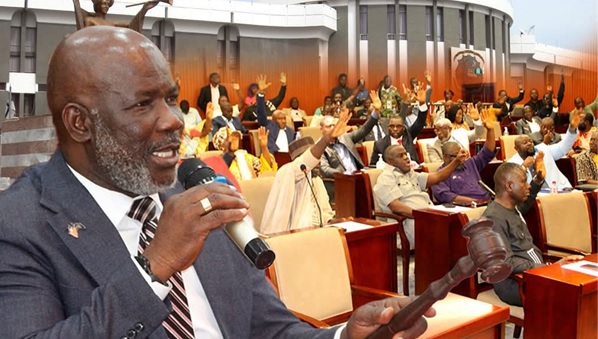
Immediately after the report was read, the House chamber erupted into intense debate. Lawmakers engaged in passionate exchanges over the timing, cost, and rationale behind expanding the Legislature at a time when the country is struggling with economic stagnation, governance concerns, and increasing public dissatisfaction with elected officials.
Representative Foday Fahnbulleh offered the motion that eventually passed, urging his colleagues to endorse the committee’s findings. He also called on the Speaker to establish a specialized committee that would work hand-in-hand with the National Elections Commission and the Liberia Institute of Statistics and Geo-Information Services. This body, he argued, would help ensure that the complex reapportionment process is grounded in accurate data and aligned with legal requirements.
Proponents of the expansion insisted that population growth and migration patterns have long outpaced the current number of constituencies, particularly in heavily populated areas such as Montserrado. According to them, the decision reflects constitutional obligations rather than political maneuvering, and failure to act would compromise the fairness of Liberia’s next major elections.
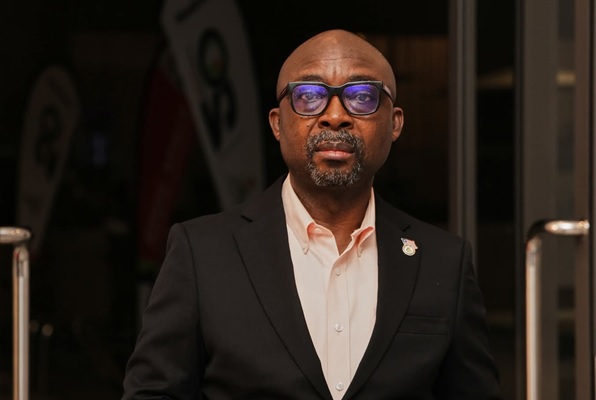
But the announcement has been met with fierce criticism from civil society actors and diaspora-based advocates who view the expansion as self-serving and wasteful. Among the loudest voices is Anderson D. Miamen, Executive Director of the Center for Transparency and Accountability in Liberia, who posted a strongly worded rejection of the move on his Facebook page. In his view, Liberia is in no need of additional lawmakers but instead requires increased investment in anti-corruption agencies, youth empowerment initiatives, and programs that deliver tangible national benefits.
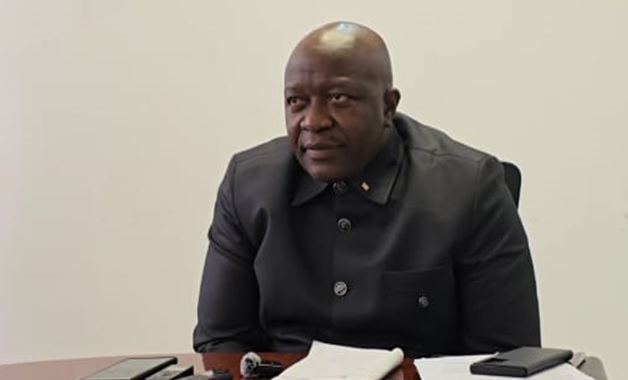
Equally forceful was the reaction from exiled activist Martin Kollie, who took to Facebook to challenge lawmakers’ justification for enlarging the Legislature. Kollie questioned what measurable impact the current 103 lawmakers have provided and argued that reducing legislative salaries and benefits to no more than US$5,000 would be far more responsible than creating more seats. He wrote that Liberia needs “14 factories, not 14 seats,” a statement that has since gained significant traction online.
Their criticisms reflect growing frustration among ordinary Liberians who feel increasingly disconnected from their representatives. Many believe the decision will worsen the financial burden on the national budget, which is already strained amid rising demands for social services, public sector reforms, and economic stabilization. Observers warn that the expansion could further deepen distrust in a system many already view as bloated and ineffective.
Despite mounting public pressure, supporters of the decision argue that Liberia must act in line with constitutional dictates and prepare responsibly for the 2029 elections. They maintain that equal representation is a democratic necessity, not a political luxury. According to them, the expansion aims to strengthen national cohesion by ensuring that each voter is fairly represented in the Legislature.
As the legislative process now advances toward the implementation stage, coordination between NEC, LISGIS, and the newly proposed committee will be critical. Yet the broader public debate reveals far deeper cracks in Liberia’s political landscape, highlighting questions about governance priorities, resource allocation, and the widening divide between elected officials and the citizens they serve. Whether the move will ultimately strengthen Liberia’s democracy or intensify existing tensions remains to be seen as the nation moves closer to a defining electoral cycle in 2029.