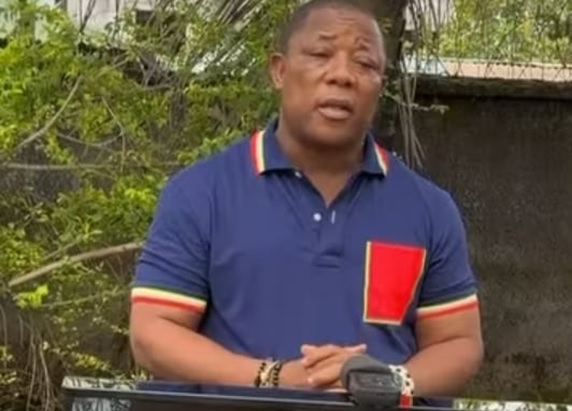
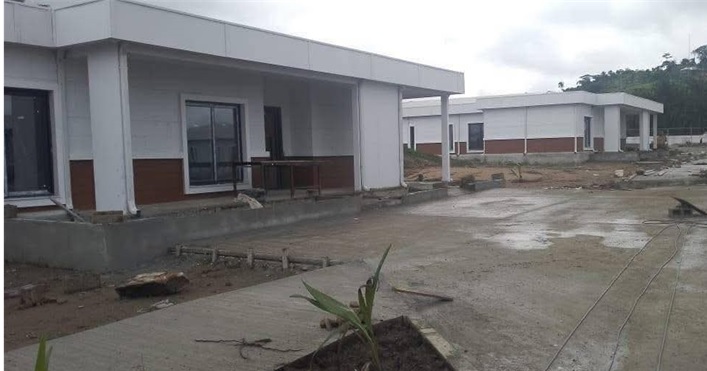
MONROVIA – The Government of Liberia, through Deputy Information Minister Daniel O. Sando, has broken its silence over the growing controversy surrounding the multi-million-dollar construction project in Foya District, Lofa County, insisting the initiative is a national and regional peace asset and not a private presidential residence. The project, officially named the Mano River Union Center for Regional Peace and Development, has drawn intense public scrutiny amid claims of secrecy, legality concerns, and funding transparency.
In a statement issued on Tuesday, December 16, 2025, Sando said the administration of President Joseph Nyuma Boakai said the facility is a Government of Liberia initiative designed to host sub-regional, regional, and global high-level meetings focused on mediation, conflict resolution, and economic integration. The government rejected assertions circulating in parts of the media and political space that the structure is a private “presidential villa.”
According to Sando, the project includes a 500-seat conference hall and nine secure accommodation units intended for visiting dignitaries. It sits on approximately seven acres of land in Foya and is described as a strategic infrastructure investment aimed at strengthening Liberia’s diplomatic and peace-building capacity within the Mano River Union (MRU) region and beyond.
The government justified the project by pointing to Liberia’s historic role as the oldest independent nation in the Mano River Basin and its growing responsibilities on the regional and global stage. Officials cited Liberia’s current and upcoming engagements in international peace and security forums, including the United Nations Security Council, as reasons the country must be adequately prepared to host sensitive diplomatic engagements.
Foya District was selected, Sando said, because of its unique geographic position at the convergence of Liberia, Sierra Leone, and Guinea, the three founding members of the MRU. The administration argued that the area’s relative distance from congested urban centers makes it suitable for high-level security discussions, noting that local communities in Foya have long engaged in cross-border peace efforts through platforms such as the Makona River Organization.
Addressing concerns about secrecy, the government maintained that confidentiality surrounding the project was driven strictly by security considerations. It argued that publicly disclosing construction layouts and security designs of a facility meant to host heads of state and senior officials would expose the country to security risks. Officials pointed to unauthorized drone footage that circulated online as evidence of the dangers associated with such disclosures.
On financing, the government stated that the project is funded through a combination of national, regional, global, and private contributions, with the total investment estimated at approximately US$6.1 million. The administration disclosed that President Boakai, along with senior government and security officials, is expected to visit the site in December as part of inspections of national development projects. A regional launch is planned for 2026 following full completion.
Despite the government’s explanation, opposition voices remain unconvinced. Wantoe Teah Wantoe, a political commentator and member of the opposition Congress for Democratic Change (CDC), issued a strongly worded counter-argument, accusing the administration of deepening public distrust through what he described as contradictory and legally flawed explanations.
Wantoe argued that under Articles 34(d) and (f) of the 1986 Constitution, only the Legislature has the authority to establish public institutions and approve public spending. He maintained that there is no Act of the Legislature, resolution, or ratified policy creating a Mano River Union center in Foya, contending that an executive announcement alone cannot lawfully establish such an institution.
He further challenged the project’s financial legitimacy, citing provisions of the Public Financial Management Act that require all public projects to be appropriated through the national budget and all funding sources, including donations and grants, to be disclosed and audited. According to Wantoe, no budget line, donor agreements, procurement records, or audit mechanisms have been made public.
Wantoe also rejected the claim that the project is an MRU initiative, arguing that the Mano River Union is governed by treaty and collective decision-making among member states. He insisted that any MRU project would require formal resolutions, shared financing, and institutional governance, none of which, he said, have been presented. He warned that deploying state security to guard a project lacking clear legal and financial authorization raises serious constitutional concerns.
As public debate intensifies, the Foya project has become a flashpoint in broader discussions about transparency, executive authority, and the rule of law under the Boakai administration. While the government portrays the initiative as a landmark investment in regional peace leadership, critics insist that without legislative approval, budgetary clarity, and procurement transparency, the controversy surrounding the project is far from over.