By Dr. Josephus M. Gray
About thirty years ago, my father known for his words of wisdom and life, and knowledge about the societal ills and human behaviors invited me one Saturday morning to accompany him around the Bishop Fergusson locality where boys and girls went for woods. The area is about eight –ten miles away from Harper City. We sit under a palm tree for a conversation as father and son, especially for his usual impactful thoughts about life and good behaviors. He asked that to look in the sky and tell him the color of the sky. I did look and replied him: “The sky is blue”, he asked me to look for the second time and again I looked and said “the sky is white” and for the third time, he asked me to look and I said sky is dark. In appreciation, he smile as usual and said to me that the color of the sky is not determined by the number of times one looks at the sky but one’s ability to make sound decision that produces positive and impactful outcomes for the greater good for humanity. In summary, he said the sky is like a leadership that people see in different colors but believe that leadership is about bringing change in people’s lives by finding solutions to society’s challenges.
He admonished me to always reflect positively and soberly when an opportunity is given to me to lead people or institutions; and be of help to others and institutions. One thing I learned based on my father’s advice was always prioritizing the institution first and remaining silent without necessarily paying attention to false innuendos reflecting positively. He reminded that great leaders do not merely leave behind successes, but also legacies that time can never erase. Interestingly, I got to know that today’s failure is an opportunity to learn to do better tomorrow; while at the same time I have been guided by empathy and compassion, embracing the mindset that kindness and empathy are great values for effective leadership.
Since then, I have been filled with a sense of pride and always want to accomplish through team work and support of others. This January 2026 makes it precisely six years in my tenure as the second longest serving dean of the Amos C. Sawyer College of Social Sciences and Humanities, formerly Liberia College established 1862 as Monrovia College and later changed to liberal Arts College, Liberia College and now Amos C. Sawyer College. Indeed, I’m proud to be part of this legacy and a transformative history of milestones. Therefore, I deem it very appropriate as Dean of this great and historical College to profoundly reflect on a career defined by fostering a supportive academic environment, navigating complex challenges, and driving institutional growth and a trajectory which focus on strategic decision-making, administrative planning and policies alignment, creativities and innovations guided by self-discipline.
It’s exactly six (6) years since January 2020 when I was given the mantle of leadership through official appointment to serve as Dean of the “mother College”, Liberia College now Amos C. Sawyer College of Social Sciences and Humanities, University of Liberia. As I look back on my tenure and time as Dean of such a prestigious and great institution, which is considered as the foundation of the University of Liberia and pioneer of tertiary education in Liberia, it is with heartfelt gratitude that I salute everyone for the support and cooperation. As I reflect on my leadership as Dean of the ACS College, it has become clear that tangible accomplishment is measured not only by tasks accomplished, but by the long-lasting impression on learners, faculty members, staff and the institution as a whole.
While I continue to serve diligently in my current capacity with new zeal, I feel an overwhelming sense of pride and gratitude for all we have achieved together over the past six years. It has been a huge privilege to work along with passionate and brilliant faculty members, staff and students. I’m more pleased for such a support received from university administration especially the two immediate former Presidents: Prof. Dr. Julius Jolocon Sarwlo Nelson and Prof. Dr. Amb. Al Hassan Conteh and the current President Prof. Dr. Layli Maparyan. I also recognize Prof. Dr. Weeks for the privilege given me to deliver a research paper on behalf of the University of Liberia during the visit of a high-powered delegation from Nigeria. It was Dr. Weeks’ leadership I was hired as Assistant Professor, while I earlier served as an adjunct instructor during the administration of Prof. Dr. Emmet Dennis, now late. I’m proud that our efforts have not only made the ACS College one of the best at the University of Liberia and first in the Republic of Liberia.
I remain hopeful about the college’s future – and it’s specifically because of everyone. Congratulations to our dedicated student leaderships; both the ACS College Student Association headed by Barnaba K. Tuopay, Sr. of the Department of Political Science and ACS College 105th Graduating Class leadership headed by Eddie Yanzea of the Social Work Unit, with special thanks to student Mohammed Koroma of the Department of Demography for his leadership role in the adoption of the Association’s constitution and leadership that give birth to the College’s student body. This milestone which reflects our collective hard work has been tough, but with collective support from our students, we achieved this legacy which will continue to transform our academic environment for generations to come. Furthermore, we’ve significantly advanced the ACS College established mission through impactful collaboration and partnerships with other sisterly colleges and institutions.
In order to excel in today’s competitive and rapidly changing world, specialized knowledge and practical skills are essential for those trusted with leadership to lead others and institutions. As such, the responsibilities of a Dean places huge demands and challenges on one’s shoulders to perform.
My journey has been a period of problem-solving, prioritizing the growth of staff and faculty and students potentials, not personal accolades. I am filled with a sense of pride and accomplishment. All of these six years of invaluable services haven’t been rosy; these years have certainly seen their share of tribulations and persistent attacks, but on the other hand, the six years of an assiduous service were also marked by triumphs coupled with tangible achievements resulting to the extraordinary growth of our great college. Every success and progress can be attributed to team work and support of those who believed in us, stood by us along the difficult journey. Their good spirits of unwavering support and resilience have given me hope, beyond that helped to deeply influence my strength to remain focused to lead the institution in a positive direction of academic excellence and enabling community where learners gain their potentials.
Experience being the best teacher, the knowledge gained over the past six years has given me a sense of good direction and readiness to work harder to conduct the affairs of the College with vision that profoundly shape the institution positivity at all levels such as fostering an academic environment where research thrives, students are nurtured to attain their fullest potential and knowledge is unlocked. The six years of remarkable and dedicated service will leave an indomitable legacy that generation will reference years to come.
A primary achievement was navigating through challenging periods (such as pandemic restrictions or financial constraints) by fostering a vibrant, energized community. Yet, all these years, I focused on creating safe academic community and maintaining academic excellence and quality learning and teaching at the College that allowed for innovation and creativity even when external circumstances were difficult. As part of our vision for academic excellence and research, we introduced a compulsory undergraduate thesis defense and essay exams as new method of students’ evaluation across the college. One of the major tasks was the situation where some departments were closed due to the unwillingness of some heads of programs to hire either adjunct or full-time faculty members. Rather than just preserving the status quo, I was challenged by the former President, Prof. Dr. Nelson to break the status quo and open-up these departments by hiring more qualified and competent faculty members and recommend faculty and staff for full-time employment. Another daunting task was the lack of oversees advanced studies opportunities for instructional staff and support staff.
Therefore, the focus was on the tangible impacts to empower our faculty members, recruit more qualified faculty members, seek full-time status for the huge part-time faculty members and volunteer staffs. Another area of focus was tangible impacts, such as securing laptops and printers for the various departments as well as faculty lounge and research annex as and reshaping the office of the Dean and the college as a whole for a new level of appreciated trajectory. Since becoming Dean in January 2020, the College has been led through significant and impactful initiatives. Among these is a thriving faculty development program which enabled over 40 instructional staff and support staff to earn UL sponsorship to pursue advanced studies abroad in search of a master and doctorate education.
Such an innovative approach also led to the hiring of two female chairpersons to head the Departments of English and Language Studies and French Studies, and the appointment of a female to serve as Associate Dean of the college. Additionally, this approach has helped to increase the number of female faculty member from 16 when we took over in 2020 to 54 currently. The progress of female in the college goes beyond instructional staff but extends to highest number of full time faculty members from 54 in 2020 to 136 now; and from 12 full- time staff in 2020 to 38 full-time current support staff. Throughout the six year tenure, our leadership has welcomed and hired 15 Ph.D. holders as professors, 185 master’s degree holders. Under our administration, the ACS College, once Liberia College has employed the highest number of persons (89) as full-time employees in the college’s history.
Furthermore, tangibles include the creation of new academic departments, programs, revision of the college’s curricula and establishment of the College Student Association, first of its kind in the institution’s 163- year history. The Dean has initiated a new initiative: “students-staff face-to-face session” with the Dean, and regularly the dean holds interactive meetings with the chairpersons and faculty members to update them about the college’s activities and policies. The Dean maintained an “open door policy” providing access to faculty, staff and chairpersons to walk into his office without appointment, except in an extreme case where the Dean is unavailable due to administrative meetings.
Under our administration’s guidance, the ACS College introduced the teaching of the Liberian Constitution at the University of Liberia and has achieved record highs in female graduates and enrollment. During the last four graduation convocations, from 101st class to the 104th class, the convocation speakers have been females while the first outstanding thesis students to be awarded graduate scholarship have been female graduates. Currently, a diligent female English instructor is pursuing her Ph.D. studies in English and Linguistic at Sharda University in Greater Norda, India while three others self-sponsored instructors are pursuing Ph.D. studies in Sierra Leone and three chairpersons, two chairs and one acting chairperson are respectively pursuing Ph.D. studies in the Netherlands and India.
As the College strive to be counted among other tertiary institutions on the continent, it has maintained a longstanding tradition of producing graduates with distinctions and academic honors for every graduation convocation at the nation’s flagship university. Besides, it introduced essay exams for final exams as the new method of students’ evaluation, thus removing the outdated multiple choice examinations, while prospective graduates are required to present and defend thesis in front of an astute thesis committee.
Another amazing success of our leadership is the ability to champion the interests of adjunct faculty members for a change of status to full-time faculty, thus reducing the huge number of part-time faculty from over 120 plus in 2020 to below 40 currently; majority of their statuses have been changed to full-time faculty. It is interesting to note that some of those who got promoted served between 10-25 years as part-time faculty. Currently, the College has no volunteer staff, all those who were serving in said role are fully employed, special thanks to Dr. Nelson and Maparyan’s wise decision-making.
It is very important to note that during all these years of our leadership, the ACS College with the support of the academic team, the College implemented the following changes: Departments’ curricula and revision and introduced new programs including the Departments of Chinese Language and Culture and Fine and Performing Arts, and the Criminology program and has formulated the curriculum for the establishment of its Psychology program. Additionally, the College for the first time has revised the following departments’ curricula: Departments of French Studies; Sociology and Anthropology; Political Science, Geography, and the Department of Communication and Media Studies.
Based on students’ requests, the College was able to introduce the 1986 Liberian Constitution as a mandatory course in the Department of Political Science. Three new tracks-Liberian Government and Politics, International Relations and Comparative Politics-were added to the major in Political Science. The Mass Communication, Arts and Crafts and Social Science programs were restructured and renamed: Departments of Communication and Media Studies, Fine and Performing Arts and Liberian Studies to meet student needs and interests and better prepare them in the fields. The new major tracks reflect our commitment to preparing learners to thrive as knowledgeable leaders in their respective areas of studies. These initiatives were spearheaded by each department committee that deep-dived into the revisions and redesigning departmental core curriculum which were approved by the ACC and Faculty Senate.
Interestingly, students will for the first time in the university pursue studies in Psychology in three-track areas next semester. A career in psychology is becoming increasingly popular, driven by advancements in mental health awareness. Also, for the first time since their establishments, the Departments of French Studies, Geography and Mass Communication now Department of Communication and Media Studies curricula were revised. The Department of Sociology and Anthropology curriculum was revised with the addition of the Criminology program to the department. Besides the degree granting programs, the ACS College under my leadership added new diploma and certificate programs. These changes were made to better prepare students for the future and to reflect current trends of workforce, providing students with new dynamic and unique academic programs that align with today’s evolving career landscape across the globe.
My core goal is to leave the Amos C. Sawyer College stronger and more respected than I found it when I took over the Deanship in 2020, particularly giving faculty and staff the opportunity to pursue advance studies overseas, establishing more programs, hiring more qualified, competent, talented faculty members and administrative staff and establishing collaboration and partnerships that will continue to thrive beyond my tenure.
I realize that my success as Dean is entirely dependent on the team, as such, my legacy is defined by the historic advices of my father, the late Kru Governor Hon. Abraham K. Gray on how to empower people to boost increased efficiency rather than micromanaging them. As a member of this great college and university, I wholeheartedly want to thank you for treating our leadership with dignity and respect. Remember, together as one family we got the job done, let us keep making history and set legacy for generation to come.
Highlights of Dr. Gray’s achievements
In order to excel in today’s competitive and rapidly changing world, specialized knowledge and practical skills are essential for those trusted with leadership to lead others and institutions. As such, the responsibilities of a Dean places huge demands and challenges on one’s shoulders to perform. Dr. Josephus M. Gray’s journey has been a period of problem-solving, prioritizing the growth of staff, faculty development and students potentials, and not personal accolades. The six years of Dr. Gray’s invaluable services haven’t been rosy; but on the other hand, his tenure is also marked by triumphs coupled with tangible achievements resulting to the extraordinary growth of the college as a whole. Experience being the best teacher, the knowledge Dr. Gray gained over the years has profoundly shape the institution positivity at all levels such as fostering an academic environment where research thrives, students are nurtured to attain their fullest potential and knowledge is unlocked.
One of Dr. Gray primary legacies was navigating through challenging periods (such as pandemic restrictions or financial constraints) by fostering a vibrant, energized academic environment with focus on creating safe academic community and maintaining academic excellence and quality learning and teaching at the College. Another area of Dr. Gray’s focus was providing oversea advanced study opportunities for instructional and support staff through institutional support, securing laptops and printers for the various departments as well as faculty members including the establishment of the Thelma E. Duncan Sawyer Faculty Lounge and the Faculty Research Annex in Fendall. Under his faculty development program, over 40 instructional staff and support staff earned UL sponsorship to pursue masters and doctoral studies abroad, while innovative approach also led to the unique establishment of collaboration and partnerships with sisterly colleges and academic institutions in Asia, Africa, United States of America and Europe, while the College new trajectory include engagement with high level of diplomatic engagements, participations in international educational conference, interactive sessions with students, faculty and staff, student’s debate and the hiring of female chairpersons to head the Departments of English and Language Studies and French Studies, and the appointment of a female to serve as Associate Dean of the college.
Additionally, this approach has helped to increase the number of female faculty member from 16 when he took over in 2020 to 54 currently. The progress of female in the College under his leadership goes beyond instructional staff but extends to highest number of full time faculty members from 51 in 2020 to about 140 now; and from 12 full- time staff in 2020 to 40 plus full-time support staff currently. Throughout his ongoing tenure, the College hired 15 Ph.D holders as Assistant, Associate and full Professors, and 185 faculty with a master’s degree. the ACS College, once Liberia College under Dr. Gray’s leadership has employed the highest number of persons about 90 full-time faculty members in the college’s history. Additionally, other tangibles include the creation of new academic departments, programs, revision of the college’s curricula and establishment of the College Student Association, first of its kind in the institution’s 163- year history and the introduction of standardized undergraduate thesis and essays exams as a new method to evaluate students’ knowledge on issues and communication skills and the the introduction of a Chinese language degree program, establishing Fine and Performing program, Criminology programs, revision of several programs including French Studies, Sociology, Anthropology, Political Science, Communication and Media Studies and Geography; and introduction of the 1986 Constitution as a course and Psychology proposed program.
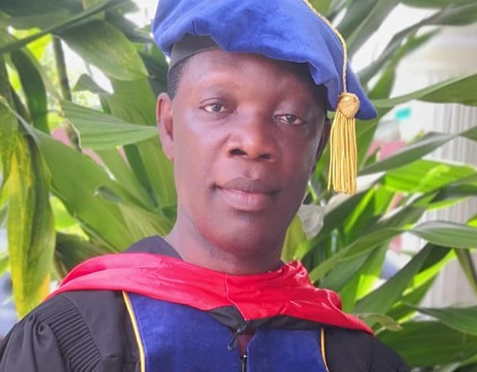
Dr. Gray who hailed from the village of Kayken, Barclayville, Grand Kru County was born in Harper City, Maryland County where he obtained his elementary and secondary education. He grow up in a Christian home where his parents taught him and siblings the true value of life. He earned his BA and MA Ph.D. from Liberia and Ph.D from France, respectively. Dr. Gray is admired for his peopled centered and results orientation, and extensive publications including his latest books: “Effect of Diplomacy: Liberia-U.S.-China’s Triangular Relations.” and published over 300 peer-reviewed articles.. He has served in various leadership roles, including Acting President of Grand Kru Technical College, Ambassador-at-Large, Sharda University in Greater NORD, India, Visiting Professor and external examiner of Ph.D student’s dissertation, Sharda University, India. He further served as Vice Chair, Grand Kru Technical College Board of Trustees; Member, Board of Directors, Amos C. Sawyer Educational Foundation and Council member, International Confucian Association, Beijing, China, and Member of the Africa-China Think Tanks Forum, Beijing, China.
At the public sector level, Dr. Gray has held prestigious and dedicated positions including serving as Senior Policy Advisor to the Minister of Foreign Affairs of Liberia, Assistant Foreign Minister for Public Affairs and Diplomacy; Political Counselor, Embassy of Liberia in Paris, France, and Minister Counsellor and Charge D’ Affairs, Liberia Permanent Mission to the Swiss Federation and the United Nations in Geneva and other International Organizations. At organization level, Prof. Gray holds membership in reputable professional journals such as: International Journal of Research and Innovation in Social Sciences (IJROSS), International Research Journal of Public and Environmental Health and Academia.edu, California St, Suite 400, San Francisco, USA. He also holds dozen of diplomas and certificates in foreign policy studies, international relations, diplomacy, print journalism, development communication, research methodology, and Digital Communication from Paris, France; Genera, Switzerland; Beijing, China; Washington, D.C., USA; Cape Town, South Africa; Rabat, Morocco; Accra, Ghana; Dakar, Senegal And Monrovia, Liberia.
My congratulations to all.