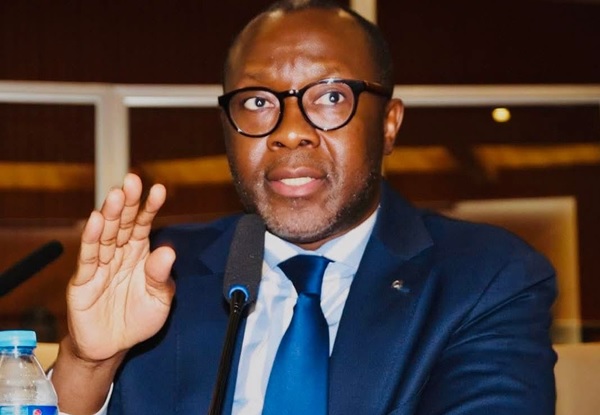

MONROVIA – Police Inspector General (IG) Gregory Coleman on Monday, January 12, 2025, addressed mounting public scrutiny of law-enforcement actions in Liberia, emphasizing that police decisions regarding arrests are grounded in law, investigative standards, and constitutional principles rather than political considerations.
IG Coleman opened his statement by acknowledging the legitimacy of public commentary in a democratic society, but he stressed that such commentary must accurately reflect legal processes and investigative protocols. “Public scrutiny of law-enforcement actions is both legitimate and healthy in a democracy. However, it is equally important that public commentary accurately reflects the law, investigative standards, and the constitutional boundaries within which the police operate,” IG Coleman said.
He elaborated on the legal thresholds for arrest in Liberia, clarifying that DNA evidence is not a prerequisite. “It is correct that Liberian criminal law does not require DNA evidence as a prerequisite for arrest. The standard is reasonable suspicion or probable cause,” Coleman stated. He noted that these thresholds are case-specific, determined by factors such as the timeliness of reporting, coherence of victim statements, witness corroboration, medical or physical findings, and the immediate safeguarding needs of victims.
According to IG Coleman, different outcomes at the arrest stage do not, in themselves, indicate inconsistency or arbitrariness. “What constitutes reasonable suspicion may differ significantly between cases,” he added, underlining that investigative discretion is guided by evidence rather than public perception or pressure.
The IG also addressed misconceptions surrounding equality before the law. He explained that constitutional guarantees of equality do not require identical outcomes in all cases. “Article 11(c) of the Constitution guarantees equality before the law, but equality does not require identical procedural outcomes in dissimilar factual circumstances,” Coleman said. He emphasized that the Constitution protects against discrimination, not lawful investigative discretion exercised based on evidence, risk assessment, and prosecutorial guidance.
IG Coleman further clarified the legal significance of arrests, stressing that arrest does not equate to guilt. “The arrest and charging of Peter Bonor Jallah, Jr. was based on the totality of information available to investigators at that time, assessed against legal thresholds and safeguarding considerations,” he explained. He added that the absence of arrest in other cases does not constitute exoneration or dismissal of victims’ rights.
The Inspector General underscored the need for precision in public language regarding suspects. “Public discourse must avoid conflating insufficient evidence at a given stage with permanent legal clearance,” he said. Coleman reminded that investigations evolve and evidence can emerge, requiring decisions to be revisited when legally justified.
Addressing DNA evidence, IG Coleman stated that while it is an important investigative tool, it is not absolute. He explained that the availability of DNA evidence depends on timing, consent, and forensic viability. Its absence does not invalidate other lawful forms of evidence, and its presence does not override due-process safeguards. “The law requires reasonableness, not rigidity,” he emphasized.
The Inspector General warned against framing lawful police discretion as selective policing without demonstrating unlawful motive or discriminatory intent. He explained that such narratives risk undermining ongoing investigations, deterring victims from reporting, pressuring investigators to act outside legal bounds, and politicizing the criminal justice process.
IG Coleman outlined the Liberia National Police’s commitment to professional conduct, stating, “The Liberia National Police remains committed to equal application of the law, victim protection, professional, evidence-based investigations, respect for constitutional rights, and transparency within legal limits.”
He further stressed that justice is served through lawful processes, evidentiary rigor, and institutional restraint rather than shortcuts, selective outrage, or public verdicts. “Justice is not served by shortcuts, selective outrage, or public verdicts. It is served by lawful process, evidentiary rigor, and institutional restraint, even when outcomes are uncomfortable or contested,” Coleman said.
The IG noted that lawful and independent action by police officers, even in cases drawing public attention or criticism, strengthens the rule of law. “The rule of law is strengthened not when police act identically in all cases, but when they act lawfully, independently, and without improper influence in every case,” he concluded.
IG Coleman’s statement comes amid heightened public debate over the handling of high-profile cases, including allegations of sexual offenses involving prominent individuals. His address is viewed as an attempt to clarify investigative procedures, protect institutional integrity, and reinforce public confidence in law enforcement operations.
The IG’s comments also reaffirm the Liberia National Police’s position that investigative discretion, when exercised within legal bounds, is neither arbitrary nor selective. Each case is evaluated on its own merits, evidentiary support, and potential risk factors for victims, ensuring that the law is applied professionally and fairly.
With the public closely monitoring police actions, IG Coleman’s detailed explanation seeks to balance transparency with procedural integrity, reinforcing the message that Liberia’s criminal justice system operates under the rule of law, not under the sway of popular opinion or political pressure.