
MONROVIA – The Congress for Democratic Change (CDC) has issued an indictment of the Boakai–Koung administration, warning that Liberia is facing a profound moral and governance crisis marked by normalized sexual violence, collapsing accountability, and what it describes as bogus criminal charges against leaders of the December 17 peaceful protest.
In a statement released Tuesday, January 13, 2026, the CDC said Liberia is no longer merely struggling with governance challenges but is “at the edge of a humanitarian and ethical abyss,” where women, children, and ordinary citizens are increasingly exposed to violence while those connected to power enjoy protection, delay, and silence.
The opposition party condemned what it called the “unequivocal” targeting of leaders of the December 17 protest, arguing that the charges represent a return to intimidation tactics against perceived political opponents. According to the CDC, such actions undermine democratic gains and threaten the right of citizens to peacefully express dissent.
“At a time when the administration seeks to project moral authority abroad,” the CDC said, “the Liberian state is collapsing inward,” adding that the government has abandoned its most basic responsibility: the protection of human life and dignity.
The statement paints a grim picture of daily life across the country, citing hospitals without medicines, schools without resources, communities without safety, and families without access to justice. The CDC stressed that these are not abstract policy failures but “lived traumas etched into bodies, minds, and graves across the country.”
The party described sexual violence as the most devastating symbol of this collapse, accusing the state of presiding over the normalization of rape, gang rape, and sodomy while accountability remains absent. “This is no longer a statistical problem,” the statement declared. “It is a human tragedy measured in names, ages, and irreversible loss.”
The CDC mourned the death of Little Mitchell of Pitty Town, describing the child as a victim of a society that failed in its duty to protect the innocent. It added that countless other children suffer in silence, their trauma buried under fear, stigma, and institutional indifference.
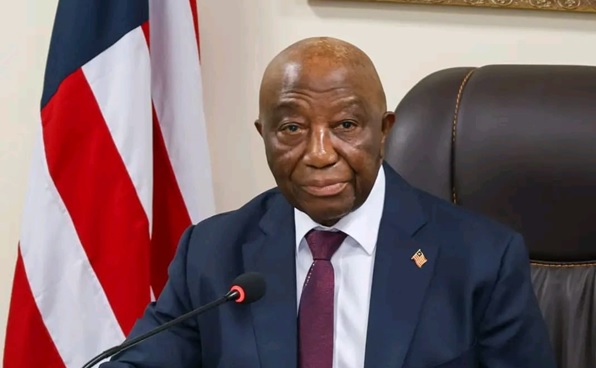
Recalling public expectations following the inauguration of President Joseph Nyuma Boakai in January 2024, the CDC said Liberians anticipated a “RESCUE” agenda that would restore dignity and security. Instead, it argued, the reality has been the widespread violation of children and the erosion of moral restraint within the state.
To underscore its claims, the CDC cited official figures showing that Liberia recorded 3,957 reported cases of rape and gender-based violence in 2024 alone. It further noted that in the first three quarters of 2025, an additional 1,735 rape cases were reported, figures the party said demonstrate a nation “overwhelmed and unprotected.”
The statement went further by naming alleged cases involving individuals linked to state institutions. In 2025, the CDC noted, a sitting Deputy Minister for Youth Development, Bryant McGill, was accused of raping a minor. In the same year, Sando Kromah, a contractor associated with the Ministry of Agriculture, was accused of raping a 15-year-old child.
Most disturbing, according to the CDC, is the case involving Peter Bon Jallah, described as a senior official of the National Security Agency, who has been implicated in the alleged gang sodomy of a 15-year-old boy. The party stressed that these allegations involve people connected to public trust and institutions mandated to protect children.
“What compounds this national trauma is not only the violence itself, but the silence that follows,” the CDC said, pointing to stalled investigations, fading prosecutions, and institutions that “close ranks” around the powerful.
The party warned that the message being sent to Liberian children is devastating: that their pain is negotiable, that power shields perpetrators, and that justice is selective. It argued that a country cannot claim moral standing while children are brutalized and alleged perpetrators remain insulated by proximity to authority.
Linking sexual violence to broader abuses, the CDC said the collapse of accountability extends to state actions against citizens. It cited the killing of Matthew Mulbah by police gunfire and the alleged assault of Musu Kiatamba, a five-month-pregnant woman, by a senior police commander as part of the same pattern of indifference to human life.
Against this domestic backdrop, the CDC sharply criticized the administration’s international posture, particularly Liberia’s recent position at the United Nations on Venezuela. The party said Liberia spoke abroad in the language of sovereignty and dialogue while failing to defend “the sovereignty of its own citizens’ bodies at home.”
The CDC formally distanced the Liberian people from that diplomatic posture, arguing that it does not reflect national priorities or moral obligations. It also referenced serious but unresolved allegations circulating in civic circles that foreign financial influence may have compromised Liberia’s diplomatic judgment, calling for transparent and independent investigations.
While stressing that such claims remain allegations, the CDC said their gravity demands scrutiny by credible national and international anti-corruption mechanisms, warning that even the perception of compromised foreign policy is dangerous for a nation already struggling to protect its citizens.
The party reminded international partners that Liberia’s historic relationships with the United States, the African Union, ECOWAS, the European Union, and others are rooted in shared commitments to democracy, human rights, and the rule of law, and should not become “diplomatic cover for domestic failure.”
Calling for what it termed “moral clarity,” the CDC urged the international community to ensure that any diplomatic or policy consequences target accountable decision-makers rather than an already traumatized population.
“Stability built on the suffering of minors is not stability,” the statement said. “It is moral decay.”
In a stark warning to those in power, the CDC said history will offer no refuge to leaders who preside over the erosion of human dignity while speaking the language of morality abroad, adding that nations are judged by whether they protect the innocent when it matters most.
The CDC concluded by reaffirming its commitment to accountability, human dignity, and the defense of the Liberian people, warning that silence in the face of such crimes amounts to complicity. “Liberia must not be allowed to sink into a future where violence is normalized, children are expendable, and justice is optional,” the statement declared.