
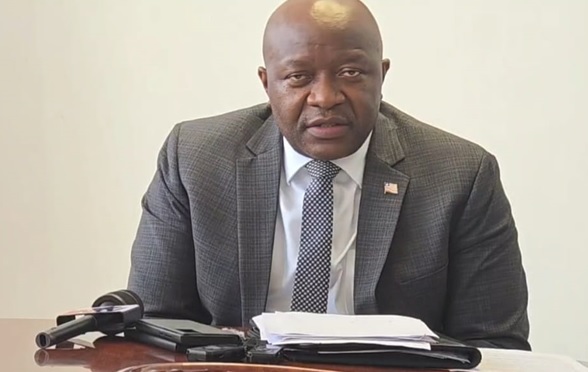
MONROVIA – When Finance and Development Planning Minister Augustine Kpehe Ngafuan asked whether government should “buy physical bread and butter and share it with citizens” before Liberians are convinced that bread-and-butter issues are being addressed, he was not merely being sarcastic. He was exposing a troubling disconnect between economic theory in government circles and the lived reality of ordinary Liberians.
Bread-and-butter issues are not metaphors. They are daily struggles defined by empty kitchens, unpaid rent, school fees in arrears, rising transportation costs, and stagnant incomes. To reduce these realities to a rhetorical joke about creating a “Ministry of Bread and Butter” trivializes the depth of hardship confronting households across the country.
Minister Ngafuan’s statement suggests that criticism of the government’s economic direction is rooted in ignorance or impatience. But the core concern is not whether infrastructure matters; it is whether the current pace, priorities, and outcomes of government spending are meaningfully improving lives now, not in some promised future.
Roads, the minister insists, will eventually translate into food on the table. Yet for many Liberians, roads remain long-term promises while hunger is an immediate crisis. A farmer may reach the market faster, but if fertilizer, tools, transport fares, and taxes continue to rise faster than farmgate prices, the benefit of that road is diluted.
Ngafuan’s repeated framing of critics as simply “doing their job” while government officials “work well” sidesteps accountability. Working well is not measured by press conferences or budget size; it is measured by whether ordinary people feel relief in their daily expenses.
The minister boasts of “the highest domestic revenue in Liberia’s history,” yet offers little explanation of how that revenue has tangibly lowered the cost of living. Revenue growth means little if inflation, unemployment, and underemployment continue to erode household purchasing power.
Submitting larger budgets of US$880 million, then US$1.2 billion, does not automatically translate into economic wellbeing. Bigger budgets without efficient execution, transparent prioritization, and visible outcomes risk becoming symbols of ambition rather than instruments of relief.
Ngafuan’s dismissal of “bread-and-butter” criticism overlooks the reality that many Liberians are not asking for handouts. They are asking for policies that stabilize prices, expand real employment, and protect incomes from relentless erosion.
The claim that Liberia’s economy is stronger today than two years ago may hold in macroeconomic spreadsheets, but macro stability does not pay school fees. Growth narratives mean little to market women whose profits are shrinking or to young graduates who remain unemployed.
Job creation figures cited by the minister raise further questions. Claiming over 70,000 short- and medium-term jobs without a robust, transparent tracking system invites skepticism, not reassurance. Dividing the numbers by counties may make them sound reasonable, but lived experience tells a different story.
Supporting 277 interns at the Ministry of Finance is commendable, but it is not evidence of broad-based job creation. Internships are temporary, limited, and often inaccessible to the vast majority of unemployed youth.
Ngafuan’s heavy emphasis on infrastructure as the primary engine of job creation oversimplifies Liberia’s economic constraints. Infrastructure is necessary, but it is not sufficient in an economy burdened by weak manufacturing, limited credit, and a fragile private sector.
Lowering electricity costs is indeed critical, yet the promise of future access does not address the present reality where small businesses bleed cash daily to fuel generators. Promises of 75 percent electricity access in the medium term do not keep shops open today.
The minister’s argument assumes a linear path from infrastructure to prosperity. Liberia’s history shows that roads and projects alone do not guarantee shared growth, especially when corruption, weak oversight, and poor maintenance undermine long-term benefits.
When Ngafuan points to reduced food prices as a result of road connectivity, many Liberians struggle to reconcile that claim with rising market prices they encounter weekly. Perception matters, and right now perception is shaped by pain, not policy papers.
Criticism, contrary to Ngafuan’s framing, is not about opposition theatrics. It is about demanding that government rhetoric match reality. Citizens are not confused about infrastructure; they are unconvinced by outcomes.
The suggestion that people should patiently wait for long-term gains while enduring present hardship ignores the urgency of survival. Hunger does not wait for medium-term strategies to mature.
Economic recovery cannot be declared from podiums. It must be felt in reduced transport fares, stable food prices, accessible jobs, and improved public services.
By framing bread-and-butter concerns as simplistic or unrealistic, the minister risks alienating the very citizens whose trust the government needs to sustain its reforms.
Liberians are not asking government to distribute bread. They are asking for policies that make bread affordable, incomes reliable, and opportunities real.
Until the government bridges the gap between macroeconomic confidence and microeconomic suffering, no amount of revenue statistics or infrastructure rhetoric will silence criticism.
Bread and butter are not jokes. They are the measure by which this administration’s economic legacy will ultimately be judged.