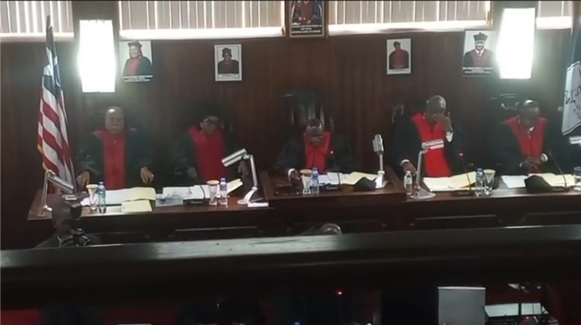
SUPREME COURT, MONROVIA – The controversial legal saga involving Justin Oldpa Yeazehn, widely known as Prophet Key, resumed today, Friday, February 13, 2026, at 11:00 a.m., at the Supreme Court in Monrovia. The Full Bench convened to hear the high-profile contempt case and also addressed other pending matters on its docket, underscoring the judiciary’s commitment to upholding procedural order and the rule of law.
The case against Prophet Key centers on allegations of abusive conduct and public insults directed at the judiciary, particularly Chief Justice Yamie Quiqui Gbeisay. Legal observers say the proceedings are a test of judicial authority and the capacity of the Court to enforce respect for its dignity and institutional integrity.
Lawyers representing Prophet Key appeared before the Supreme Court on Thursday, February 12, 2026, pleading for mercy. They emphasized his remorse and asked the justices to show leniency, portraying his alleged misconduct as non-intentional. Representatives for Chief Justice Gbeisay rejected the plea, arguing that Prophet Key should face appropriate legal consequences for his contemptuous behavior.
Reports from the courtroom indicated that Prophet Key was visibly emotional, reportedly crying and begging the justices not to impose a custodial sentence. He appealed for leniency, signaling acknowledgment of the seriousness of the allegations.
The Supreme Court had formally summoned Prophet Key through a citation issued on February 4, 2026, signed by the Clerk of the Supreme Court, Cllr. Sam Mamulu. The citation commanded Yeazehn to appear before the Full Bench on February 10 at 3:00 p.m. at the Temple of Justice to show cause why he should not be held in contempt of court.
According to the Court, Prophet Key is accused of engaging in “continuous and sustained attacks” on Chief Justice Gbeisay, the Supreme Court, and other Bench members. These actions are alleged to have subjected Liberia’s highest judicial body to public ridicule, exceeding the bounds of legitimate criticism.
Observers noted that statements attributed to Prophet Key circulated widely on social media and in public forums, raising concerns about respect for the judiciary and the independence of legal institutions. Analysts emphasize that unchecked, such behavior could undermine public confidence in Liberia’s justice system.
While recognizing the constitutional right to freedom of expression, the Supreme Court emphasized that this freedom is not absolute. Statements that undermine judicial authority or bring the administration of justice into disrepute may attract legal consequences, including fines or imprisonment.
The Court underscored that sanctions in contempt cases are intended both to punish misconduct and deter future acts that threaten judicial authority. Legal experts note that this framework is essential for reinforcing institutional discipline and public trust.
Following the hearing in the Prophet Key matter, the Full Bench proceeded to address other cases on its docket. Observers described the session as procedurally disciplined, highlighting the judiciary’s effort to manage pending matters efficiently despite the heightened public attention.
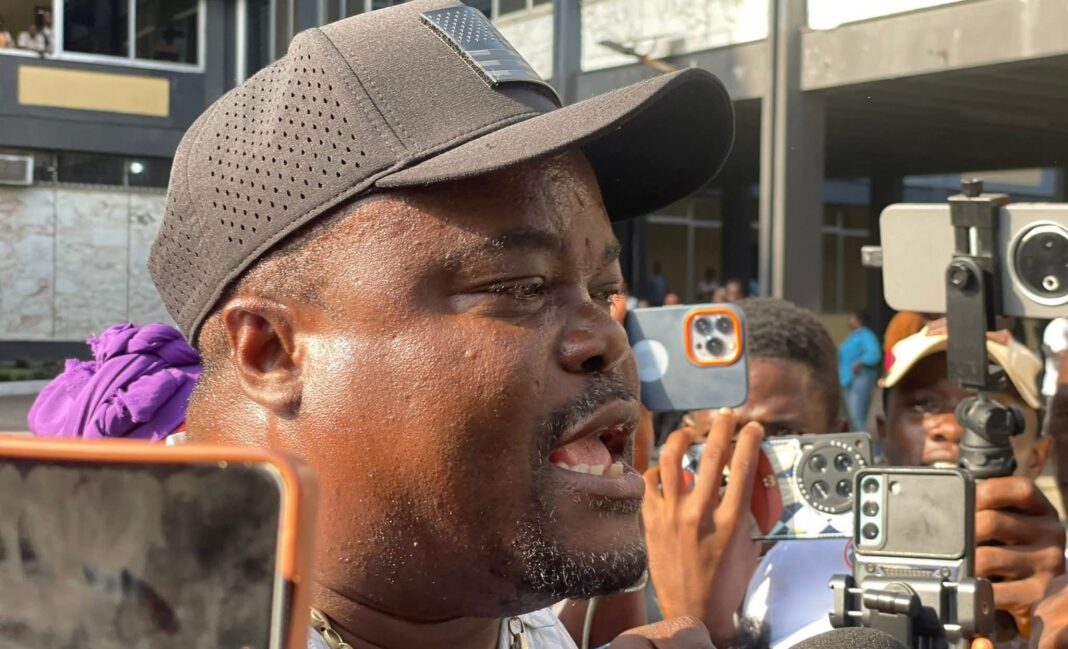
Outside the courtroom, tensions appeared to remain high. Ahead of the proceedings, Prophet Key told journalists in the Supreme Court yard, “The Zoes are threatening me, and if they try me and I go there in the Poro bush, I’ll spray them o.” These remarks referenced traditional authority structures in Nimba County, adding a complex social dimension to the legal case.
Inside the Temple of Justice, the atmosphere remained formal and controlled. Chief Justice Gbeisay and his colleagues presided over the session, demonstrating the Court’s commitment to maintaining order even amid the high-profile controversy.
The contempt proceedings have reignited national debate about courtroom decorum, freedom of expression, and the limits of acceptable behavior toward judicial officers. Many observers say the case highlights the judiciary’s role in safeguarding its authority and protecting institutional integrity.
As of Friday, the Supreme Court had not yet issued a formal ruling in the Prophet Key case. Legal analysts and the public remain attentive, recognizing that the outcome will have implications for judicial authority, freedom of expression, and public confidence in Liberia’s courts.
Friday’s session emphasizes the Supreme Court’s central role in interpreting the law and managing its docket. By addressing both the Prophet Key matter and other pending cases, the Court demonstrated its responsibility to ensure orderly proceedings while maintaining the dignity of Liberia’s highest judicial institution.