
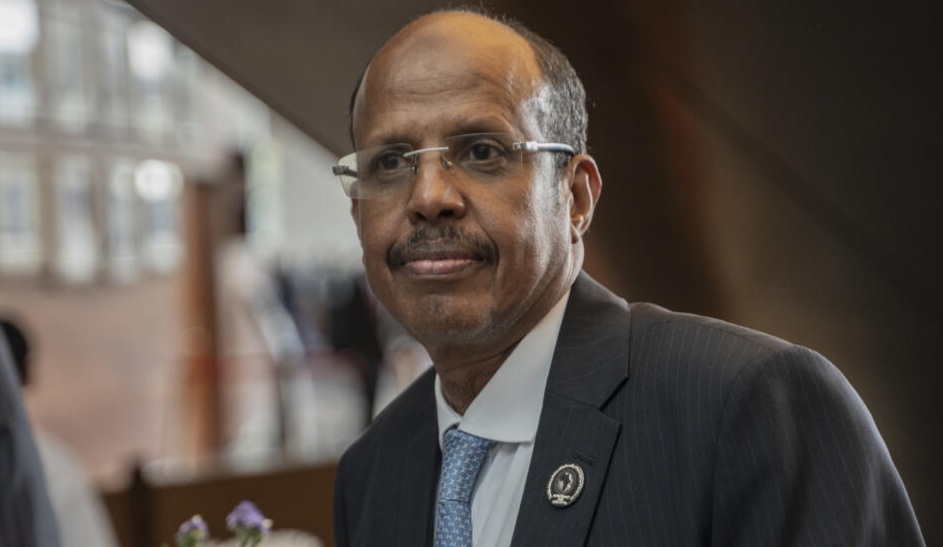
ADDIS ABABA, ETHIOPIA – The African Union Commission has expressed deep concern over the reported military strikes conducted by the United States in coordination with Israeli forces against targets inside the Islamic Republic of Iran. In a press statement issued today, Saturday, February 28, 2026, AU Chairperson H.E. Mahmoud Ali Youssouf described the escalation as a “serious intensification of hostilities in the Middle East” with potential global consequences.
Chairperson Youssouf urged all parties to exercise restraint, calling for “urgent de-escalation and sustained dialogue,” while emphasizing that actions must fully comply with international law and the United Nations Charter. “All actors must act in accordance with international rules to safeguard global peace and security,” he said, highlighting Africa’s vulnerability to the fallout of escalating conflicts.
The AU warned that further military action could destabilize energy markets, disrupt food security, and undermine economic resilience, challenges that are already acute across the African continent. “The implications of this escalation are not confined to the region; Africa is particularly at risk from the economic pressures generated by conflict,” Chairperson Youssouf stressed.
The origins of the US-Iran tension are deeply rooted in historical, geopolitical, and sectarian divides. Since the 1979 Iranian Revolution and the severing of US-Iran diplomatic relations, decades of mistrust have been fueled by proxy conflicts in Iraq, Syria, and Yemen. The Middle East remains a volatile theatre where competing regional ambitions, religious tensions, and global strategic interests converge, leaving any spark capable of igniting broad military confrontations.
Experts say that the current flare-up reflects both long-standing grievances and immediate triggers, including nuclear program disputes, economic sanctions, and contested military activities. Analysts argue that such escalations often gain momentum when diplomatic channels stall, and unilateral military actions replace negotiation. The AU notes that ignoring these root causes risks repeating cycles of violence that destabilize not only the Middle East but the global order.
In response to the recent strikes, Chairperson Youssouf urged diplomatic engagement, pointing to ongoing mediation efforts facilitated by the Sultanate of Oman. He emphasized that negotiations, not force, remain the only viable pathway to sustainable peace. “Sustainable peace can only be achieved through diplomacy, not through force,” he affirmed, reiterating the AU’s commitment to supporting international peace-building mechanisms.
The statement also underscored Africa’s stake in global stability, noting that disruptions in oil supply and rising commodity prices directly affect African economies already grappling with conflict, climate shocks, and food insecurity. “We call on all actors to consider the broader ramifications of their actions, particularly on vulnerable regions,” said the AU Chairperson.
The press release further highlighted the necessity of upholding a rules-based international order, warning that unilateral military interventions could erode trust among nations and set dangerous precedents. The African Union insists that all parties respect diplomatic protocols and the frameworks established under the United Nations Charter.
For the international community, the AU’s intervention is a reminder that regional escalations carry global consequences. African Union officials continue to monitor the situation closely, engaging with global partners to promote dialogue, reduce tensions, and mitigate potential humanitarian crises.
Chairperson Youssouf concluded by reaffirming the AU’s commitment to peace, stability, and international law: “The African Union stands ready to support mediation and diplomatic efforts to prevent further deterioration of the situation in the Middle East, for the sake of global security and the wellbeing of all nations.”