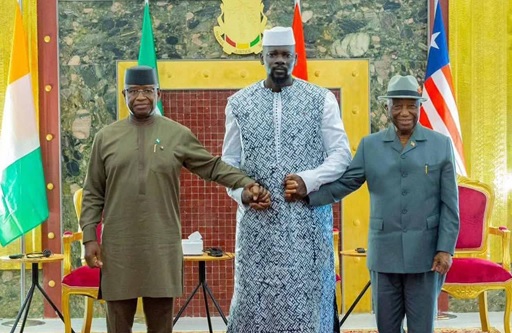
CONAKRY, GUINEA – In a diplomatic move aimed at preventing escalation and restoring regional stability, Joseph Nyuma Boakai, Mamadi Doumbouya, and Julius Maada Bio have concluded high-level consultations with a unified commitment to resolve ongoing border tensions through peaceful dialogue.
The meeting, held Monday, March 16, 2026, in Conakry under the framework of the Mano River Union, brought together the three Heads of State in what officials described as a candid yet constructive atmosphere. The talks ended with the adoption of a joint communiqué prioritizing diplomacy over confrontation.
At the heart of the agreement is a mutual decision to maintain the “status quo ante” on current border positions while negotiations continue. This measure is seen as critical in preventing further incidents while creating space for a sustainable and mutually acceptable resolution. The leaders underscored that preserving peace along their shared borders is essential to protecting longstanding trade routes, cultural ties, and livelihoods of border communities.
The consultations were prompted by recent incidents that have heightened tensions in key border area, raising concerns about potential instability in the sub-region. In response, the three presidents emphasized collective responsibility in safeguarding peace, strengthening security coordination, and reinforcing the principles of good neighborliness.
In their joint resolution, the leaders expressed deep concern over rising global conflicts and their far-reaching economic and humanitarian consequences, particularly for developing nations. They reaffirmed their unwavering respect for sovereignty, territorial integrity, and political independence as the cornerstone of regional cooperation.
Significantly, the three countries committed to resolving all border disputes strictly through peaceful means, in line with United Nations principles, particularly Article 33 of its Charter, which promotes negotiation and mediation as primary tools for conflict resolution.
Beyond diplomacy, the summit also focused on practical security measures. The leaders agreed to intensify joint border patrols, enhance intelligence sharing, and improve coordination between security forces and local authorities. These steps are aimed at tackling growing threats such as terrorism, transnational crime, and trafficking, which often thrive in poorly managed border regions.
Economic cooperation featured prominently in the discussions, with a shared vision to transform border area into zones of opportunity rather than conflict. The presidents pledged to promote cross-border trade, infrastructure development, energy collaboration, and environmental management, while also supporting the free movement of people and goods.
To ensure lasting impact, relevant national agencies have been directed to urgently engage in technical dialogue on border demarcation and conflict prevention. This includes community-level engagement initiatives designed to reduce tensions and build trust among affected populations.
In a major step toward institutional revival, the leaders agreed to convene a summit of the Mano River Union within one month. The goal is to reinvigorate the regional body as a platform for sustained dialogue on peace, security, and development.
The three presidents also signaled their intention to undertake reciprocal working visits, a move expected to deepen diplomatic ties and reinforce a shared commitment to peaceful coexistence.
The outcome of the Conakry consultations is widely seen as a turning point that could ease tensions, restore confidence among border communities, and reignite cross-border economic activities. Following the successful talks, Presidents Boakai and Bio have returned to their respective countries, carrying with them renewed momentum for regional peace and cooperation.