By Socrates Smythe Saywon | Smart News Liberia
MONROVIA – The fragile calm now returning along the Liberia Guinea border tells a powerful story, one of tension narrowly averted, diplomacy urgently embraced, and communities desperate for stability. The recent high-level talks in Conakry, convened under the leadership of Julius Maada Bio as Chairman of the Mano River Union, may have pulled the region back from the brink. But beneath the diplomatic language lies a deeper question: how sustainable is this peace?
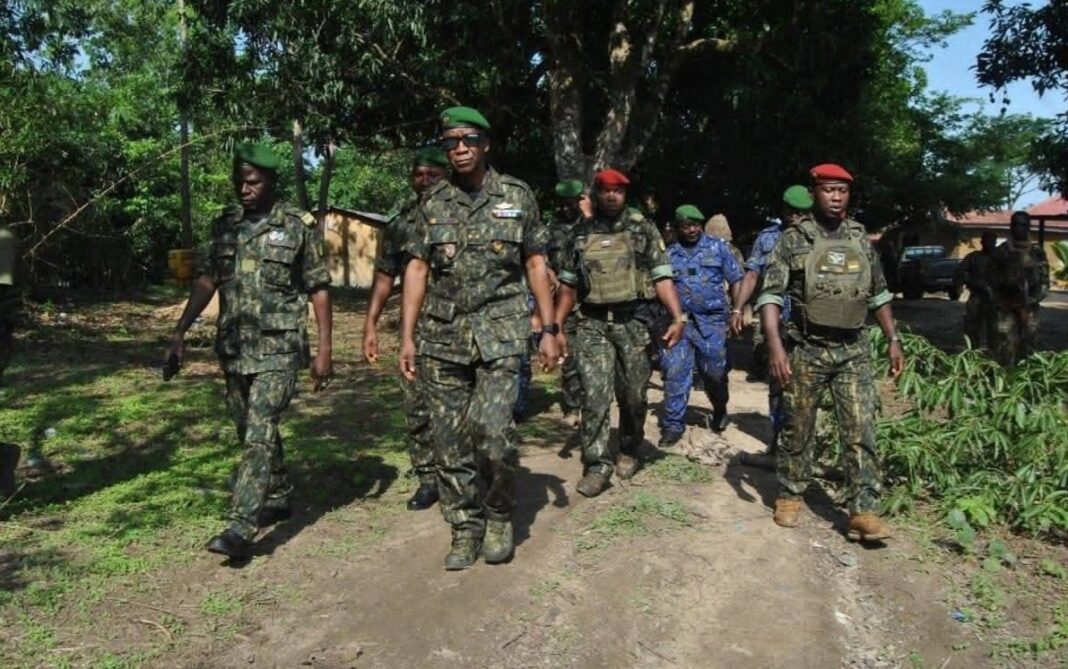
At the center of the crisis stands a familiar but dangerous reality, unclear borders, competing territorial claims, and heightened military alertness. The visit of Guinean Armed Forces Inspector General, Sennah Camara, to frontline areas such as Kissidougou, Guéckédou, and Yenga signals that Guinea is not taking any chances. His message to troops, discipline, vigilance, and readiness, reflects a nation quietly preparing for worst-case scenarios even as leaders preach peace.
For Liberia, particularly in Lofa County, the tension has not been abstract. Communities living along the border have experienced fear, disrupted trade, and uncertainty about their safety. Local farmers, traders, and families whose livelihoods depend on cross-border interaction have watched closely as soldiers replaced traders and suspicion replaced trust. The reopening of markets and roads is therefore not just economic, it is deeply psychological.
The joint communiqué issued after the Conakry summit, attended by Joseph Nyuma Boakai and Mamadi Doumbouya, alongside President Bio, emphasizes dialogue over confrontation. It commits the three nations to maintaining the status quo while negotiations continue. This decision, though prudent, is also a temporary fix, one that postpones rather than resolves the underlying dispute.
What makes this situation particularly delicate is the human dimension. Thousands of Guinean nationals reside in Liberia, particularly in border counties like Lofa and Nimba, engaging in trade, agriculture, and small businesses. Similarly, a significant number of Liberians live and work in Guinea, especially in towns near Guéckédou and Macenta. These populations form the backbone of cross-border commerce and cultural exchange. Any escalation risks not only diplomatic fallout but humanitarian consequences for families whose lives straddle both nations.
Recent reports from Liberian media outlets highlight how quickly tensions disrupted normal life. They describe deserted marketplaces, halted transportation, and growing anxiety among citizens. Yet these same outlets now report a cautious optimism as trade resumes and local interactions slowly return.
Still, peace along the border is not guaranteed by declarations alone. It requires trust, and trust is fragile in a region where history has seen conflict spill across boundaries. The Mano River basin has long been a corridor of both cooperation and conflict, with past civil wars in Liberia and Sierra Leone serving as stark reminders of how quickly instability can spread.
A critical factor in this equation is military capability. Guinea possesses a significantly larger and better-equipped armed force compared to Liberia. With an estimated 45,000 active personnel, Guinea’s military strength far surpasses Liberia’s Armed Forces, which numbers roughly 2,000 to 3,000 troops. Guinea also benefits from heavier equipment and a more robust defense infrastructure. Liberia, on the other hand, has focused on rebuilding a professional but relatively small military force following years of civil conflict.
This imbalance underscores why Liberia’s strategy leans heavily toward diplomacy rather than confrontation. Any military escalation would be uneven and potentially devastating. It also explains why the presence of Guinean troops near contested areas raises concern among Liberian citizens, who perceive a power imbalance that could tilt negotiations.
However, military strength alone does not determine outcomes in modern border disputes. International law, regional diplomacy, and multilateral engagement play equally critical roles. The reference to Article 33 of the United Nations Charter in the joint communiqué signals a commitment to peaceful dispute resolution mechanisms, a move that aligns with global expectations and regional stability goals.
Equally important is the role of local engagement. The directive for community-level dialogue and technical border clarification is perhaps the most practical step forward. Borders in this region are often defined not just by maps but by lived realities, villages, rivers, and farmlands that do not neatly align with colonial-era demarcations. Without local input, any resolution risks being disconnected from the people it affects most.
Encouragingly, the resumption of social and economic activities along the border suggests that ordinary citizens are ready to move forward. Markets are reopening, transportation routes are active again, and the sounds of daily life are returning. These developments reflect a shared desire among Liberians and Guineans to coexist peacefully, regardless of political tensions.
Yet, this moment must not be mistaken for a permanent resolution. It is a window of opportunity, one that requires decisive action, sustained dialogue, and genuine political will. The planned follow-up summit of the Mano River Union within a month will be a critical test of whether leaders can translate commitments into concrete progress.
The stakes are high. A breakdown in talks could reverse recent gains, disrupt regional trade, and reignite tensions that could spill beyond Liberia and Guinea into neighboring Sierra Leone. Conversely, a successful resolution could strengthen regional integration and set a precedent for peaceful conflict resolution across West Africa.
The Liberia–Guinea border situation is more than a territorial dispute, it is a test of leadership, diplomacy, and regional unity. The people along the border have shown resilience and a willingness to coexist. Now, it is up to their leaders to match that spirit with action.
For now, the guns are silent, and the markets are alive again. But whether this fragile peace endures will depend not on words spoken in Conakry, but on the choices made in the days ahead.