By Socrates Smythe Saywon | Smart News Liberia
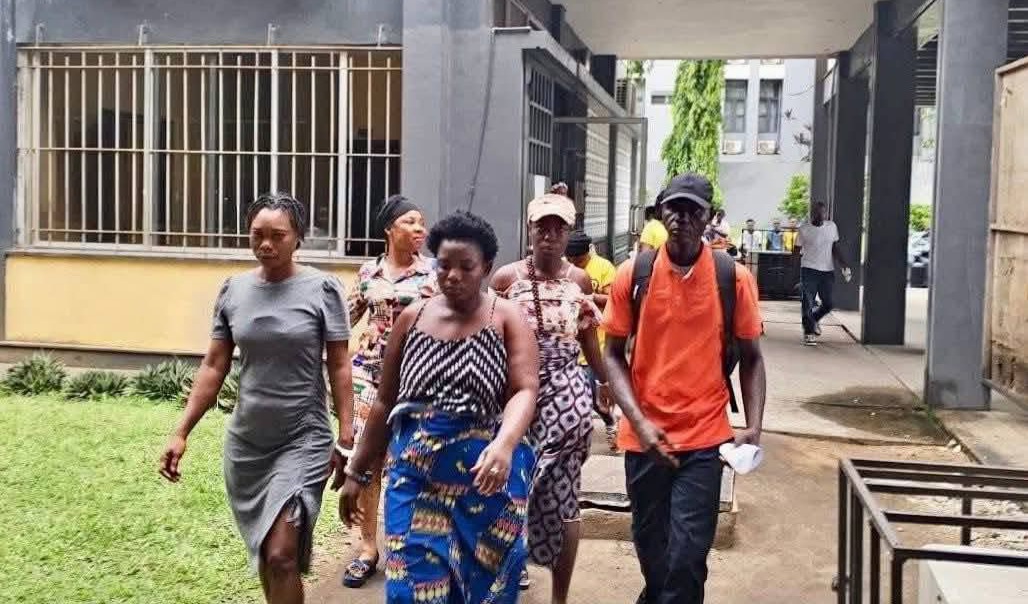
MONROVIA – A ruling from Criminal Court has exposed a disturbing case of child trafficking involving five women accused of recruiting and transporting minors under deceptive circumstances. In a detailed final judgment delivered by Resident Circuit Judge Roosevelt Z Willie, the court laid out how the defendants orchestrated a scheme that placed fourteen children at risk of exploitation across borders.
The case, prosecuted by the Republic of Liberia through the Ministry of Justice, centered on defendants Halimantu Daramy, Grace Sesay, Hawa Kamara, Henrita Beayce, and Famata Doe. According to the court record, the women were indicted by the Grand Jury of Montserrado County on August 22, 2025, on charges of trafficking in persons and criminal conspiracy.
The indictment revealed a troubling pattern. “The Defendants previously recruited and transported fourteen (14) minors through deception to the Republic of Mali where they were rescued and transported back to Liberia,” the court document stated. It further disclosed that the accused received L$50,000 as settlement following that earlier incident.
Yet, the court found that the alleged settlement did not deter the group. Instead, “the Defendants again decided trafficking the said 14 minors from their homes in Liberia enroute to Burkina Faso for the purpose of exploiting them,” the ruling emphasized. Their arrest at the Redlight parking station ultimately halted what authorities described as a repeated and calculated operation.
Testimony from immigration officer Williet Kangar proved central to the prosecution’s case. He told the court that during routine document inspections on April 10, 2025, officers became suspicious after encountering the defendants with fourteen children. “When they were asked about the parents of the children, Halimatu Daramy said she was the leader,” the testimony revealed.
The situation raised further alarm when officers could not determine which child belonged to which adult. According to the court record, “Halimatu Daramy was the one dividing the children to take photo,” a moment that triggered suspicion among immigration officers. The witness recounted a critical observation, questioning how a mother could fail to identify her own child.
The testimony also described the emotional state of the children. Some were reportedly crying uncontrollably while being given juice, adding to the concern that they were not in the care of their rightful guardians. One defendant was said to be visibly afraid, prompting reassurance from Daramy who allegedly stated, “This is Liberian Police, do not be afraid, they cannot do anything to us.”
Further evidence came from Chief Inspector Emmanuel F. Walker of the Liberia National Police, who confirmed that the defendants were taken to the Anti-Human Trafficking Unit following their arrest. He told the court that the accused were informed of their constitutional rights but chose to waive them and provide statements.
Walker challenged the defense’s claims in court, stating that “for Famatta Doe, Grace Sesay and Hawa Kamara to come here and say that they never made any statements is false and misleading.” According to him, all statements were documented, read back to the defendants, and signed accordingly.
In its legal analysis, the court relied heavily on the Revised Trafficking in Persons Act of 2021. Judge Willie emphasized that trafficking does not require successful exploitation abroad to be established. Instead, the act of recruitment, transportation, and intent to exploit is sufficient to constitute the crime.
“The answer to the issue above is in the affirmative,” the ruling declared when addressing whether the defendants committed trafficking in persons. The court noted that the defendants could only account for four of the fourteen children, leaving the majority without clear parental identification.
The defense argued that no trafficking occurred because the children never left Liberia. However, the court dismissed this position, pointing out that the defendants admitted to transporting the children from Grand Cape Mount County to Monrovia and preparing to move them across internation al borders.