By Socrates Smythe Saywon | Smart News Liberia
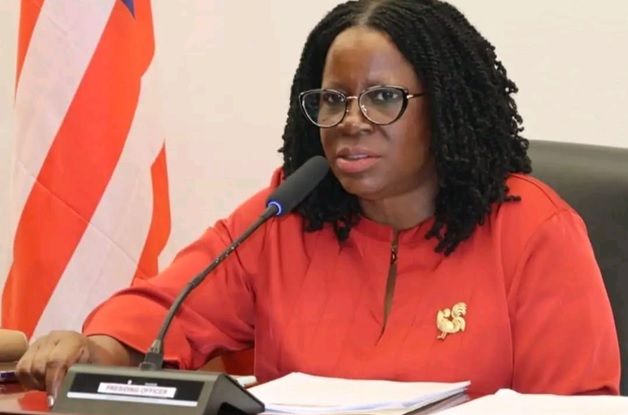
MONROVIA – The Liberian Senate, under the leadership of Pro Tempore Nyonblee Karnga-Lawrence, has endorsed a set of audit reports targeting financial mismanagement across key government institutions, signaling a renewed push for accountability and transparency in the public sector.
The decision, taken Tuesday, March 24, follows a joint review by the Legislature’s Public Accounts Committees from both the Senate and the House of Representatives. The Joint Public Accounts Committee consolidated findings from 12 separate audits and formally submitted its recommendations to President Joseph Nyuma Boakai for executive action.
The endorsed reports span multiple sectors and institutions, including a compliance audit of the Liberia Water and Sewer Corporation (LWSC) covering up to June 2021, and a financial audit of the regional CLSG Rural Electrification Project involving Côte d’Ivoire, Liberia, Sierra Leone, and Guinea.
Other reports scrutinized include the operations of the National Bureau of Concessions (NBC), regulatory practices in river-sand mining, and the financial activities of the National Disaster Management Agency (NDMA). These audits highlight long-standing governance and regulatory weaknesses across multiple sectors.
The Legislature also examined financial and compliance audits involving the Liberia Opportunities Industrialization Center (LOIC), Bong County Development and Social Development Fund, and the National Road Fund (NRF), further exposing concerns about the handling of public resources at both national and county levels.
Additionally, key infrastructure and revenue-generating entities such as the National Fisheries and Aquaculture Authority (NaFAA), the Liberia Road Asset Management Project (LIBRAMP), and the National Transit Authority (NTA) were cited in the reports, with auditors pointing to discrepancies in financial reporting and project execution.
One of the most significant audits reviewed was the compliance audit of the Central Bank of Liberia (CBL), covering a five-year period from January 2018 to December 2023. The findings from this audit are expected to draw heightened public and institutional attention due to the bank’s central role in managing the country’s financial system.
In response to these findings, the Legislature has issued a series of strong recommendations aimed at tightening financial oversight. Chief among them is the full implementation of audit recommendations, with a mandate for the Internal Audit Agency to ensure that all issues identified by the General Auditing Commission (GAC) are adequately addressed.
Lawmakers also called for continuous progress reporting, requiring the Internal Audit Agency to provide regular updates to both the Auditor General and the Legislature on the status of implementation. This measure is intended to prevent audit findings from being ignored or delayed indefinitely.
The Legislature further emphasized strict financial discipline by directing that all recovered funds be deposited into the Government of Liberia Recovery Account at the Central Bank through the Ministry of Finance and Development Planning, with verifiable proof of payment submitted.
Perhaps most striking are the punitive measures recommended. The Legislature has called for all cases involving financial misconduct to be referred to the Ministry of Justice Liberia and the Liberia Anti-Corruption Commission (LACC) for investigation and prosecution. It also proposed banning individuals found guilty of serious offenses from holding public office, while urging the dismissal through due process of current officials implicated in major violations.