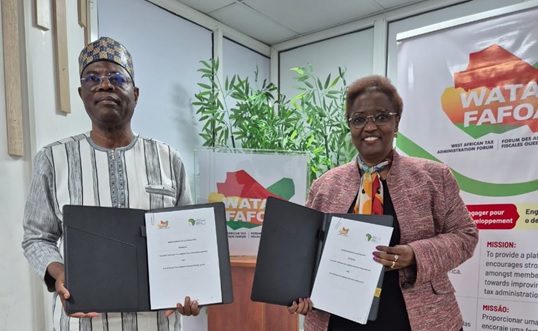

MONROVIA – The Managing Director of the Liberia Medicines and Health Products Regulatory Authority, Dr. Luke L. Bawo, has left the country to participate in a major regional forum aimed at strengthening bio-manufacturing and expanding access to essential health products across West Africa.
The West African Bio-manufacturing Regulation & Market Access Forum, kicked-off for March 24–25, 2026, in Accra, will assemble regulators, policymakers, manufacturers, financiers, and development partners under the theme: “Leveraging Health Security and Regulatory Collaboration under AfCFTA to Advance Local Production and Access to Vaccines, Sera & Biologics in Africa.”
The forum is jointly convened by the African Medicines Agency, the Africa Centres for Disease Control and Prevention, and the Government of Ghana, with support from partners including Deutsche Gesellschaft für Internationale Zusammenarbeit, Physikalisch-Technische Bundesanstalt, and the Paul-Ehrlich-Institut.
Dr. Bawo’s participation reflects growing urgency among African nations to reduce dependence on imported vaccines and biologics. The continent still sources over 90 percent of its pharmaceuticals externally—a vulnerability exposed during the COVID-19 pandemic, when supply chain disruptions constrained access to critical health commodities.
The Accra forum is designed as a working platform—not merely a policy dialogue—to advance coordinated solutions in regulatory harmonization, cross-border market access, and sustainable financing for local production.
Deliberations will align closely with the objectives of the African Continental Free Trade Area, which provides the legal and economic basis for reducing trade barriers and promoting intra-African pharmaceutical commerce.
A central focus will be the implementation of the 2025 Reliance Memorandum of Understanding among countries with WHO Maturity Level-3 regulatory systems. The framework is expected to streamline medicine approvals, enhance quality assurance, and accelerate access to vaccines and other biologics across borders.
Participants will interrogate three persistent constraints limiting bio-manufacturing growth in West Africa: Limited domestic production capacity; fragmented regulatory regimes; weak cross-border market integration In parallel, the forum will address declining donor financing—particularly from institutions such as Gavi, the Vaccine Alliance—and explore investment models capable of sustaining local manufacturing ecosystems.
The meeting is expected to yield concrete outputs, including: a regional baseline assessment of biomanufacturing and regulatory capacity; identification of key regulatory and market access barriers; Priority investment and workforce development areas and joint communiqué outlining agreed actions and timelines.
Liberia’s participation through LMHRA places the country within ongoing regional efforts to build a coordinated pharmaceutical production base. Engagement at this level is expected to strengthen regulatory capacity, expand technical partnerships, and improve access to essential vaccines and biologics.
Beyond immediate health outcomes, the forum is positioned to influence broader economic priorities—supporting industrialization, enhancing trade competitiveness, and reducing long-term import dependence. If effectively implemented, outcomes from the Accra meeting could accelerate West Africa’s transition from a largely import-dependent market to a more self-sustaining bio-manufacturing hub.