By Smart News Liberia
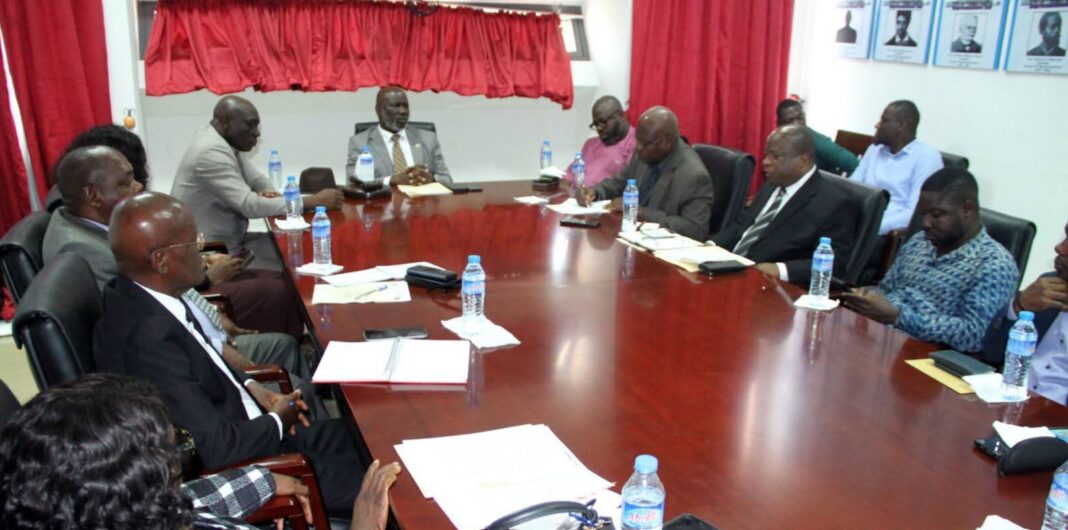
MONROVIA – Richard Nagbe Koon has concluded a high-level consultative meeting with leading legal experts to examine key constitutional issues that could lead to a review of Liberia’s 1986 Constitution.
The meeting brought together prominent legal minds to deliberate on provisions under Articles 91 and 92 of the Constitution, which outline how amendments can be initiated by the Legislature. The discussions centered on laying the groundwork for potential reforms that may ultimately be subjected to a national referendum.
Participants emphasized the importance of engaging legal expertise in shaping any constitutional review process, stressing that reforms must be guided by clarity, inclusiveness, and adherence to established legal procedures.
A major highlight of the engagement was the call for urgent constitutional reforms across multiple sectors. Contributors underscored that any amendment process must be deliberate, transparent, and reflective of the will of the Liberian people.
William B. Kollie Jr., who participated in the discussions, emphasized the need for clearly defined referendum options. He reaffirmed the Legislature’s central role in initiating constitutional amendments and outlined the legal threshold required to effect such changes.
According to him, any amendment must secure a two-thirds majority within the Legislature before being presented to the public, in keeping with constitutional requirements.
The meeting also clarified the distinct roles of the different branches of government in the amendment process. While the Legislature is responsible for adopting proposed changes, the publication of those amendments in the official gazette falls under the authority of the Executive Branch.
Also contributing to the dialogue, Bornor Varmah highlighted the importance of clarity in the referendum process. He pointed out that the law provides a one-year period to ensure adequate public awareness and understanding of proposed amendments.
Varmah further stressed that each proposed amendment must be presented separately to voters, in line with Supreme Court rulings, to avoid confusion and ensure informed decision-making during referenda.
Additional insights were provided by Alaric K. Tokpa and Niveda Ricks, who both called for consistency and clarity in constitutional provisions, particularly those relating to citizenship.
Discussions revealed ongoing concerns about inconsistencies between citizenship certificates and constitutional provisions, which participants believe have created confusion within Liberia’s legal framework.
Stakeholders noted that revising citizenship-related provisions could help resolve these discrepancies, strengthen legal coherence, and reinforce national identity.
The meeting also highlighted the importance of timing, with participants expressing optimism that key constitutional amendments could be considered ahead of the next general elections, provided that due process is followed.
In his remarks, Speaker Koon reaffirmed his commitment to a participatory reform process that includes input from legal experts, civil society organizations, and the general public.
He disclosed plans to establish a special committee that will work collaboratively with stakeholders to advance discussions on constitutional review and guide the reform process.
The engagement concluded with a renewed call for sustained collaboration among all actors, as Liberia seeks to address constitutional challenges and strengthen its democratic governance framework through inclusive and well-informed reforms.