April 6 remains one of the darkest dates in Liberia’s history, a day when the promise of peace collapsed into chaos and the capital city, Monrovia, was plunged into one of the most violent episodes of the civil war. Nearly three decades later, the memories of that day still echo through the nation’s conscience, reminding Liberians of how quickly fragile peace can give way to terror.
The events of April 6, 1996, occurred during the final phase of the First Liberian Civil War, a brutal conflict that had already devastated the country. Although peace agreements had been signed and a transitional government was in place, tensions among warring factions remained dangerously unresolved. Beneath the surface, Liberia was a nation sitting on a ticking time bomb.
That bomb exploded when forces loyal to Charles Taylor and Alhaji Kromah launched an operation to arrest Roosevelt Johnson, leader of the ULIMO-J faction. What was intended as a targeted military action quickly spiraled into full-scale urban warfare, igniting fierce clashes in the heart of Monrovia.
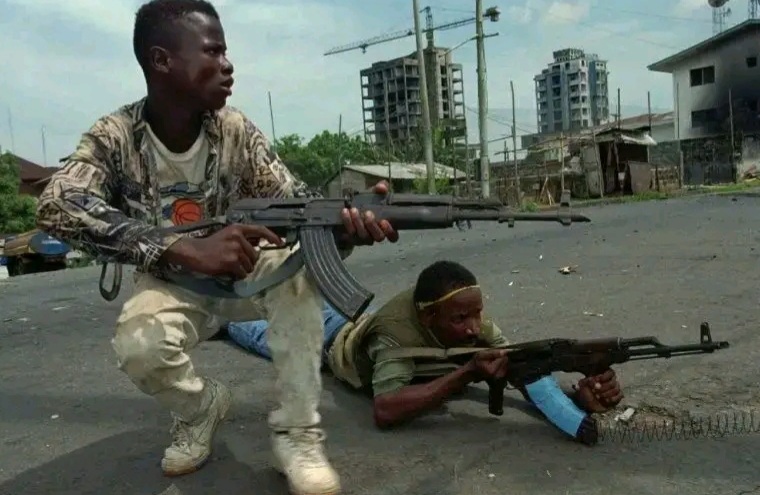
Within hours, the city descended into unimaginable violence. Heavy gunfire, rocket-propelled grenades, and street-to-street fighting turned neighborhoods into battlegrounds. Civilians, already weary from years of conflict, were caught in the crossfire as fighters clashed with little regard for human life or property.
The brutality of that day cannot be overstated. Reports indicate that Monrovia was nearly destroyed during the fighting, with up to 3,000 people killed and thousands more displaced in just weeks of violence that followed the April 6 outbreak. The capital, once a symbol of resilience, became a landscape of fear, smoke, and death.
April 6 was not just another battle; it was a collapse of order. Homes were looted, entire communities were burned, and families were forced to flee in desperation. The streets were littered with bodies, and the cries of terrified civilians filled the air as lawlessness reigned supreme.
International panic quickly followed. The intensity of the violence prompted the United States to launch Operation Assured Response, evacuating thousands of foreign nationals trapped in the chaos. This dramatic intervention underscored how severe and uncontrollable the situation had become.
What made April 6 particularly tragic was that it shattered hopes for peace. Liberia had been inching toward elections and stability, but the violence exposed the deep mistrust and rivalry among faction leaders. It became clear that agreements on paper meant little without genuine commitment to peace.
The human cost extended far beyond the battlefield. Women and children bore the brunt of the violence, facing displacement, hunger, and unspeakable atrocities. The psychological scars of that day would linger for generations, shaping the national psyche and collective memory.
Even more haunting were the stories of child soldiers and warlords who turned the city into a theater of horror. The conflict revealed the extreme breakdown of moral order, where violence became normalized and humanity was stripped away in the pursuit of power.
In the aftermath, April 6 became a turning point. The destruction forced renewed international pressure and eventually led to the Abuja peace agreement later that year. But the road to stability remained long and painful, culminating in elections in 1997 that brought a fragile end to the war.
Today, April 6 stands as a solemn reminder of Liberia’s painful past. It is a day that calls for reflection, not only on the horrors of war but also on the enduring need for unity, reconciliation, and vigilance in safeguarding peace.