By Socrates Smythe Saywon | Smart News Liberia
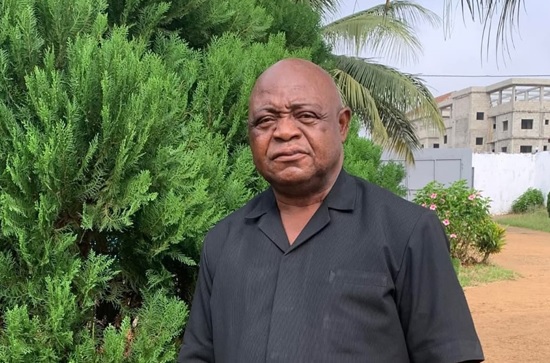
Liberia’s democratic integrity is once again facing serious scrutiny following President Joseph Nyuma Boakai’s controversial nomination of Jonathan K. Weedor as Acting Chairperson of the National Elections Commission (NEC) on March 30, 2026, following the resignation of Madam Davidetta Browne-Lansanah pending confirmation by the Liberian Senate. What initially appeared to be a routine administrative appointment has now evolved into a full-blown debate over conflict of interest, neutrality, and the future credibility of Liberia’s electoral body.
At the center of the growing concern are revelations suggesting that Weedor previously played a role in electoral consultancy tied to the ruling Unity Party Alliance during the 2023 elections. These disclosures are not minor footnotes, they go to the very heart of whether an individual with such connections can impartially oversee the same electoral system he once helped a political bloc navigate.
A detailed account shared publicly by Liberian journalist Charles Yates alleges that Weedor was affiliated with the Center for Democratic and Election Management (CEDEM), a consultancy firm deeply involved in election-related activities. According to the account, CEDEM provided services not only to political actors but also to international institutions, positioning itself as a key player in Liberia’s electoral ecosystem.
However, it is CEDEM’s reported engagement with the Unity Party Alliance that has ignited the most concern. Yates asserts that the firm was contracted specifically to support the alliance’s electoral machinery, raising serious questions about the boundaries between professional consultancy and political alignment.
Central to this controversy is a letter dated August 15, 2023, attributed to then Standard Bearer Joseph Boakai. The letter explicitly awards CEDEM a consultancy role to “recruit, train, and deploy poll watchers/party agents nationwide” for the October 10 elections, a task that is both strategic and politically sensitive.
The letter states: “On behalf of the UP/Alliance, we wish to award consultancy to CEDEM so that it may use its vast electoral experience to recruit, train, and deploy UP/Alliance poll watchers/party agents nationwide for the ensuing October 10, 2023 polls.” Such a mandate places CEDEM, and by extension individuals associated with it, at the operational core of a political campaign.
Further reinforcing the perception of partisanship, the communication underscores the alliance’s confidence in CEDEM based on prior collaboration and expresses optimism about achieving “total victory.” This language suggests more than a neutral, technical relationship; it signals alignment with a specific political objective.
Defenders of Weedor may argue that professional consultancy does not automatically equate to political bias. Yet, electoral governance is a uniquely sensitive domain. The leadership of the NEC must not only be neutral but must be seen as unquestionably impartial. In Liberia’s context, where electoral tensions have historically escalated into instability, perception alone can be as damaging as reality.
Compounding the issue are reports of CEDEM’s interactions with international organizations such as the International Foundation for Electoral Systems and Democracy International. While these engagements may reflect technical expertise, they do little to mitigate domestic concerns about political entanglement, especially when weighed against the firm’s reported work for the ruling alliance.
This unfolding controversy is not just about one appointment, it is a test of the Boakai administration’s commitment to transparency and institutional independence. If left unaddressed, the perception that the NEC is being influenced by individuals with prior partisan engagements could erode public trust in future elections.
Liberia stands at a critical crossroads. The credibility of the NEC is foundational to democratic stability. Any appointment that introduces credible concerns of conflict of interest must be handled with utmost caution. Whether through clarification, review, or reconsideration, the responsibility now lies with the administration to ensure that the integrity of Liberia’s electoral system remains beyond reproach.