
By Socrates Smythe Saywon | Smart News Liberia
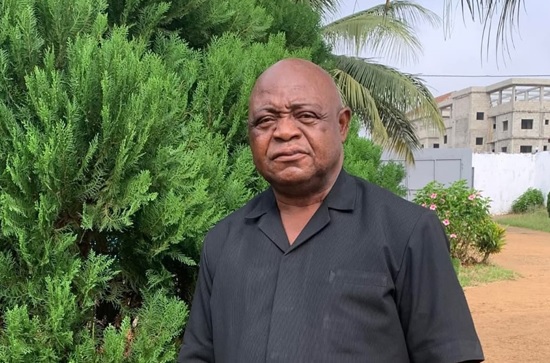
Liberia is on the verge of a major economic milestone with the revitalization of the Putu iron ore project. For citizens of Grand Gedeh and the broader southeastern region, the announcement has generated optimism and hope. However, as Cllr. Kanio Bai Gbala, Assistant Professor of Law and Executive Chairperson of the Liberia Political Centrism Movement, emphasizes, this optimism must be paired with concrete strategies to ensure meaningful local participation.
Gbala highlights a critical point that jobs alone will not secure local prosperity. “Too often, public discourse around large-scale concessions such as Putu is narrowly framed around direct employment opportunities. While jobs are important, the reality is that modern mining operations are highly mechanized and capital-intensive. This inevitably limits the number of direct jobs available to local communities,” he writes. In other words, many residents could watch economic activity unfold without benefiting in a substantive way unless deliberate steps are taken.
The solution, Gbala argues, lies in creating ancillary business opportunities. Mining operations require a network of support services, including trucking, fuel supply, environmental compliance, logistics, catering, and equipment maintenance. These sectors represent millions of dollars in recurring contracts over the life of the concession, providing a far broader economic impact than employment alone.
However, without intentional policies, external companies often capture these lucrative opportunities. Gbala warns, “If left unstructured, there is a real risk that external actors, often better capitalized and more organized, will dominate these spaces. This would result in a familiar and unfortunate pattern, resources extracted locally, but value captured elsewhere.” His words highlight the importance of designing the project so that local communities retain economic control.
To prevent this, Gbala recommends that local content provisions extend beyond employment quotas to include procurement obligations. “A defined percentage of ancillary contracts should be reserved for businesses owned by citizens of Grand Gedeh and the southeastern region, with transparent criteria and enforcement mechanisms,” he writes. By embedding such rules into the concession framework, the government can ensure that wealth generated by Putu benefits local stakeholders.
Capacity building is another essential component. Gbala emphasizes, “Local entrepreneurs cannot compete effectively without access to finance, technical training, and organizational development.” Government, concessionaire, and development partners should collaborate to equip local businesses to meet industry standards, ensuring they are capable participants in the mining ecosystem.
Gbala also advocates for consortia models, where local businesses pool resources to bid for larger contracts. “This approach reduces fragmentation and strengthens local bargaining power,” he explains. Collective action can transform small, individually under-resourced businesses into serious competitors capable of securing significant contracts, creating sustainable economic growth.
Transparency must be enforced across all stages of the project. Gbala insists, “The awarding of contracts should be subject to open, competitive, and publicly disclosed processes, ensuring fairness and accountability.” Clear processes protect local enterprises while building public trust in the administration of the concession.
Political oversight is equally important. Gbala urges, “Grand Gedeh’s elected representatives must keep their eyes firmly on the ball, ensuring that the interests of their constituents are not sidelined.” Policymakers must translate advocacy into tangible outcomes, ensuring that the Putu project fosters measurable economic empowerment for local communities.
Gbala envisions a Putu project that goes beyond wages. “For the people of Grand Gedeh and the southeastern counties, the promise of Putu must translate into business ownership, enterprise growth, and generational wealth. Anything less would be a missed opportunity of historic proportions,” he concludes. With strategic planning, local capacity-building, and strict enforcement of inclusive policies, the Putu iron ore project can become a model of sustainable, community-focused economic development in Liberia.