By Socrates Smythe Saywon | Smart News Liberia
MONROVIA – April 14 remains one of the most symbolically referenced dates in Liberia’s modern political memory, closely associated with the 1979 Rice Riots, a mass uprising that reshaped the country’s political trajectory and exposed deep tensions between government policy and public hardship.
Although not an official national holiday, the events surrounding April 1979 continue to be revisited as a defining moment in Liberia’s history, when economic grievances over the proposed increase in the price of rice, Liberia’s staple food, sparked nationwide unrest.
The immediate cause of the crisis was a government decision under the administration of President William R. Tolbert Jr. to raise the price of a 100-pound bag of imported rice from US$22 to US$26. The policy was officially intended to encourage local rice production and reduce dependency on imports. However, many citizens viewed the decision as profiteering by political elites, with widespread suspicion directed toward senior officials, including members of the presidential circle.
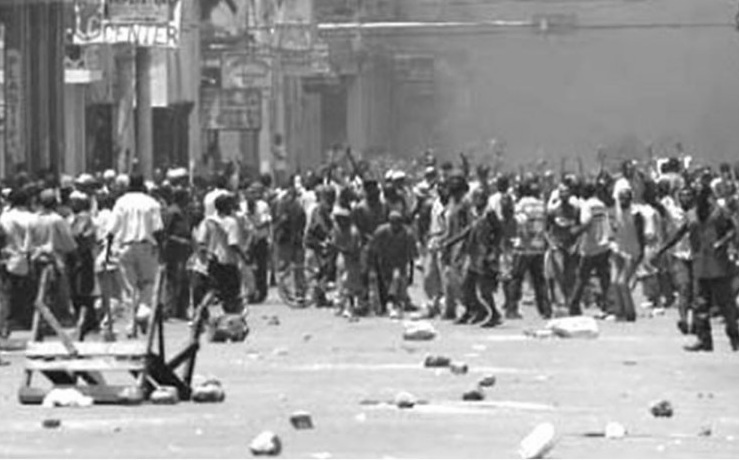
What began as a planned peaceful demonstration quickly escalated into chaos. The Progressive Alliance of Liberia (PAL), a political advocacy group active at the time, had initially organized a march to protest the rice price increase. However, on April 14, 1979, the protest spiraled into widespread riots and destruction of property across Monrovia as tensions intensified and crowds swelled beyond control.
The situation rapidly deteriorated as clashes broke out between protesters and security forces. Government troops responded with force, firing on demonstrators in an attempt to restore order. In response to the escalating crisis, President Tolbert reportedly sought assistance from neighboring Guinea to help stabilize the situation and reinforce security.
In the aftermath of the violence, the government took emergency measures to restore calm. Schools were closed, several organizers and activists were arrested, and the administration temporarily reduced the price of rice to US$20 in an effort to appease public anger and prevent further unrest.
Among the most influential figures in the broader political environment were reformist voices such as Gabriel Baccus Matthews, associated with growing opposition politics, and Togba-Nah Tipoteh, whose economic critiques of inequality and governance helped shape public debate at the time. Activist movements such as the Movement for Justice in Africa (MOJA) also played a role in mobilizing political consciousness, particularly among students and young people, even though the riots themselves were not centrally coordinated by any single organization.
The 1979 Rice Riots ultimately marked a turning point in Liberia’s history. The events severely destabilized the administration of President Tolbert and exposed deep structural tensions within the state. Many historians view the riots as a direct precursor to the military coup of April 12, 1980, which overthrew the government and fundamentally altered Liberia’s political landscape.
In the days following the unrest, the country experienced heightened political tension, economic disruption, and a growing sense of uncertainty about the future of civilian rule. The crisis highlighted the fragile relationship between government policy decisions and public trust, particularly in times of economic hardship.
Today, the events of April 14, 1979, are remembered not simply as a protest over rice prices, but as a broader expression of public frustration over inequality, governance, and exclusion. The riots stand as one of the most consequential moments in Liberia’s modern history.
April 1979 remains a turning point in Liberia’s national story, defined by a convergence of economic grievance, political activism, and state response that reshaped the country’s historical trajectory and set the stage for profound political change.