By Staff Writer | Smart News Liberia
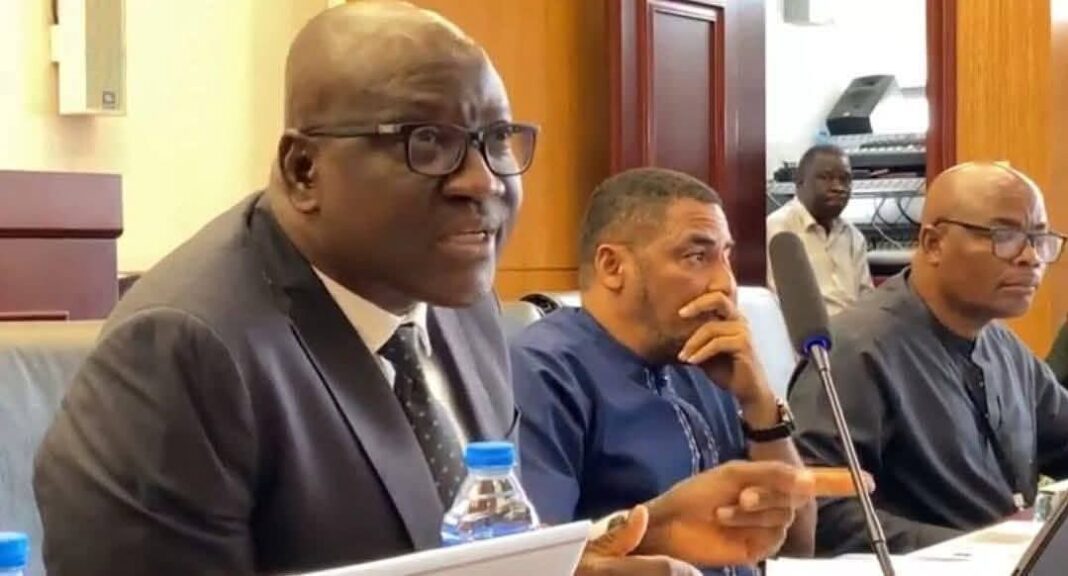
MONROVIA – Former Finance Minister Samuel D. Tweah delivered a politically charged defense in court on Monday, April 20, 2026, directly confronting the prosecution’s core allegations in the ongoing corruption case involving alleged Financial Intelligence Agency (FIA) fund transactions.
The proceedings took a decisive turn after the court ordered the Governor of the Central Bank of Liberia to appear and authenticate key financial documents submitted by the defense, evidence that could significantly shape the outcome of the trial.
Testifying under direct examination by his lead counsel, Cllr. Arthur Johnson, Tweah systematically dismantled the prosecution’s claims, rejecting accusations that he acted outside his authority, authorized unlawful transfers, or conspired with former Acting Justice Minister Nyanti Tuan.
At the heart of Tweah’s argument was a broader political and legal challenge to how government financial decisions are interpreted. He contended that the prosecution’s case is built on a flawed understanding of public finance, particularly regarding how state institutions respond to urgent national needs.
Drawing on his experience as Finance Minister and a member of Liberia’s National Security Council, Tweah argued that the absence of formal written requests does not invalidate government spending. Instead, he maintained that once the national budget is passed, it provides the legal foundation for expenditures.
“Budget approval by the Legislature is what triggers spending authority, not individual requests,” Tweah told the court, pushing back against what he described as an overreliance on missing documentation by prosecutors.
He further emphasized that emergency or security-related expenditures often require swift decisions at the highest levels of government, processes that may not always generate immediate paperwork but remain lawful under executive authority.
In a strategic move to reinforce his defense, Tweah cited multiple past transactions processed through the Central Bank, including over US$15 million to the National Elections Commission, US$25 million to the World Food Programme for COVID-19 food support, and US$1 million to UNFPA for the 2022 National Census.
According to Tweah, these transactions followed the same procedures now being questioned, underscoring his argument that such financial practices are long-standing and institutional, not criminal.
A pivotal courtroom moment came when the defense successfully requested that the Central Bank Governor be subpoenaed to verify the authenticity of these transactions. Despite objections from the prosecution, the court granted the motion, signaling the importance of documentary evidence in resolving the dispute.