By Our Reporter | Smart News Liberia
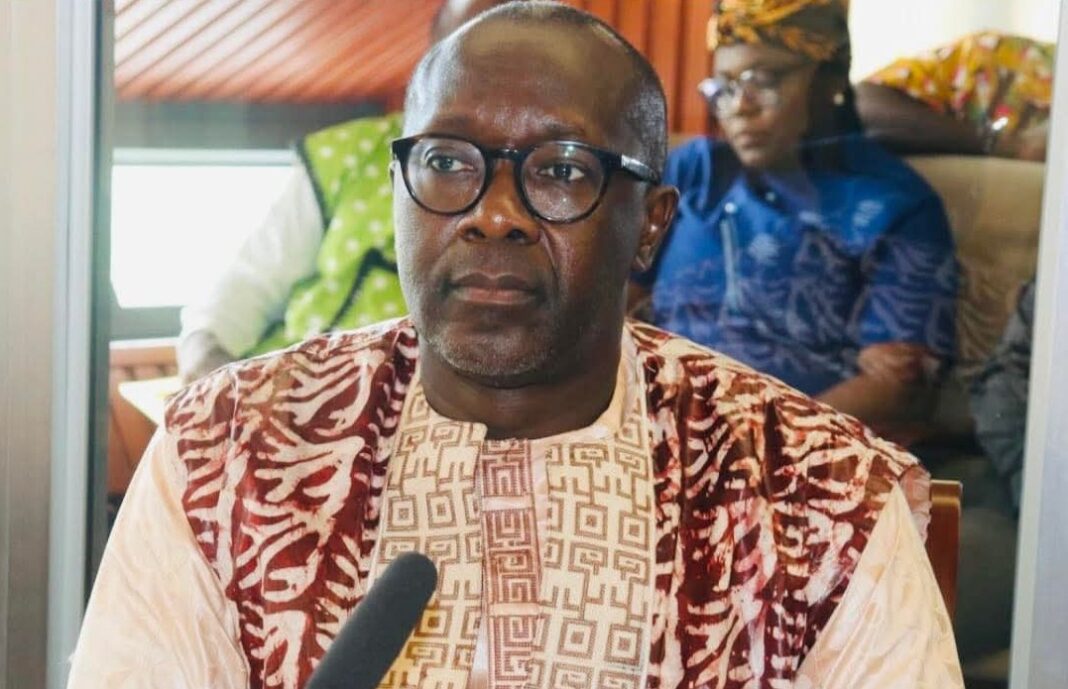
MONROVIA – Former President of the Liberia Council of Churches (LCC), Bishop Kortu Brown, has issued a strong appeal to President Joseph Boakai, urging his administration to ensure a swift, transparent, and credible investigation into the seizure of more than US$19 million worth of cocaine at Roberts International Airport (RIA).
Addressing a press conference in Brewerville on Tuesday, June 16, 2026, Bishop Brown warned that any attempt to suppress, manipulate, or conceal the findings of the ongoing investigation would severely damage Liberia’s international reputation and reinforce perceptions that the country is becoming a major transit hub for international drug trafficking.
The respected cleric, who also serves as General Overseer of the Apostolic Pentecostal Church International, expressed alarm over the circumstances surrounding the massive cocaine shipment, questioning how such a significant quantity of narcotics could have entered the country and advanced through critical security checkpoints without being detected by state security institutions.
“It is surprising that such a huge quantity of cocaine could enter the country without detection,” Bishop Brown emphasized, highlighting what many observers see as serious vulnerabilities within Liberia’s security and border management systems.
His comments come amid growing public concern over one of the largest drug seizures in Liberia. On June 8, 2026, the Liberia Drug Enforcement Agency (LDEA) intercepted 198 compressed plates of cocaine concealed in six cargo boxes at Roberts International Airport. According to LDEA Officer-in-Charge DCP Fitzgerald T.M. Biago, the shipment was allegedly destined for export aboard Brussels Airlines and carried an estimated street value exceeding US$19 million.
While the operation has been widely praised as a major success for the LDEA and other security agencies involved, the scale of the seizure has also triggered troubling questions about the sophistication and reach of drug trafficking networks operating within Liberia.
For Bishop Brown, the seizure represents more than a law enforcement victory. He believes the government’s handling of the investigation will serve as a defining test of its commitment to combating narcotics trafficking and organized crime.
According to him, the outcome of the investigation will reveal whether Liberia is genuinely winning the war against drugs or merely intercepting isolated shipments while larger criminal networks continue to operate undisturbed.
His remarks highlight growing public demands for accountability and transparency, particularly regarding who may have facilitated the movement of the cocaine through airport and customs systems. Critics of the Boakai administration have argued, both publicly and across social media platforms, that a shipment of such magnitude could not have progressed without assistance, negligence, or significant security lapses within the country’s security and cargo-handling systems.
The seizure has also intensified calls for the Boakai administration to identify and prosecute all individuals connected to the smuggling attempt, regardless of their political, economic, or social standing. As the investigation unfolds, many Liberians are closely monitoring whether authorities will pursue the case beyond low-level suspects and expose any wider network that may have facilitated the trafficking operation.
Against this backdrop of growing public concern, President Boakai has vowed that no individual, institution, or criminal network connected to Liberia’s recent US$19 million cocaine seizure will be spared from investigation.
In a nationwide address delivered on Tuesday, June 16, 2026, President Boakai described the seizure of approximately 237.6 kilograms of cocaine at Roberts International Airport as a major national security threat and a stark reminder of the growing efforts by transnational criminal organizations to use West Africa as a corridor for international drug trafficking.
“Any individual, group, or network that seeks to exploit our territory, corrupt our institutions, endanger our youth, or undermine our national security will be identified, pursued, and brought to justice,” the President declared.
According to Boakai, the investigation is being coordinated by the Liberia Drug Enforcement Agency (LDEA) and the Liberia National Police (LNP), with support from the National Security Agency (NSA), Executive Protection Service (EPS), Financial Intelligence Agency (FIA), Liberia Immigration Service (LIS), Customs authorities, Airport Security, the Ministry of Justice, and other security institutions.
However, despite the President’s assurances, Bishop Brown’s warning reflects mounting concerns that the credibility of Liberia’s anti-drug campaign is now on the line. For many observers, the ultimate measure of success will not simply be the seizure itself, but whether the investigation is allowed to proceed independently and leads to the identification and prosecution of all those involved.
Any perception of political interference, selective justice, or an incomplete investigation could undermine public confidence and raise questions among international partners about Liberia’s capacity to combat transnational organized crime and prevent the country from becoming a preferred route for international narcotics trafficking.