
By Staff Writer | Smart News Liberia
MONROVIA – New testimony from Ruth Gbarpetea, one of the persons of interest identified by the Ministry of Justice in the ongoing US$18 million drug trafficking investigation linked to Roberts International Airport (RIA), has raised fresh questions about airport security procedures, supervisory decisions, and the circumstances under which security clearance tags were placed on a shipment that later became the focus of a major narcotics probe.
During questioning by investigators on Monday, June 22, 2026, Gbarpetea described a sequence of events that suggests airport security personnel encountered difficulties screening the shipment but nevertheless allowed security tags to be attached before a physical inspection was conducted.

According to her testimony, the cargo initially appeared unusually dense when screened through the L3 monitoring system. She said the scanner was unable to clearly penetrate the shipment or identify its contents, making it impossible to determine what was inside.
Gbarpetea told investigators that she immediately reported her concerns to her manager, warning that the cargo could potentially contain prohibited items. However, she claimed she was instructed to allow all of the packages to proceed because the monitor could not conclusively determine the contents.
“The shipment appeared very dense on the screen,” she explained. “I informed the manager that the cargo might contain prohibited items, but he told me to let all the packages pass because we could not determine from the monitor whether they contained anything suspicious.”
Her account has drawn attention because standard security protocols generally require heightened scrutiny when scanner images are unclear or when screening equipment cannot adequately identify the contents of a shipment.
The testimony became even more significant when investigators focused on the decision to place security clearance tags on the cargo despite the unresolved concerns.
Investigators repeatedly questioned why security tags were attached to the shipment before a physical inspection had been completed. Gbarpetea acknowledged that a security tag ordinarily indicates that cargo has been cleared.
When pressed by investigators, she admitted that she instructed another employee, identified as Lily, to place the tags on the shipment while her supervisor was present.
“I believed the cargo would still undergo physical inspection,” Gbarpetea stated. “If the inspection revealed problems, the tags could be removed.”
Investigators challenged that explanation, noting that standard operating procedures require immediate physical inspection whenever scanner images are inconclusive and suspicion exists regarding the contents of a shipment.
The questioning highlighted what appears to be a significant procedural contradiction. On one hand, Gbarpetea acknowledged that unclear scanner images required further inspection. On the other hand, she admitted that security tags, which generally signify clearance, were allowed to remain on the cargo.
The testimony also revealed concerns regarding documentation associated with the shipment.
According to Gbarpetea, the airway bill presented during the physical inspection differed from the document originally submitted when the cargo was first screened. She stated that the first airway bill identified Gerald Cargo, while a different airway bill was presented later.
She told investigators that she informed her supervisor about the discrepancy, raising additional questions about whether documentation associated with the shipment changed during the screening process.
The situation took a dramatic turn during a physical inspection conducted on Sunday after Gbarpetea’s supervisor informed her that the shipment would be examined.
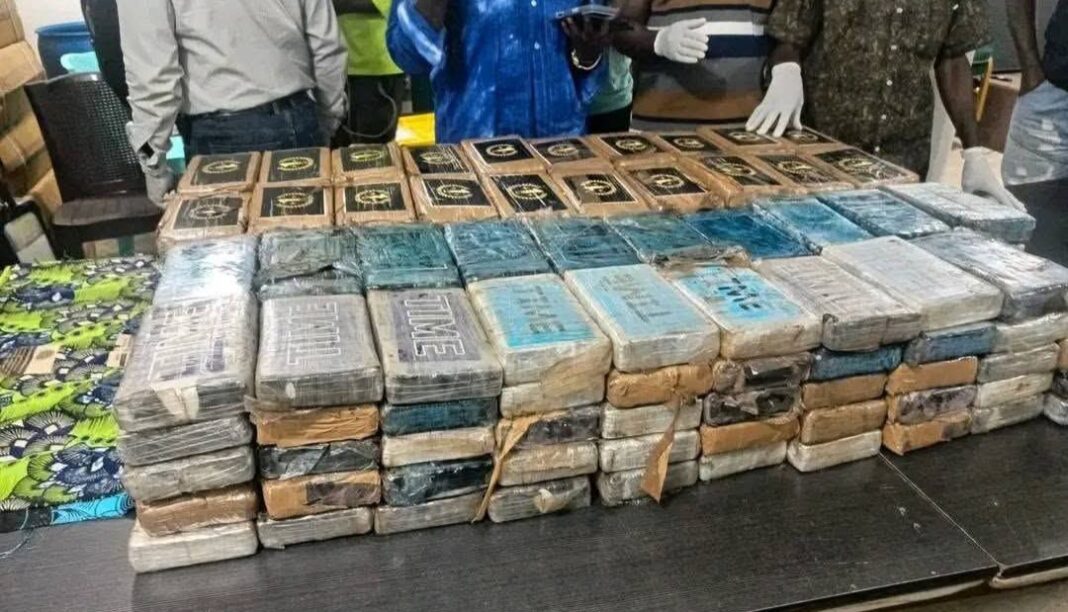
During the inspection, she said she opened one of the parcels and discovered a hard substance resembling cake. Although she broke part of it open, she told investigators that she did not know what the substance was at the time and had only seen similar materials on television.
She further stated that intelligence officers later arrived at the warehouse, along with airport official Philip Yoh, to inspect the shipment.
The testimony has intensified scrutiny of airport screening procedures and supervisory oversight at Roberts International Airport. Investigators appear to be examining whether established security protocols were properly followed and whether decisions made during the screening process may have contributed to the movement of a shipment that ultimately became linked to one of Liberia’s largest recent narcotics investigations.
At the center of the inquiry is a critical question why was cargo that security personnel themselves considered suspicious permitted to receive security clearance indicators before mandatory physical inspections were completed?
As the investigation continues, authorities are expected to further examine the roles of screening officers, supervisors, cargo handlers, and other individuals connected to the shipment. The answers could prove crucial in determining whether the events resulted from procedural failures, negligence, or a more coordinated effort to bypass established security controls.