By Socrates Smythe Saywon | Smart News Liberia
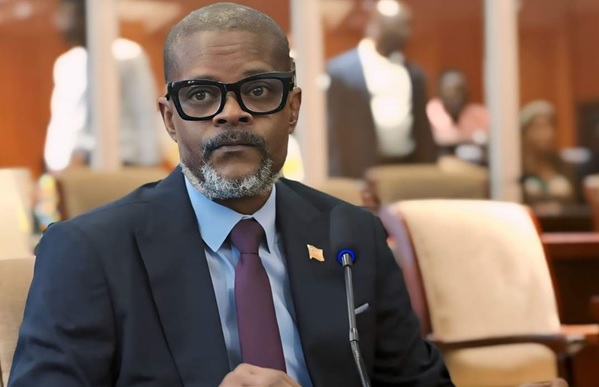
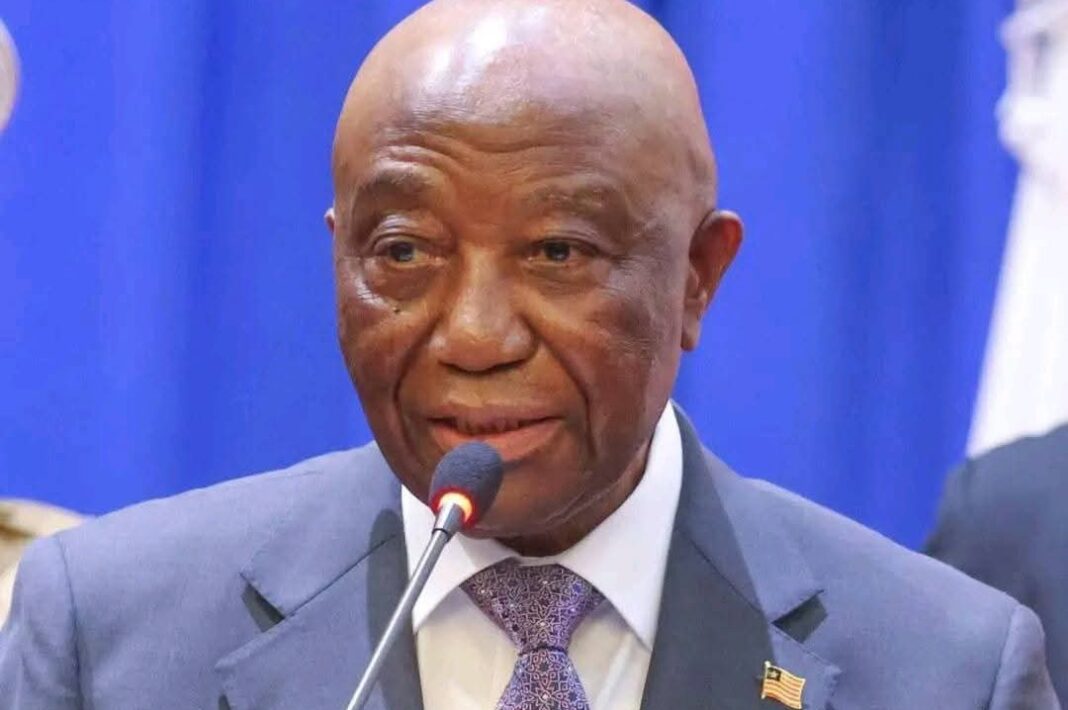
MONROVIA – President Joseph Nyuma Boakai is facing accusations from former Finance and Development Planning Minister Samuel D. Tweah Jr. that his administration is attempting to undermine a jury verdict that acquitted him in the highly publicized US$6.2 million national security funds case, a move Tweah warns could establish a “dangerous precedent” for Liberia’s justice system and democratic governance.
In a communication addressed to United Nations Secretary-General António Guterres and copied to senior officials of the African Union, ECOWAS, the European Union, members of the United States Congress, diplomatic missions, and international human rights organizations, Tweah alleged that efforts to investigate claims of jury misconduct following his acquittal are part of a broader attempt to cast doubt on a verdict that should be considered final under Liberian law.
The former minister argued that the controversy is no longer merely about the US$6.2 million national security funds case. Instead, he warned that any attempt to reopen, manipulate, or politically influence an acquittal threatens the independence of the judiciary, weakens public confidence in the courts, and risks eroding democratic safeguards that Liberia has spent decades rebuilding since the end of its civil conflict.
At the center of Tweah’s complaint is what he describes as an unprecedented effort to challenge the outcome of a criminal trial after a jury had already rendered its decision. He argues that allowing political pressure to influence post-verdict proceedings could fundamentally alter public confidence in Liberia’s justice system and create uncertainty about whether acquittals remain truly final.
For Tweah, the most compelling aspect of the controversy is not the investigation itself but the precedent it could establish. He contends that if a government can revisit or cast doubt on a jury’s decision after failing to secure a conviction, future defendants may lose confidence that a favorable verdict will actually bring legal closure.
“No precedent exists in Liberia where either the Supreme Court or a lower court has overturned an acquitting verdict,” Tweah asserted in his letter, presenting the argument as the cornerstone of his appeal to the international community.
The former minister’s warning stems from developments that followed his acquittal on May 8, 2026, when a jury at Criminal Court “C” cleared him and former Financial Intelligence Agency Comptroller General Moses D. Cooper of all charges linked to allegations involving US$6.2 million in national security funds used during the 2023 elections.
The government had accused Tweah and four other former officials of crimes ranging from economic sabotage and theft of public funds to criminal facilitation and money laundering. The prosecution became one of the most politically significant cases pursued by the Boakai administration since taking office.
According to Tweah, the prosecution failed to present evidence proving that the funds were stolen, diverted, or illegally expended. He maintained throughout the proceedings that the transfer of the funds was lawful and authorized under Liberia’s Public Financial Management Law and national security provisions governing emergency expenditures.
Tweah argued during the trial that the Finance Minister possesses legal authority to release funds under emergency circumstances when supported by approved budgetary allocations and national security approvals. He further pointed to previous multimillion-dollar transfers made under his authority to institutions including the National Elections Commission, the World Food Programme, and the United Nations Population Fund as examples of similar lawful government transactions.
According to the former minister, the jury ultimately accepted his explanation and rejected the prosecution’s theory of criminal conduct. However, he alleges that the political atmosphere shifted dramatically after celebrations erupted among supporters following his acquittal.
Tweah claims the government initially accepted the verdict and publicly portrayed the outcome as evidence that Liberia’s justice system was functioning properly. He alleges, however, that increasing public attention surrounding his acquittal created political pressure that eventually led to efforts aimed at questioning the verdict.
Central to his complaint is the emergence of allegations of jury misconduct after the trial had concluded. According to Tweah, three jurors who voted against acquittal later raised concerns about alleged misconduct and outside influence.
The former minister questions why those concerns were not raised immediately before the court while jurors remained under judicial supervision. He argues that jurors had multiple opportunities throughout the proceedings to report any irregularities if such concerns genuinely existed.
For Tweah, the timing of the complaints raises fundamental questions. He contends that allegations surfacing after jurors returned to private life have created the appearance that forces dissatisfied with the verdict are attempting to generate uncertainty around a decision that should otherwise be final.
Beyond his own case, Tweah’s letter expands into a much broader criticism of what he describes as growing executive interference in Liberia’s judicial and democratic institutions.
One of the examples cited by the former minister is the prolonged leadership crisis in the House of Representatives. Tweah argues that despite judicial guidance concerning the legitimacy of actions involving former Speaker J. Fonati Koffa and rival legislative factions, the government continued dealing with political actors whose authority remained contested.
According to Tweah, the episode reflected a willingness to place political considerations above legal clarity, a pattern he believes is now reemerging in the post-verdict controversy surrounding his acquittal.
The former minister also points to disputes involving officials serving fixed tenures in autonomous public institutions. He argues that despite Supreme Court rulings establishing limits on presidential removal powers in certain circumstances, those decisions were allegedly disregarded when politically inconvenient.
Tweah further referenced the Capitol Building fire prosecution as another example of what he perceives as troubling interactions between politics and judicial processes.
In that case, he noted that jurors were eventually disbanded after concerns emerged regarding possible compromise. Tweah questioned whether allegations of jury misconduct tend to gain prominence only when legal proceedings appear to be moving in a direction unfavorable to government interests.
He argued that such perceptions, whether accurate or not, risk damaging public confidence in Liberia’s justice system and creating doubts about the independence of judicial institutions.
The former minister’s concerns extend beyond courtroom proceedings and into the country’s evolving political landscape.
Tweah explicitly linked his prosecution and subsequent legal battles to what he described as broader political calculations surrounding the 2029 presidential elections. He alleged that key opposition figures associated with former President George Manneh Weah are being subjected to heightened legal and political scrutiny as part of an effort to weaken potential rivals before the next electoral cycle.
According to Tweah, the government faces growing pressure over economic hardship, unemployment, investment challenges, and unmet public expectations. He argued that pursuing high-profile cases against former officials provides a political narrative that may appeal to sections of the electorate while diverting attention from governance concerns.
The former minister also pointed to subsequent inquiries involving rice subsidy transactions approved during his tenure as additional evidence of what he described as an ongoing campaign against him.
He claimed that authorities continue to revisit decisions made during his time as Finance Minister despite the fact that many of those transactions were undertaken within the framework of established government policies and international financial arrangements.
Throughout the letter, Tweah repeatedly called on the international community to pay closer attention to developments in Liberia. He warned that silence from international partners could embolden further actions that he believes threaten judicial independence, democratic governance, and the rule of law.
The former minister argued that Liberia’s democratic progress was built through years of sacrifice by Liberians and substantial support from international partners, including the United Nations, ECOWAS, the African Union, the European Union, the World Bank, the International Monetary Fund, and the African Development Bank.
Legally, the controversy raises important questions regarding the scope and purpose of post-verdict investigations, the protection of jury integrity, and the procedures governing allegations of juror misconduct.
Politically, the dispute risks deepening divisions between the ruling Unity Party and opposition forces at a time when national political attention is gradually shifting toward future electoral contests.
Neither President Boakai nor the Executive Mansion had publicly responded to Tweah’s specific allegations contained in the communication as of press time.
Whether viewed as a legitimate warning about judicial independence or a forceful political counteroffensive against the Boakai administration, Tweah’s appeal has transformed a criminal prosecution into a wider national debate over law, politics, and power.
For now, the controversy surrounding the US$6.2 million case has moved far beyond the courtroom. It has evolved into a test of public confidence in Liberia’s justice system, democratic institutions, and commitment to the principle that the law must remain insulated from political influence regardless of who occupies power.