By Socrates Smythe Saywon | Smart News Liberia
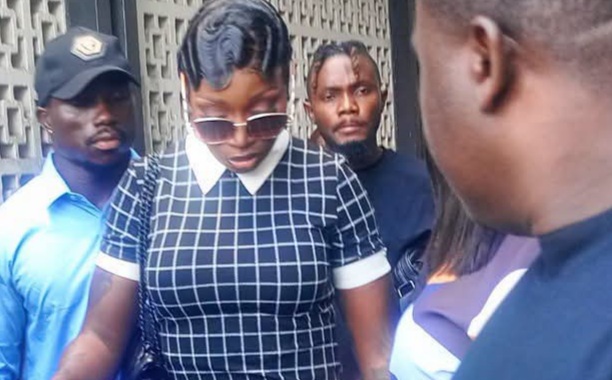
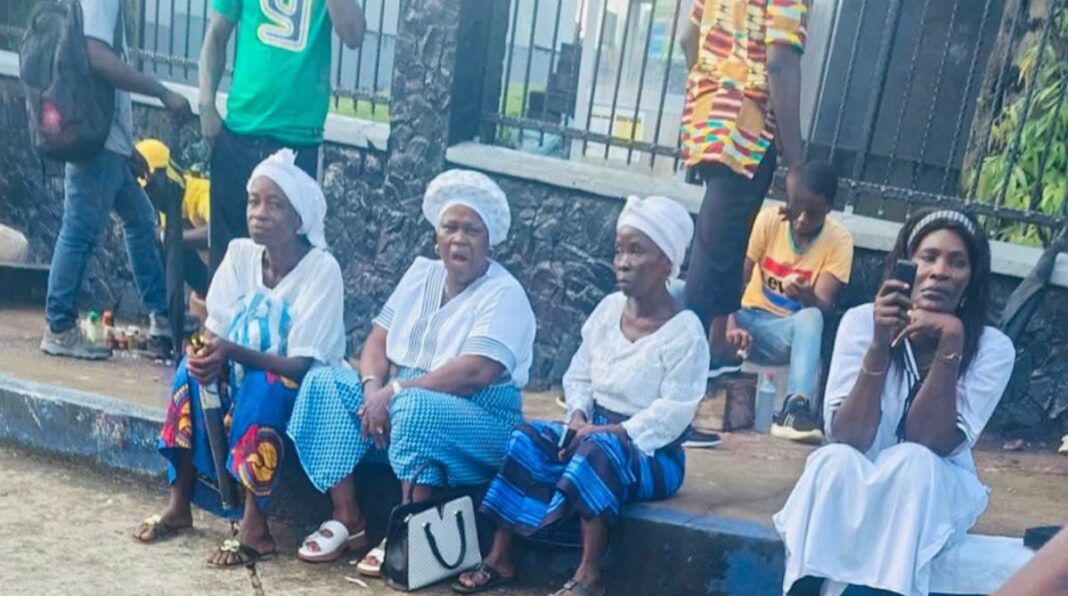
MONROVIA — The bond hearing of former Executive Mansion Chief of Protocol Nora Finda Bundoo on Thursday, June 25, 2026, drew an unusual display of support at Criminal Court “C” at the Temple of Justice, where dozens of women believed to be prayer warriors gathered in solidarity as she faced proceedings in an ongoing corruption-related case.
The group, comprised largely of women and religious supporters, arrived at the court premises early in the morning, praying, singing, and expressing support for Bundoo as the court prepared to hear arguments concerning the surety bond filed on her behalf.
The hearing focused on the justification of the sureties presented in support of Bundoo’s bond. The court is expected to determine whether the individuals and properties offered as guarantees satisfy the legal requirements necessary for her continued release while the corruption case proceeds through the judicial process.
While supporters described their presence as a demonstration of faith and compassion, the gathering has sparked broader discussions about accountability, justice, and the fight against corruption in Liberia.
For many viewers commenting on Facebook during live coverage of the proceedings, the sight of prayer warriors rallying around an individual facing corruption-related allegations underscored a recurring challenge confronting Liberia’s justice system: how to balance the constitutional rights of accused persons with the public’s increasing demand for accountability in cases involving public officials and public funds.
Liberia is one of Africa’s most religious countries, where faith remains deeply embedded in social and political life. Churches and religious organizations play influential roles in shaping public opinion, and it is common for believers to pray for individuals facing legal, medical, or personal challenges. However, some anti-corruption advocates argue that while prayer and spiritual support are fundamental rights, they should not distract from the seriousness of allegations involving the misuse of public resources.
The Bundoo proceedings come at a time when corruption remains one of Liberia’s most persistent governance challenges. Successive governments have pledged to combat corruption and strengthen transparency, yet allegations of financial misconduct continue to surface across public institutions, fueling public frustration and skepticism about whether meaningful accountability is being achieved.
Anti-corruption advocates, including the Center for Transparency and Accountability in Liberia (CENTAL), have repeatedly warned that corruption continues to undermine Liberia’s development agenda. Despite millions of dollars being allocated through national budgets and international assistance programs over the years, many Liberians still face deteriorating roads, inadequate healthcare facilities, under-resourced schools, and limited access to basic public services, raising concerns about how public resources are being managed.
Across the country, roads remain impassable during rainy seasons, health facilities struggle with shortages of equipment and medicines, public schools face chronic resource constraints, and access to electricity and safe drinking water remains limited in many communities. Development specialists and governance advocates frequently point to corruption, mismanagement, and weak oversight mechanisms as major factors contributing to these shortcomings.
When public funds intended for roads, schools, hospitals, agriculture, sanitation, and other essential services are allegedly diverted or mismanaged, the consequences extend far beyond financial losses. Entire communities are denied opportunities for development, economic growth slows, and citizens lose confidence in institutions established to serve them.
Corruption also undermines investor confidence and weakens Liberia’s ability to attract sustainable economic partnerships. Investors often view corruption as a significant risk factor because it increases uncertainty, raises the cost of doing business, and creates concerns about governance and accountability.
Against this backdrop, the case involving Bundoo has become more than a legal proceeding. Judging from reactions on social media, particularly Facebook, many Liberians view the proceedings as another test of whether the country’s justice system can independently and impartially address allegations involving current or former public officials, regardless of their political connections or social standing.
The presence of prayer warriors at the hearing has further intensified public debate. While supporters insist they are merely exercising their faith and standing with someone they believe deserves prayers during a difficult period, others argue that corruption cases should serve as opportunities for national reflection on the consequences of public-sector misconduct rather than demonstrations of political or personal loyalty.
Political commentators and anti-corruption advocates who have weighed in on the case through social media argue that the central issue before the court is not public sympathy but whether the evidence, bond requirements, and legal procedures meet the standards established under Liberian law. They contend that the determination of guilt or innocence must rest on facts presented before the court rather than public sentiment or political loyalty.
As the bond hearing unfolds, many Liberians are watching closely to see whether the judicial process will proceed transparently and without interference. The outcome will likely be viewed not only as a decision affecting one defendant but also as an indicator of Liberia’s broader commitment to accountability and the rule of law.
For a country still striving to overcome decades of governance challenges and allegations of corruption within public institutions, cases involving former senior government officials carry immense symbolic importance. Whether justice is ultimately served will depend not on the size of the crowd gathered outside the courtroom or the number of prayers offered, but on the ability of the courts to fairly, independently, and courageously uphold the law.
As Liberia continues its struggle against corruption, many citizens believe that genuine progress will require more than promises and public declarations. It will require consistent accountability, stronger institutions, effective oversight, and a justice system capable of ensuring that no public official, regardless of status or influence, stands above the law.