
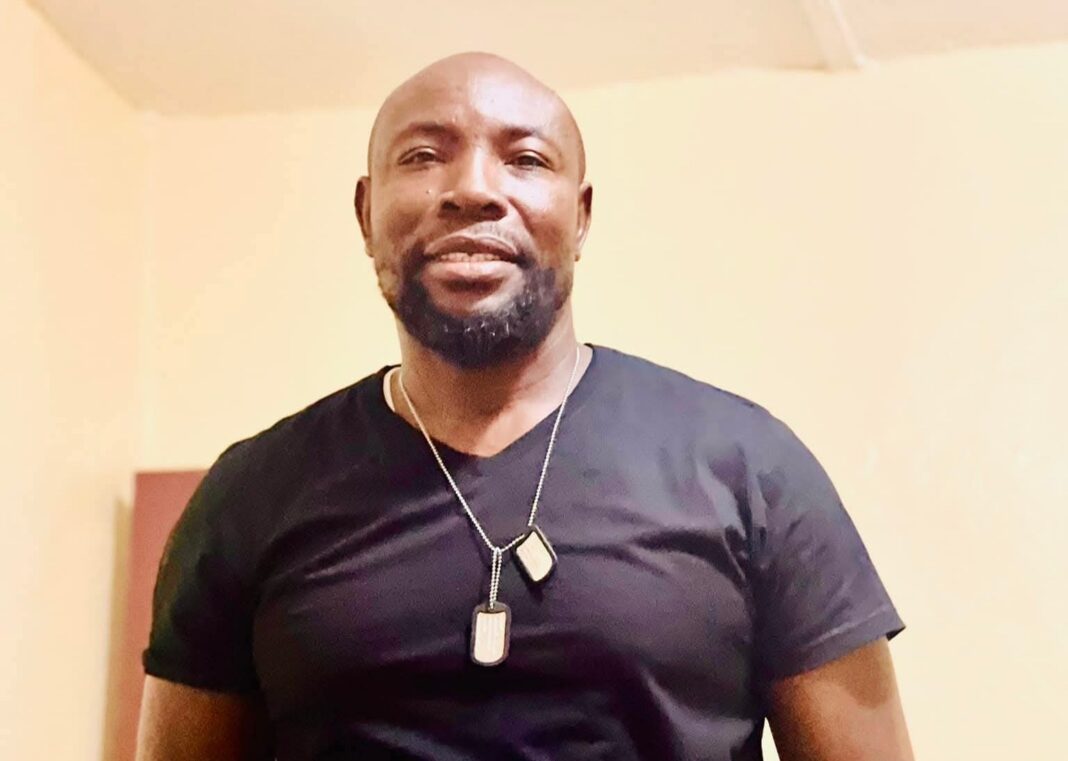
MONROVIA – A criminal case involving former Liberia National Police Crime Services Commissioner Johnny Bolar Dean has moved beyond internal police scrutiny and into the courtroom, placing allegations of bribery and interference with an active investigation under judicial examination.
Dean has been forwarded to the Monrovia City Court alongside Stephanie Fefe Mensah following allegations that a US$10,000 payment was made while police were investigating individuals allegedly connected to Liberia’s massive illicit drug trafficking case.
The charges against Dean include criminal conspiracy, bribery, tampering with a criminal investigation and obstruction of government functions by a public servant.
The allegations are particularly significant because they involve a former senior police officer whose responsibilities included overseeing crime-related investigations.
The Alleged Payment
According to a police charge sheet dated September 1, 2026, Dean allegedly received US$10,000 from Stephanie Fefe Mensah while her alleged “boss-man,” Edison Brown, and Alpha Bah were under investigation in connection with the drug trafficking case.
Police allege that the payment was not an ordinary personal transaction but was connected to an effort to influence the investigation.
Investigators further allege that Dean used his official position to frustrate the investigation, disclosed confidential information and failed to carry out duties expected of him as a senior police official.
The allegations therefore go beyond the question of whether money changed hands.
At their core, they concern whether an official entrusted with protecting an investigation allegedly became entangled in circumstances capable of compromising it.
Dean’s Explanation
Dean reportedly admitted receiving the US$10,000.
But according to the police charge sheet, he told investigators that Mensah gave him the money for safekeeping and identified her as his lover.
That explanation now becomes a potentially important element of the court proceedings, where the prosecution will have to establish the circumstances surrounding the payment and whether it was connected to the criminal investigation.
The money was subsequently retrieved from Dean, according to investigators.
The central courtroom battle is therefore likely to focus not simply on possession of the money but on intent, context, communication, conduct and the alleged relationship between the payment and the ongoing investigation.
From Internal Discipline to Criminal Prosecution
The case reportedly began with an administrative investigation conducted by the LNP’s Professional Standard Division.
Dean and Mensah were subsequently turned over to the Crime Services Department on August 18.
A Special Investigative Team headed by ACP Harold T. Jones then conducted the criminal investigation that resulted in the charges.
That sequence is important.
It indicates that the allegations did not emerge solely from an external accusation but proceeded through an internal police process before becoming a criminal matter before the courts.
Yet the case also exposes a difficult institutional contradiction.
The police are expected to investigate criminal networks, preserve evidence, protect confidential information and prevent interference with active cases.
When a senior police official is accused of doing the opposite, the credibility of the investigative institution itself can come under scrutiny.
The Drug Case Raises the Stakes
The backdrop makes the allegations even more serious.
The case is linked to an investigation involving a reported US$317 million illicit drug trafficking operation, one of the most consequential narcotics investigations to confront Liberian authorities.
Any credible allegation that sensitive information was disclosed or that an investigation was deliberately obstructed therefore raises questions about whether criminal networks can exploit weaknesses inside the institutions pursuing them.
It also raises a broader question for law enforcement: Who investigates the investigators when allegations of misconduct reach the upper levels of the police hierarchy?
In this case, the answer has so far been an internal professional-standards process followed by a criminal investigation and court proceedings.
The Court Must Separate Allegation From Proof
Dean and Mensah have now secured separate property bonds and are expected to appear for subsequent proceedings.
Dean’s bond is set at US$15,000, while Mensah’s is US$5,000.
But the amounts of their bonds should not be interpreted as a judicial determination of guilt or innocence.
The prosecution still carries the burden of proving its allegations in court, while both defendants remain presumed innocent unless convicted by a competent court.
What makes the case consequential is not merely the amount of money allegedly involved.
It is the allegation that money may have intersected with the machinery of criminal justice at a moment when authorities were pursuing a major drug investigation.
If proven, the allegations could raise profound questions about police integrity, accountability and the protection of sensitive investigations.
If not proven, the case will nevertheless test whether Liberia’s justice system can investigate accusations against powerful law-enforcement officials without fear or favor.
The US$10,000 may be at the center of the charge sheet. But the larger issue before the court is whether public authority was allegedly placed in the service of justice or compromised at its expense.