
Boakai’s UN Speech Raises Questions About Whether Liberia’s Present-Day Story Received Enough Attention
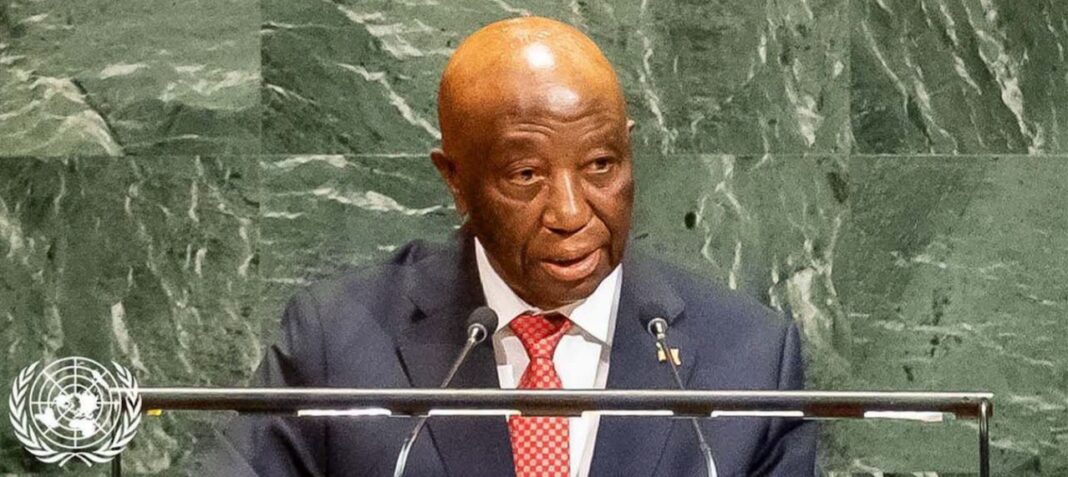
MONROVIA — President Joseph Nyuma Boakai went before the 81st United Nations General Assembly on September 24 carrying two responsibilities: to speak for Liberia and, as a member of the UN Security Council, to advance issues affecting Africa and the wider international system.
He chose to make the reform of the international system a major part of Liberia’s message.
There is nothing inherently wrong with that.
President Boakai’s call for permanent African representation on the UN Security Council reflects a long-standing African position. In his address, he argued that Africa, with approximately 1.5 billion people and nearly one-third of UN membership, should have at least two permanent seats, including veto rights for as long as the veto remains part of the Council’s structure.
But that legitimate continental argument raises another question:
Where, in all of this, was Liberia’s own seat at the table?
Not the physical seat Liberia currently occupies at the United Nations.
The national seat.
The seat representing Liberia’s security concerns, economic needs, border challenges, drug-trafficking crisis, unemployment, infrastructure deficit, institutional reforms and the expectations of millions of Liberians.
That is where critics say the President’s UN appearance may have represented a missed opportunity.
AFRICA NEEDS A VOICE — BUT SO DOES LIBERIA
Liberia can advocate for Africa and still tell the world what Liberia needs.
It can support permanent African representation while explaining why Liberia needs stronger international partnerships.
It can defend multilateralism while telling the international community where Liberia’s own institutions require support.
It can invoke Liberia’s historic role in the creation of the United Nations while presenting a detailed account of the country that exists in 2026.
The question is whether President Boakai sufficiently connected those two missions.
His speech reminded the international community that Liberia was one of only four African countries to sign the UN Charter in 1945.
He also invoked Liberia’s transition from civil conflict to constitutional democracy and presented the country as evidence that institutions can be rebuilt and dialogue can overcome division.
Those historical credentials matter.
But the world did not gather in New York in 2026 simply to hear what Liberia represented in 1945.
The international community was also listening for what Liberia represents now.
THE LIBERIA OF 2026 DESERVED A CLEARER PRESENTATION
What is Liberia asking the world to help it accomplish today?
That question could have been at the heart of the President’s address.
Liberia faces significant contemporary challenges: economic development, employment, infrastructure, governance, organized crime, narcotics trafficking and regional security.
President Boakai did refer to several of these issues.
He spoke about public accountability, prudent financial management, corruption, development financing, agriculture, roads, education and climate change. He also specifically identified transnational organized crime, cyber warfare and illicit narcotics trafficking along Gulf of Guinea maritime corridors as evolving threats facing West Africa.
But the criticism is not that these subjects were absent.
It is that they could have been much more specifically and forcefully presented as Liberia’s national priorities.
The President could have told the world:
This is where Liberia stands.
This is what we have accomplished.
This is where we are struggling.
These are the threats confronting our people.
This is the assistance we require.
And this is what Liberia is prepared to contribute in return.
That would have given the speech a more unmistakable Liberian identity.
THE SORLUMBA OMISSION
Perhaps the clearest example is the Liberia-Guinea border situation.
Sorlumbah was not merely a theoretical foreign-policy issue.
Liberian authorities had publicly acknowledged tensions at the crossing, involving Guinean military personnel and Liberia’s Joint Security over the location of checkpoints. The government said the two sides had engaged in talks, agreed to exercise restraint and were pursuing a peaceful diplomatic resolution.
Earlier in the year, President Boakai had also discussed the Liberia-Guinea border situation with Ivorian President Alassane Ouattara. His meeting with Sierra Leonean President Julius Maada Bio likewise addressed border disagreements involving Guinea, Liberia and Sierra Leone and the need for diplomatic solutions.
Yet there was no specific reference to Sorlumbah in the published UNGA speech.
That omission becomes more noticeable because the President devoted considerable attention to preventive diplomacy, conflict prevention and regional security.
A short, carefully worded reference to Liberia’s own border challenge could have demonstrated that the principles Liberia was advocating at the United Nations were not merely theoretical.
It could have told the world:
Liberia is not only talking about preventive diplomacy. Liberia is living it.
THE COCAINE CRISIS NEEDED MORE THAN A PASSING REFERENCE
The same question arises with narcotics trafficking.
Liberia is confronting a major drug-trafficking challenge, while West Africa remains a significant transit region for international criminal networks.
President Boakai did acknowledge illicit narcotics trafficking and requested international support in areas including coast guard surveillance, intelligence sharing and port-security technology.
That was important.
But the President had an opportunity to make Liberia’s request much more concrete.
What exactly does Liberia need from the United States, Europe, the United Nations and other international partners?
More intelligence?
More maritime surveillance?
Port-security equipment?
Forensic capacity?
Financial-crime investigations?
Training?
Cross-border intelligence cooperation?
Asset-tracing assistance?
The UN platform offered an opportunity to place Liberia’s emerging security challenges directly before the international community.
A broader reference to narcotics trafficking was useful.
A detailed presentation of Liberia’s specific needs could have been more consequential.
RESTORING TRUST ABROAD WHILE RESTORING TRUST AT HOME
There is another irony in the President’s message.
The central theme of the 81st UN General Assembly is “Restoring Trust, Managing Transformation.”
President Boakai told the Assembly that trust in multilateralism has been damaged and that the international system must become more effective, representative and capable of responding to crises.
He also said his administration is strengthening public accountability, pursuing prudent financial management, intensifying the fight against corruption and supporting the judiciary in rebuilding citizens’ confidence.
That creates an opportunity for a powerful national narrative.
Liberia itself is engaged in a struggle to restore public confidence in government institutions.
The President could therefore have used the UN platform to connect Liberia’s international message with measurable domestic transformation.
Instead of simply telling the world that Liberia has risen from the ashes of war, the speech could have asked:
What has Liberia actually built since the war?
What remains broken?
What reforms are working?
Where are the gaps?
What does Liberia need from the international community to close them?
Those questions would have brought the UN speech closer to the lives of ordinary Liberians.
THE DANGER OF LIVING TOO MUCH IN HISTORY
Liberia’s history is unquestionably important.
Its role in the founding of the United Nations is historically significant.
Its experience with civil war, peacebuilding and democratic transition gives it legitimate authority to speak about conflict prevention and reconciliation.
But history can serve two different purposes.
It can provide credibility for a country’s contemporary message.
Or it can become a substitute for explaining contemporary realities.
The challenge for Liberia is to ensure that its history is used as a foundation for influence rather than as the principal source of its international identity.
The Africa of 1945 is not the Africa of 2026.
And Liberia’s international environment today is radically different from the one that existed when the UN Charter was signed.
The question, therefore, is not whether Liberia should remember 1945.
It should.
The question is whether Liberia can use 1945 to explain 2026.
AFRICA’S AGENDA CANNOT REPLACE LIBERIA’S AGENDA
There is a legitimate continental dimension to Liberia’s foreign policy.
As a current Security Council member, Liberia has a platform to advocate for African interests.
Indeed, President Boakai explicitly argued that Africa deserves permanent representation on the Council and linked that demand to the legitimacy and credibility of the international system.
But Liberia’s continental responsibilities should not erase its national responsibilities.
The country can speak for Africa while speaking clearly about Liberia.
It can demand African representation while demanding international support for Liberia.
It can defend reform of the UN while explaining the reforms Liberia itself is undertaking.
It can talk about global peace while describing the security challenges confronting its own borders.
And it can discuss international cooperation while telling potential partners exactly where their assistance can make a difference.
That is the balance critics say was missing.
THE QUESTION BOILS DOWN TO ONE THING
President Boakai had approximately one global microphone.
He used it to speak about restoring trust in multilateralism, reforming the international system, Africa’s representation, global peace and security, climate change, development financing and other international concerns.
Those are legitimate issues.
But the President also had an opportunity to introduce the world to Liberia as it exists today.
A Liberia facing drug-trafficking threats.
A Liberia dealing with border tensions.
A Liberia seeking investment and development financing.
A Liberia trying to strengthen public institutions.
A Liberia struggling with the expectations of a young population.
A Liberia attempting to translate peace into jobs, infrastructure and economic opportunity.
A Liberia that needs international partners—but also has something to contribute.
That story deserved greater space.
The issue, therefore, is not whether President Boakai said the wrong things.
It is whether he said enough about the things that matter most to Liberia right now.
The world already knows that Liberia helped establish the United Nations.
The more urgent question is whether the world now understands what Liberia needs to become stronger, safer and more prosperous.
And that leaves perhaps the most important question from the President’s UN appearance:
Did Liberia use the world’s most important diplomatic platform to explain the Liberia of today—or did it spend too much of that opportunity reminding the world about the Liberia of yesterday?