By D. Roland Taygar Sr.
In 2016, Liberia was emerging from the shadows of a devastating civil war, grappling with significant challenges in rebuilding its educational infrastructure. Recognizing critical gaps in access, quality, and affordability of education, the Liberian government initiated a transformative partnership with Bridge International Academies, now known as Bridge-Liberia Academies, supported by New Globe. This for-profit educational organization is distinguished by its innovative, technology-driven approach to learning.
The partnership was launched with considerable optimism, aimed specifically at enhancing educational opportunities in rural areas where access to quality schooling was severely limited. The objective was to align educational experiences for children in underserved regions with those enjoyed by their urban counterparts, regardless of their economic backgrounds, beliefs, or social status—all while maintaining low operational costs. This initiative was designed to leverage Bridge’s technological approach not only to reduce overhead expenses but also to facilitate rapid scaling of services. The implementation of tablets and smartphones, coupled with automated systems, was expected to streamline operations across various facets of education, including scripted lesson plans developed by international experts, classroom monitoring, payroll processing, attendance tracking, and assessment management.
However, despite the initial positive aspirations of this collaboration, the current reality paints a starkly different picture. Beneath the polished exterior, the operations of Bridge-Liberia Academies have been fraught with deception and systemic issues. Corruption and exploitative labor practices have emerged, prompting serious concerns regarding the integrity of the organization and the actual quality of education it delivers. As a result, the very vision of enhancing global education equity appears to be undermined by the troubling realities of its implementation in Liberia.
Alleged Fraudulent Practices by Bridge-Liberia Incorporated
Quality of Education:
While Bridge-Liberia has marketed its educational services as “life-changing” and of “world-class” quality, the curriculum has largely been developed at a foreign head office, which seems disconnected from the unique cultural and educational needs of Liberian society. The materials created by international educators do not account for local context, traditions, or the specific challenges faced by students in Liberia.
Furthermore, teachers receive these pre-designed, scripted lessons electronically on tablets, which they are expected to deliver verbatim. This approach presents significant challenges for educators, hindering their ability to adapt lessons to their students’ needs and interests. Consequently, the education provided becomes less relevant, and the potential for creating an engaging and meaningful learning environment is drastically reduced.
The rigid structure imposed by a fixed schedule and pacing further constrains teachers. Instead of fostering an adaptive, interactive classroom experience, teachers are compelled to follow predetermined scripts that may not resonate with their students. This method not only lacks authenticity but also diminishes opportunities for educators to connect with their students on a personal level, ultimately impeding the positive impact that education should have on young minds.
Examination Integrity:
Another grave concern is the integrity of examinations conducted by Bridge-Liberia. It is alleged that the same test questions—primarily multiple-choice—have been in circulation since the organization’s inception in 2016. Such reliance on recycled assessments fosters a culture of complacency among students, who may find it easier to regurgitate past answers rather than engage in meaningful learning.
The use of outdated tests, which can be handled down to students by relatives, friends, or neighbors who have previously taken the test and passed to the next grade, not only significantly compromises the quality of education but also raises fundamental questions about the credibility of the educational outcomes that Bridge-Liberia claims to achieve. Students taking these tests often do not study as required but memorize answers handed to them. This lack of educational rigor directly undermines the purpose of the education system that Bridge-Liberia promises to transform and ultimately impairs students’ readiness for future challenges.
Inhuman Treatment:
Despite numerous artificial challenges created by company management to siphon money at the expense of Liberian children, school leaders and staff have shown commendable dedication—especially volunteer teachers trained by the company who were relocated without resettlement benefits and with limited support to their assigned schools. This exacerbates their struggles to sustain themselves financially during their service.
In light of insufficient support and unfulfilled promises regarding stipends, volunteer teachers have resorted to withholding tablets and delaying the submission of student progress reports as forms of protest.
In response, Bridge-Liberia management has pressured field supervisors to input grades on behalf of teachers rather than addressing their concerns. This practice raises ethical questions and is viewed as academic fraud, jeopardizing the educational integrity of the organization. Such actions warrant serious investigation by relevant authorities.
Contradictions in Student Progress Reports:
In addition to the inhumane treatment of school leaders and volunteer teachers, significant discrepancies have been identified between the annual progress reports that Bridge-Liberia submits to donors and the national government, and the reports provided to parents and guardians. This alarming inconsistency casts doubt on the organization’s transparency and accountability regarding student performance metrics.
It strongly indicates the need for the Ministry of Education to conduct a thorough investigation comparing the reported outcomes with the actual achievements and experiences of students in supported schools. Misinformation of this magnitude not only erodes trust but also perpetuates neglect of students’ needs.
Insufficient Supplies of Educational Material:
Regarding seating arrangements in Bridge-Liberia-supported schools, since the organization’s introduction in 2016, it has claimed to provide desks at a ratio of three students per desk. In reality, this is false and misleading. Many classrooms lack sufficient desks, forcing students to sit on the floor or on bricks supported by planks. When class sizes are large, students are often seated five to a desk, which impacts their learning and undermines their dignity.
The Blackboards Project:
On February 7, 2022, Bridge-Liberia’s media team announced a remarkable achievement: the comprehensive renovation and replacement of blackboards across all supported schools. They claimed the project commenced in January 2022 and was completed by the end of February. However, this was a deceptive attempt to siphon funds.
Reliable sources within the finance department indicated that over $90,000 USD was allocated for this project. In reality, only about $10,000 was spent on accessible and visible schools, leaving many rural schools with deplorable blackboards. Supervisors tasked with assessing the condition of blackboards used Google Forms to report on infrastructure, but reports revealed that many schools in rural areas did not receive the promised renovations or replacements.
Textbooks and Report Cards:
Another troubling issue concerns the provision of educational resources. Although Bridge-Liberia claims to receive substantial funding from the government and international donors for textbooks, teacher resources, and classroom supplies, the actual delivery is inadequate. Allegations suggest that essential textbooks, such as those for Mathematics and Social Studies, are either in low supply, delayed, or not distributed at all—often only halfway through or at the end of the semester. This allows upper management to divert funds intended for these materials.
The textbooks that are supplied are often insufficient for the student population, forcing multiple students to share a single book—a situation that hampers individual engagement with learning. To mask these issues, the organization posts images of donated books on social media and news outlets, which do not align with the national curriculum or Liberian culture. For example, textbooks on music and culture often do not reflect Liberian traditions.
In addition, report cards and certificates of achievement, produced between 2021 and 2022, contain numerous errors. This is due to the higher-ups’ refusal to hire qualified professionals or local companies for printing. Instead, they allocated around $30,000 USD for printing at personal residences, causing delays in distribution and additional expenses for parents. This situation highlights the organization’s corruption and insensitivity to the plight of impoverished Liberian children.
Supervision of Schools:
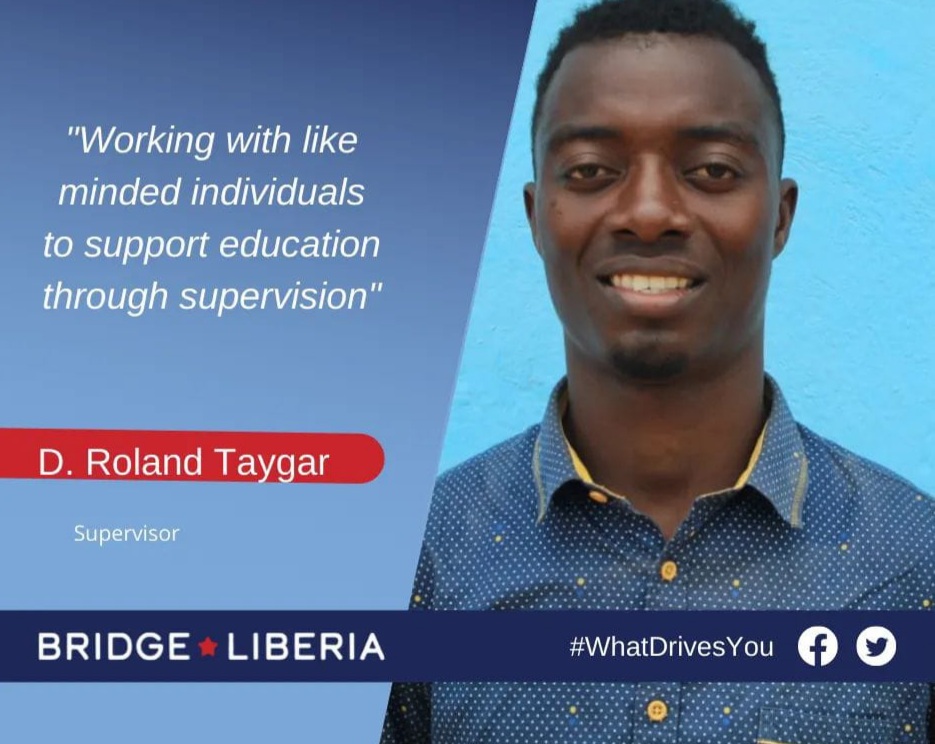
Supervision, a key reason for the government’s engagement of Bridge-Liberia, is severely lacking. Recently, over 10 out of 20 school supervisors were allegedly dismissed unfairly. Currently, one supervisor supports 20–25 schools across different districts and even separate counties. According to the organization’s standard, a supervisor should oversee at most 10 schools and conduct two visits per day. The current situation is far from this standard.
It is alleged that supervisors visit schools only once a month or every two months, hindering student learning. The role of supervisors is to visit schools, troubleshoot technical problems, ensure lessons are occurring, and report issues to the central office. The current supervision model suggests that effective oversight is unlikely, and I challenge management to disclose the actual ratio of supervisors to schools and whether active learning is taking place in all supported schools.
Call for Accountability
Given these serious allegations, it is imperative that Bridge-Liberia’s procurement and finance departments provide transparent wage bills and detailed accounts of past procurement processes. I challenge the management to address these concerns openly. Stakeholders, including the Ministry of Education and the public, must demand clarity to ensure resources are used ethically and effectively. Without accountability, students continue to suffer from these corrupt practices, and the organization’s leadership may continue to thrive at the expense of its educational mission. In conclusion, confronting these fraudulent practices is essential to restoring trust in Liberia’s educational system and ensuring every student receives a quality education that prepares them for the future. I urge the Ministry of Education and other relevant authorities to take these allegations seriously and initiate a formal investigation into Bridge-Liberia Incorporated’s operations.