Transforming Border Tensions into Regional Cooperation—A Reconciliation Framework for Liberia and Guinea
A Reflection: The Liberia–Guinea tension is a reminder that unresolved colonial boundaries should not overshadow the deeper bonds of cultural relationship, inter-marriages, trade networks, shared traditions and community that unite the peoples of the Mano River Region.
A comprehensive analysis of the ongoing tension between Liberia and Guinea requires examining several interconnected dimensions, including border governance, cross-border trade, socio-cultural relations, natural resource management, and regional stability within the Mano River Union. The current dispute reflects broader structural challenges common to West African borderlands, where colonial-era boundaries intersect with deeply integrated communities and shared economic systems. Understanding the dynamics of the Liberia–Guinea tension therefore demands a multidimensional approach that considers not only state sovereignty and territorial claims but also the social, economic, and environmental realities that shape relations between border communities.
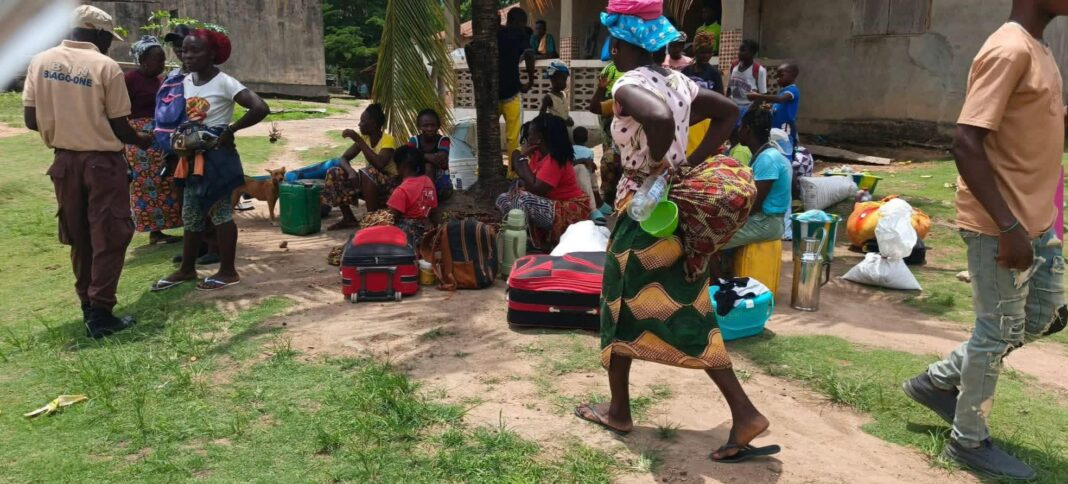
Recent incidents along the Liberia–Guinea frontier, particularly in northern Liberia near Lofa County, have heightened tensions between the two countries. Reports of Guinean security personnel entering areas considered by Liberians to fall within their territory, halting certain economic activities such as sand mining, and confronting local authorities have created anxiety among residents of border communities. These developments have disrupted daily life, causing temporary displacement of villagers, interruptions to schooling, and reduced commercial activity in nearby markets. At the heart of the dispute is uncertainty surrounding the precise demarcation of sections of the international boundary, especially along riverine zones where natural shifts in waterways and limited physical markers complicate the interpretation of colonial-era maps and agreements.
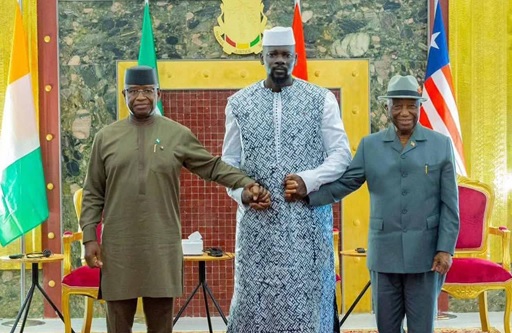
Historically, relations between Liberia and Guinea have been shaped by both cooperation and tension. During the period of the Liberian civil wars from 1989 to 2003, Guinea hosted significant numbers of Liberian refugees and played a notable role in the broader regional security environment. In the post-war period, both countries have sought to strengthen diplomatic and economic cooperation through regional institutions such as the Mano River Union, which also includes Sierra Leone and Côte d’Ivoire. The MRU framework has aimed to promote regional peacebuilding, economic integration, and improved cross-border governance. Nevertheless, unresolved border demarcation issues remain a latent source of friction between member states, particularly in remote areas where state presence is limited and local communities historically operated with minimal regard for national boundaries.
The economic dimension of the Liberia–Guinea relationship is especially significant because border communities rely heavily on cross-border trade for their livelihoods. Markets in northern Liberia and southern Guinea are interconnected through both formal and informal trading networks involving agricultural produce, palm oil, livestock, timber, and small-scale mining products. For many residents, crossing the border is a routine part of daily life, allowing farmers and traders to access markets, purchase goods, and maintain family networks. When tensions arise and border activities are restricted, the consequences are felt immediately through declining trade, disrupted supply chains, and reduced household income. In this sense, geopolitical disputes between governments can have disproportionate effects on local populations whose survival depends on open and cooperative borders.
Equally important are the deep socio-cultural ties linking communities on both sides of the border. Several ethnic groups inhabit both Liberia and Guinea, including the Kissi, Loma, Mandingo, Kpelle, and Gbandi peoples. These groups share languages, traditional leadership structures, religious practices, and cultural institutions that predate the modern state system. Intermarriage between Liberians and Guineans is common, creating extensive kinship networks that span the international boundary. Cultural practices such as initiation societies, communal land management systems, and agricultural festivals further reinforce a shared social identity across the frontier. As a result, the political boundary separating the two states often does not correspond with the lived cultural reality of the communities residing in the borderlands. When tensions escalate between the governments, these communities can find themselves caught between competing national loyalties despite their historically integrated social structures.
Natural resources also play a crucial role in shaping the dynamics of the dispute. Rivers and surrounding ecosystems along the border support agriculture, artisanal mining, fishing, and domestic water supply. Because many of these resources are located in river basins that straddle national boundaries, disputes over their use can easily become politicized. Activities such as sand mining, timber extraction, and small-scale mineral exploitation may generate economic benefits but also create competition between communities and authorities on either side of the border. In cases where borders are not clearly demarcated or where rivers change course over time, disagreements over resource ownership can escalate into diplomatic tensions. Effective management of shared ecosystems therefore requires cooperative governance mechanisms that recognize both national sovereignty and the ecological interdependence of the region.
The implications of the Liberia–Guinea tension extend beyond bilateral relations and have broader significance for regional stability within the Mano River Basin. The countries of the Mano River Union share a history of interconnected conflicts, particularly during the 1990s and early 2000s when insurgent movements frequently crossed porous borders. While the region has made substantial progress toward peace and reconstruction, unresolved border disputes still carry the potential to undermine trust and create new security challenges. Escalating tensions could disrupt regional trade corridors, strain diplomatic relations among MRU member states, and weaken ongoing efforts to promote economic integration and environmental cooperation.
At the political level, several structural factors contribute to the persistence of such tensions. Many sections of the Liberia–Guinea boundary were originally defined during the colonial period through agreements between European powers, often with limited on-the-ground surveying. As a result, some border segments remain poorly marked or inconsistently interpreted by local authorities. In addition, the peripheral nature of border regions means that state institutions such as security forces, administrative services, and infrastructure are often weak or unevenly distributed. This can create space for competing claims over land, resources, and authority, particularly where traditional leaders and local communities maintain customary land rights that do not always align with national legal frameworks.
Looking forward, the most likely path toward stability lies in diplomatic engagement and cooperative border management. Bilateral negotiations between Liberia and Guinea, supported by regional organizations such as the Mano River Union, could help clarify disputed boundaries, establish joint monitoring mechanisms, and strengthen communication between security agencies on both sides of the border. Community-based peacebuilding initiatives involving traditional leaders, women’s groups, youth organizations, and cross-border traders may also help reduce tensions by fostering dialogue and reinforcing the shared cultural heritage of the region. In addition, joint frameworks for managing riverine resources and regulating activities such as mining and sand extraction could transform potential sources of conflict into opportunities for cooperative development.
In conclusion, the Liberia–Guinea tension illustrates the complex nature of border politics in West Africa, where state sovereignty, local livelihoods, cultural identity, and environmental resources intersect. Although the border formally separates the two countries, the societies inhabiting the frontier remain deeply interconnected through trade networks, family relationships, and shared traditions. Sustainable conflict resolution therefore requires approaches that extend beyond traditional diplomacy to include regional cooperation, community engagement, and joint resource governance. By addressing the structural causes of border disputes while recognizing the social realities of cross-border communities, Liberia and Guinea can transform their shared frontier from a zone of tension into a platform for regional cooperation and development within the Mano River Basin.
Speaking candidly.