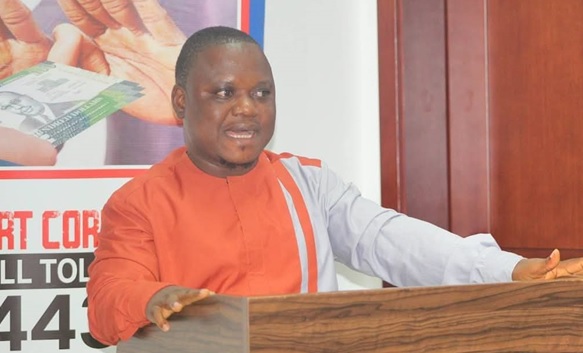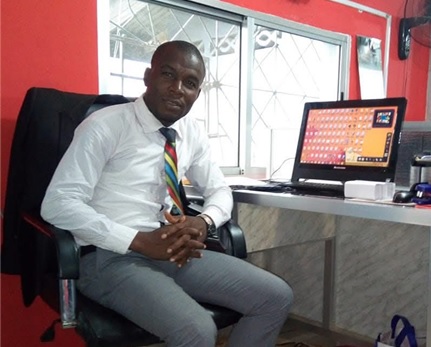

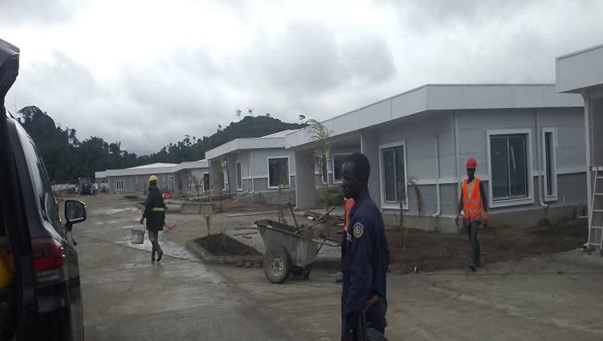
Liberia finds itself once again at the crossroads of governance and public trust, this time with troubling revelations from Eddie D. Jarwolo, Executive Director of NAYTOME-Liberia. According to Jarwolo, a massive “Presidential Villa” valued at more than US$10 million is under construction in Foya District, Lofa County, the birthplace of President Joseph Nyuma Boakai. The project, allegedly undertaken by MUSNS Groups Incorporated, with close presidential associates at the helm, raises uncomfortable questions about transparency, accountability, and priorities in a country still struggling to provide even the most basic services for its citizens.
For a country whose public schools lack textbooks, whose hospitals are running out of essential drugs, and whose roads are washed away every rainy season, the symbolism of such a project is damning. Jarwolo rightly asked: what rationale exists for spending such an astronomical sum on a private-style villa when the people of Foya and, by extension, Liberia, remain trapped in cycles of poverty and neglect? A US$10 million investment in factories or agricultural development could have transformed livelihoods in Lofa, creating jobs and generating revenue. Instead, Liberians are presented with a palace-like construction shielded by state security.
At a time when Liberia faces a US$44 million revenue shortfall in its 2024 national budget, the optics of a $10 million villa are indefensible. President Boakai, who campaigned under the banner of a “rescue mission,” seems to have quickly forgotten that rescue begins with prudent management of scarce resources and prioritization of public welfare. A country that relies on donor support for vaccines, school programs, and road maintenance cannot afford to tolerate leaders investing in vanity projects.
Moreover, this construction echoes a troubling pattern in Liberia’s political history. Former President George Weah was repeatedly accused of erecting mansions, resorts, and private estates during his six-year term, with little transparency about financing. Weah’s critics argued that such projects were symbols of self-indulgence while citizens languished in poverty. Today, President Boakai risks falling into the same trap, building for prestige rather than progress. The fact that state security guards are protecting this villa only sharpens suspicions; is this truly a private project, or are public resources quietly being diverted to support it?
Even more concerning is the lack of clarity about how this project was financed. Jarwolo has raised critical questions: was the Public Procurement and Concessions Commission (PPCC) involved in reviewing the project? Did the Ministry of Public Works or any relevant agency approve the construction? Or was this deliberately kept outside formal processes to avoid scrutiny? If public money is being used, Liberians must demand full disclosure. If it is privately financed, transparency is still essential, especially since the contractors, MUSNS Groups Incorporated, have close ties to the President. The involvement of figures like Joe Mulbah and Edward Yamba, both alleged confidants of the President, makes the project look less like a private investment and more like a political reward. This is where corruption often begins, behind closed doors, under the cloak of friendship, with accountability sidelined.
Leadership is not measured by the size of one’s mansion but by the reach of one’s policies. The decision to build such an opulent villa in Lofa, the President’s home county, reeks of parochialism and favoritism. It reinforces the perception that Liberian presidents use state power to fortify their personal legacies in their hometowns while neglecting the broader needs of the nation. For the people of Foya, the sight of towering walls and luxury cement rising in their midst is a cruel contrast to their daily reality. Most households still depend on subsistence farming, schools lack proper facilities, and access to healthcare remains a daily struggle. A presidential villa does not feed families, does not educate children, and does not heal the sick. If anything, it deepens the sense of exclusion and fuels resentment.
This scandal cannot be brushed aside as mere speculation. Civil society organizations, the Press Union of Liberia, and watchdog institutions like the Liberia Anti-Corruption Commission (LACC) and the General Auditing Commission (GAC) must investigate. Too often, allegations of misuse of resources are left to die in the court of public opinion without official inquiry. This time, Liberia cannot afford silence. International partners, too, must take note. Liberia remains heavily dependent on donor aid, from the European Union, the United States, Sweden, and UNDP, among others. A country pleading for international assistance while simultaneously spending millions on private presidential estates sends the wrong message. Donors should not close their eyes to such excesses, for it undermines the very development programs they are funding.
History is unkind to leaders who place self-indulgence above service. From Samuel Doe’s Executive Mansion renovations to Charles Taylor’s obsession with wealth and Weah’s Jamaica Resort saga, Liberian leaders have often mistaken power for privilege. Each time, the result has been the same; public outrage, declining trust, and ultimately, political failure. Joseph Boakai campaigned on integrity, humility, and rescue. If these revelations are true, then he risks squandering not just his reputation, but also the fragile hope many Liberians placed in him after years of disappointment. At 82, this should have been his opportunity to leave behind a legacy of honesty and reform. Instead, he may be remembered for building a villa while the nation drowned in unmet needs.
Liberians must insist on answers: Who is financing this project? Was procurement law followed? What role, if any, did the state play in this construction? And why, in the face of so many urgent national priorities, is a presidential villa considered necessary at all? The time for silence has passed. This issue cuts to the heart of governance, accountability, and the very meaning of leadership. If Liberia is to move forward, leaders must learn that monuments do not rescue nations; policies do. Villas do not build legacies; service does.
Liberia deserves more than palaces in the villages of presidents. It deserves schools where children can learn, hospitals where mothers can give birth safely, roads that connect farmers to markets, and jobs that give dignity to its youth. Until then, the $10 million villa in Foya will stand not as a symbol of progress, but as a monument to misplaced priorities.