MONROVIA – The Center for Transparency and Accountability in Liberia (CENTAL) has raised serious concerns over fresh corruption allegations involving the Managing Director of the Liberia Airport Authority (LAA), calling on President Joseph Nyuma Boakai to adopt a consistent and uncompromising approach in addressing corruption across government.
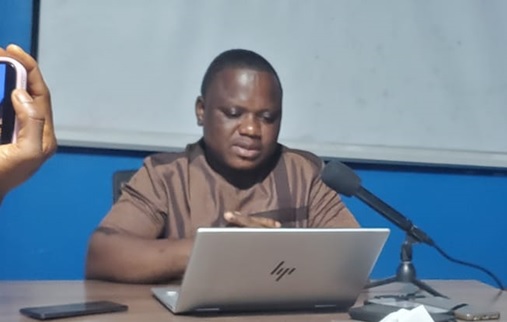
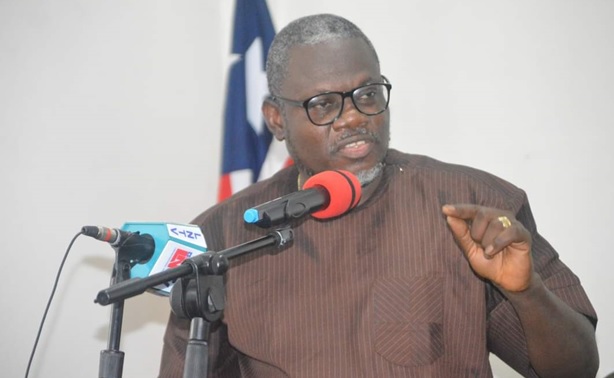
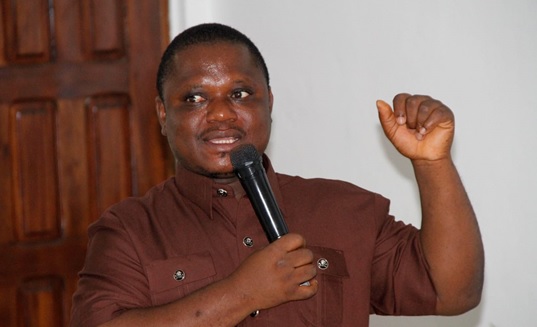
Speaking at a press conference on Tuesday, March 17, 2026, in Sinkor, Monrovia, CENTAL Executive Director Anderson D. Miamen outlined what he described as troubling developments surrounding Mr. Ernest Hughes, a former top official of the Liberia Anti-Corruption Commission (LACC) who now heads the LAA.
According to Miamen, recent media reports allege that Ernest Hughes solicited a 15 percent kickback from a Canadian aviation navigation contractor as a condition to approve a payment of approximately US$1 million for services rendered at the Roberts International Airport.
The allegations have since triggered internal actions at the LAA, with its Board of Directors reportedly reviewing the matter and deciding to suspend Hughes while forwarding the case to the Ministry of Justice for a full investigation. However, before the decision could be implemented, Hughes requested a leave of absence, stating that the move was intended to allow the investigation to proceed without any perception of interference.
The Executive Mansion subsequently accepted Hughes’ request for leave and mandated the Ministry of Justice to conduct a comprehensive probe into the allegations before March 30, 2026. While acknowledging this step, CENTAL says the handling of the case raises broader concerns about consistency in the government’s anti-corruption response.
“We take keen note of the difference in trends by the Executive Mansion in the handling of corruption allegations,” Miamen said. “The President seems to be picking and choosing, immediately suspending some accused persons while merely allowing others to resign or proceed on leave without decisive action or clear pathways to prosecution.”
Miamen stressed that such inconsistencies risk undermining public trust and signal what he termed “limited political will” to confront corruption decisively, regardless of who is involved. He argued that allegations of this magnitude demand stronger and more uniform action from the highest levels of government.
“Allegedly soliciting a 15 percent bribe to approve a US$1 million payment is a grave accusation,” he stated. “In such circumstances, the appointing authority should act decisively by suspending the accused, especially given Mr. Hughes’ past role as a senior official of the anti-corruption commission.”
CENTAL further emphasized that when institutional boards, such as that of the LAA, determine allegations to be credible and serious, their decisions should be reinforced, not circumvented. Allowing an accused official to proceed on voluntary leave instead of enforcing suspension, the group argues, weakens accountability mechanisms.
Drawing parallels with other recent cases, including that of former Ombudsman Chairperson Finley Y. Karngar, CENTAL called on the Boakai administration to ensure that similar standards are applied across the board. The organization warned that selective enforcement could erode the integrity of Liberia’s anti-corruption framework.
“We call on the government of Liberia and President Boakai to adopt a uniform approach in dealing with allegations of corruption,” Miamen urged. “Actions such as suspension, dismissal, and prosecution should be applied equally where evidence and circumstances demand.”
In concluding, CENTAL reaffirmed its commitment to promoting transparency and accountability, while urging all public officials, particularly those in integrity institutions, to lead by example. The organization also called on the President to demonstrate stronger resolve by ensuring that no individual is shielded from scrutiny, emphasizing that the credibility of Liberia’s anti-corruption efforts depends on fairness, consistency, and decisive action.