
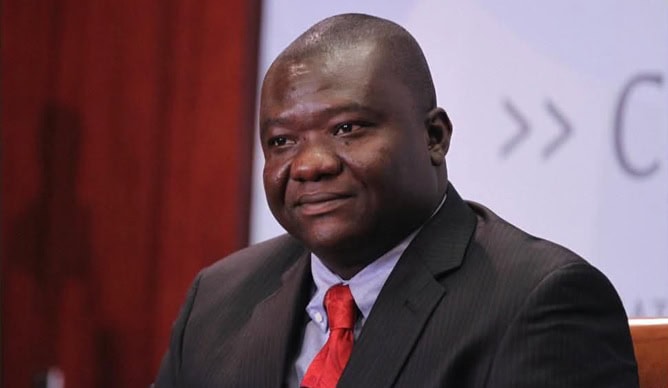
MONROVIA – Former Director General of the National Public Health Institute of Liberia (NPHIL), Dr. Tolbert G. Nyenswah, has called on the Liberian government to place “Investing in People” at the center of its national development strategy if the country hopes to qualify for a second Millennium Challenge Corporation (MCC) Compact. In a statement titled “What Liberia Must Do to Qualify for a Second MCC Compact: Putting ‘Investing in People’ at the Center,” Dr. Nyenswah emphasized that human development must be treated as a national priority rather than a peripheral policy goal.
Dr. Nyenswah noted that Liberia’s progress toward sustainable development and economic independence remains closely tied to its performance on the MCC scorecard. He recalled that between 2016 and 2021, the country implemented its first MCC Compact worth $257 million, which funded major projects including the rehabilitation of the Mount Coffee Hydropower Plant, the enhancement of electricity transmission and distribution networks, and improvements in road infrastructure. However, he argued that while these investments were transformative, they must now be complemented by strong social sector programs.
“As Liberia now positions itself for a potential second compact, greater attention must be directed toward one of the most critical pillars of human development, health, education, water, sanitation and hygiene (WASH), and social protection,” Dr. Nyenswah wrote. He stressed that these sectors form the foundation for building a healthy, productive, and resilient population capable of driving economic growth.
Dr. Nyenswah underscored that the MCC’s “Investing in People” category is central to determining how effectively governments invest in their citizens. He explained that the indicators under this category, Health Expenditure, Child Health, and Immunization Rates, measure a government’s commitment to improving the welfare and productivity of its population. “Passing these indicators is critical,” he said, “but the MCC also considers progress over time, whether a country is demonstrating credible and sustained improvements.”
According to him, Liberia’s persistent failure in the Child Health indicator paints a troubling picture of the country’s health system. “This indicator captures the quality and reach of care in clinics, hospitals, and community health programs, as well as financing, governance, data systems, and inter-sectoral coordination,” Dr. Nyenswah explained. “Liberia’s performance in this area over the past five years, 35% in 2021, 33% in 2022, 33% in 2023, 37% in 2024, and 36% in 2026, yields an average score of approximately 34.8%, a massive failure of this important composite indicator.”
He lamented that such a consistently low score reflects deeper structural weaknesses in Liberia’s health system. “Immunization programs are stagnating, nutrition interventions remain underfunded, and WASH services continue to deteriorate,” he said. “Together, these shortcomings expose a system struggling to meet even the most basic health needs of its population.” Dr. Nyenswah described the Child Health indicator as “a stark mirror of systemic collapse,” showing how poorly the health system protects the country’s most vulnerable citizens, children under five.
The former NPHIL Director General compared Liberia’s performance on the MCC’s “Investing in People” indicators over the two compact periods, 2016 to 2021 and 2022 to 2026. He pointed out that during the first compact, average health expenditure was around 8% of GDP, far below the 15% target set by African Union member states under the 2001 Abuja Declaration. “From 2022 to 2026, average health expenditure has fluctuated but still remains below the benchmark, indicating insufficient prioritization of the health sector,” he stated.
Dr. Nyenswah acknowledged some progress in immunization coverage but warned against complacency. “Immunization rates improved from 54% in 2016 to around 87% by 2020,” he noted, “but have since stagnated.” Citing the 2019–2020 Liberia Demographic and Health Survey, he revealed that only 51% of children aged 12–23 months were fully vaccinated against basic preventable diseases, while 6% received no vaccination at all. These figures, he argued, reflect a need for renewed investment and political commitment to public health systems.
He further observed that the flat trend in the Child Health composite score, which has hovered around 56 points before declining to 0.407 in 2026, signals a deterioration in the country’s capacity to provide essential health services. “Without bold reforms and increased investment in human capital,” he warned, “Liberia risks missing another opportunity to qualify for a second compact.”
Dr. Nyenswah concluded by urging policymakers to treat human development as an economic imperative. “Liberia cannot achieve sustained growth or qualify for another MCC compact without investing in its people,” he asserted. “Health, education, and WASH are not charity; they are the engines of national transformation.” His message serves as both a critique of past neglect and a call to action for the current administration to realign national priorities toward improving the lives of ordinary Liberians.