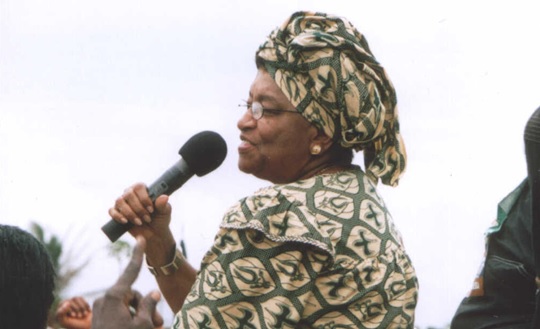
MONROVIA – Former Liberian President Ellen Johnson Sirleaf, Africa’s first democratically elected female head of state, celebrates her 87th birthday today, October 29, 2025, a moment that rekindles reflection on her remarkable legacy of leadership, resilience, and reform in Liberia and across the African continent.
Born in Monrovia in 1938, Madam Sirleaf rose from humble beginnings to become one of the most consequential figures in modern African history. Her presidency, which spanned from 2006 to 2018, marked a turning point for a nation emerging from years of civil war and political instability. To many Liberians, she remains the embodiment of hope, courage, and the power of women in leadership.
Her election in 2005 was both historic and symbolic. It signaled not just a break from Liberia’s violent past but a new dawn for African democracy, where women could ascend to the highest office through ballots rather than bullets. Sirleaf’s victory carried immense weight, a triumph over decades of patriarchy and a statement that Liberia could lead the continent in gender empowerment.
Throughout her twelve years in office, Ellen Johnson Sirleaf championed transparency, education, and women’s rights while steering Liberia through post-war reconstruction and a crippling Ebola epidemic. Her administration secured billions in foreign debt relief, stabilized the national economy, and strengthened relationships with international partners, including the United States, the European Union, and the African Union.
Her leadership earned her the 2011 Nobel Peace Prize, shared with fellow Liberian peace activist Leymah Gbowee and Yemeni journalist Tawakkol Karman, for their nonviolent struggle for women’s safety and participation in peace-building processes. That recognition cemented Sirleaf’s place not only as a national icon but also as a global advocate for democracy and gender equality.
Sirleaf’s presidency was not without controversy. Critics accused her government of tolerating corruption and favoring political allies. Yet even her harshest detractors concede that she brought Liberia from the brink of collapse to relative stability and international respectability. Her unwavering belief in institutional reform, rule of law, and human capacity building became a benchmark for leadership across Africa.
After leaving office in 2018, she continued her advocacy through international roles, including her work with the Ellen Johnson Sirleaf Presidential Center for Women and Development, which trains and empowers emerging female leaders across the continent. Her post-presidential years have been marked by mentorship, thought leadership, and her continued influence on Africa’s democratic evolution.
Today, as Liberia and the world celebrate her 87th birthday, tributes pour in from political leaders, women’s rights organizations, and ordinary citizens who credit her for paving the way for women in politics. Many recall her as the “Iron Lady of Africa,” a title that reflected not only her resilience but her uncompromising commitment to national progress.
For many Liberians, Sirleaf’s legacy is deeply personal. She represents a generation that fought to rebuild the nation’s soul after years of devastation. Under her leadership, Liberia regained its voice in international forums, rebuilt its institutions, and redefined its democratic identity.
Her story continues to inspire young women across Africa who dare to dream beyond societal limits. As one of Liberia’s most influential figures, she remains a symbol of possibility that leadership rooted in integrity, education, and perseverance can indeed transform nations.
As she marks this milestone, Liberia reflects on the enduring imprint of her leadership. Ellen Johnson Sirleaf’s name is etched into the pages of history not merely as a president but as a pioneer who redefined the face of African governance.
Her journey from a young economist in Monrovia to a Nobel laureate and global stateswoman mirrors Liberia’s own journey of endurance and renewal. And on this day, October 29, 2025, her story continues to remind the world that one woman’s courage can change the destiny of a nation.