MONROVIA – Former President George Manneh Weah has delivered a pointed message against political intolerance, warning Liberians, especially those in power, not to weaponize party colors against ordinary citizens. Speaking with humor and moral clarity, Weah framed partisan exclusion as both hypocritical and un-Liberian, urging compassion over political rivalry in a sharply polarized climate.
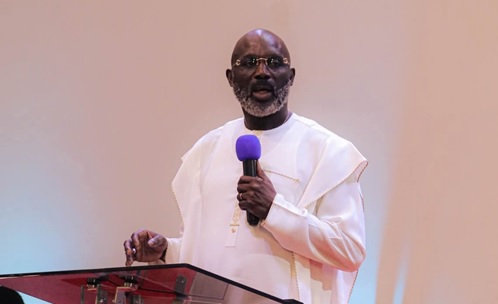
Addressing congregants at Faith Life Ministries on Sunday, February 8, 2026, Weah recounted an incident he described as both “funny” and revealing. “Let me tell you something funny that happened the other day,” he said. “A little girl texted me and said, ‘Oh, my school fees are not paid.’ I asked her, ‘Okay, what can I do?’ Then she told me she was a CDC person.”
Weah said he challenged the girl to prove her loyalty, telling her to send all her CDC hats and T-shirts. “It took her three days, and she still couldn’t send them,” he told the audience, drawing laughter. Curious, Weah said he sent the girl’s photo to a friend, only to discover something unexpected. “When I looked closely, I saw her wearing a Unity Party T-shirt a full Unity partisan standing in the street,” he said.
According to the former president, he confronted the girl with the photo. “I sent the picture back to her and said, ‘Is this you?’ She replied, ‘Daddy, yes o, please forgive me,’” Weah recalled. He used the story to underline a broader point about humanity and responsibility. “That’s why I say we should do things for God’s sake whether you are a Unity partisan or a CDCian,” he said.
Weah reminded the audience that during his presidency, political differences did not determine who deserved help. “That’s why, in our government, we were all together,” he said, suggesting that leadership should rise above party lines, especially when dealing with vulnerable citizens such as children seeking education.
The former president also referenced a recent Facebook exchange with a current government official, criticizing what he described as arrogant political behavior. “I sent him a message and told him, ‘You don’t need to speak like that, because when you were in opposition, remember you were asking for phone, asking for food everything,’” Weah said.
He added that he urged the official to remember those difficult days. “So when the children are calling you now, do the same,” Weah quoted himself as saying. According to him, the official responded apologetically: “He replied, ‘Oh, Papay, sorry.’”
Driving home his central message, Weah appealed for national unity beyond party identity. “So we are one people,” he said. “I can run into the kitchen and say, ‘I am George Weah give me food,’ because we are human beings. Let us not hate each other because of colors or because of what we believe.”
Weah was a guest of Bishop Paye Bagnon at Faith Life Ministries, where he attended a Thanksgiving service marking Bishop Bagnon’s consecration. The event drew a large congregation, including CDC loyalists and sympathizers, many of whom responded enthusiastically to his remarks.
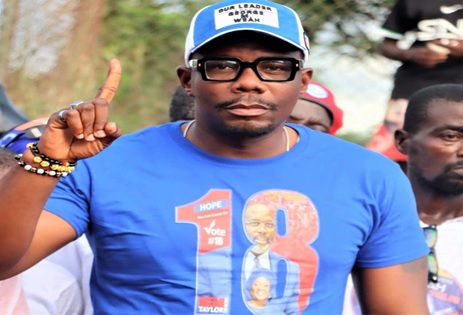
Outside the pulpit, political undercurrents were unmistakable. Supporters and followers of the former president openly chanted and circulated messages predicting his return to power. Among them, a growing chorus insists that George Weah will be back on the ballot in 2029 and, they say, reelected as President of Liberia. Whether prophetic or premature, the chants signal that Weah remains a central figure in Liberia’s political conversation.