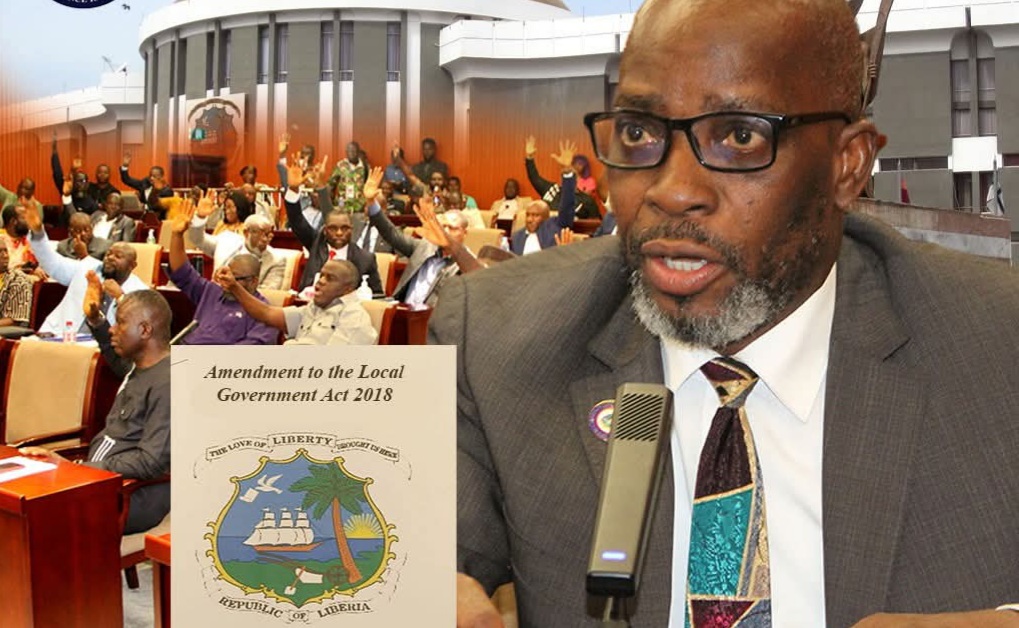
MONROVIA – Former House Speaker Cllr. Jonathan Fonati Koffa has publicly voiced his opposition to the recent decision by his colleagues to expand the House of Representatives by fourteen new seats, arguing that the move oversteps legal boundaries and threatens to disenfranchise parts of the country. Koffa made his position known in a brief statement posted on his official Facebook page on Tuesday, December 10, 2025, highlighting both constitutional and regional concerns regarding the expansion.
“The House majority passed a resolution to apportion constituencies, assuming powers they do not have. Article 80(e) is the controlling legal authority,” Koffa wrote. He further asserted that the proposed reapportionment amounted to “a complete disenfranchisement of the southeast region of Liberia,” underscoring what he sees as a disregard for equitable representation in critical areas of the country.
The controversy follows a vote by the House of Representatives on December 9, 2025, during the 16th Day Sitting of the 3rd Quarter of the 2nd Session, in which lawmakers approved the creation of fourteen additional seats. The expansion followed the submission of a detailed reapportionment report prepared by the Joint Committee on Elections and Inauguration, Judiciary, and Good Governance & Government Reform. The report proposed a population-based redistribution of legislative representation aimed at aligning constituencies with current demographic trends.
According to the committee’s blueprint, Montserrado County would receive four new seats due to its high population density, while Lofa, Nimba, and Bong Counties would each gain two. Grand Bassa, Margibi, Grand Cape Mount, and Grand Gedeh Counties were each allocated one additional seat. The recommendations, proponents say, are designed to ensure compliance with constitutional requirements for equitable representation, reflecting population growth and migration patterns across the nation.
The report’s presentation sparked immediate debate in the House chamber. Lawmakers engaged in passionate discussions over the timing, cost, and necessity of expanding the legislature, particularly in a period marked by economic stagnation, widespread governance concerns, and growing public dissatisfaction with elected officials. Concerns were raised over the financial burden of adding new representatives, especially as government revenues face persistent pressure.
Representative Foday Fahnbulleh, who moved the motion that ultimately passed, emphasized the importance of aligning legislative representation with accurate demographic data. He also called for the establishment of a specialized committee to work closely with the National Elections Commission and the Liberia Institute of Statistics and Geo-Information Services to ensure that the reapportionment process adheres to legal and technical standards.
Proponents of the expansion argued that the creation of new constituencies was necessary to address long-standing imbalances, particularly in heavily populated areas such as Montserrado, where population growth has outpaced the current number of legislative seats. They framed the decision as a constitutional obligation rather than a political maneuver, asserting that failure to act could undermine the fairness of future elections and leave some citizens without proper representation.
Koffa’s concerns that the House may have exceeded its authority in unilaterally approving the reapportionment. They contend that such decisions require careful constitutional scrutiny and that the southeast region’s representation could be disproportionately affected, raising questions about the balance of power and regional equity.
The debate highlights ongoing tensions within Liberia’s legislative process, where demographic realities, political interests, and governance challenges intersect. While the expansion aims to modernize the legislative structure and improve representation, it also exposes divisions over the interpretation of constitutional authority and the equitable treatment of all regions in national governance.
The controversy is likely to intensify scrutiny of the House’s actions and the role of former leaders like Koffa in holding current lawmakers accountable. The decision to expand the legislature may have long-term implications for electoral fairness, regional representation, and public confidence in the country’s democratic institutions, placing pressure on the Boakai administration to ensure that governance reforms and legal frameworks are consistently respected.