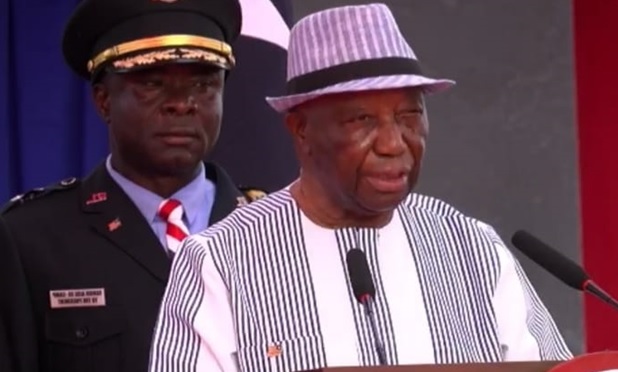
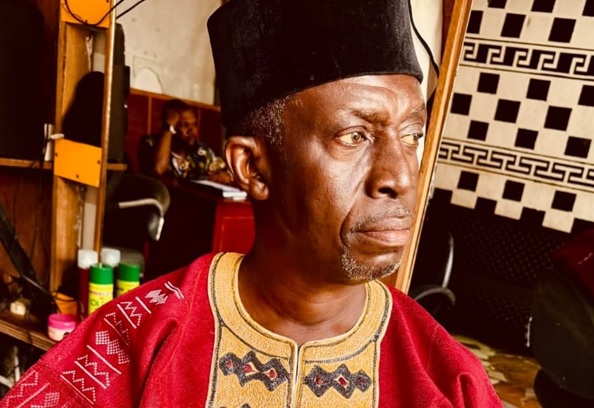
MONROVIA – Liberia stands at a critical crossroads, and Human Rights Advocate and former Solicitor-General Cllr. Tiawan Saye Gongloe has issued a stern critique of the 2026 State of the Nation Address, warning that the country risks settling for incremental improvement if leadership does not prioritize people-centered development.
In his reflection on President Joseph Nyuma Boakai’s address, Cllr. Gongloe acknowledged that some progress has been made in infrastructure, citing the ongoing rehabilitation of the Tappita road and the commencement of pavement works on the Zwedru–Harper road. “Under the present administration, these steps are commendable and deserve acknowledgment,” he said.
However, Cllr. Gongloe emphasized that development should be measured by outcomes, not effort alone. “It is measured by how decisively a nation lifts its people out of poverty and expands opportunity,” he stated, urging Liberia to move beyond complacency.
Highlighting Botswana as a benchmark, Cllr. Gongloe noted that despite being landlocked and largely desert, the country became a middle-income nation through disciplined, people-focused leadership. “Liberia must ask whether we are content with incremental improvement, or whether we are prepared for genuine transformation,” he said.
Cllr. Gongloe criticized excessive government spending and lavish lifestyle practices among officials, noting that large convoys, frequent foreign trips, and luxury accommodations send the wrong signal in a country where most citizens struggle to survive.
He recommended that President Boakai expedite renovations of the Executive Mansion and fully relocate there, arguing that this would improve productivity, reduce unnecessary movement, enhance security efficiency, and demonstrate respect for public resources.
While President Boakai emphasized roads in the SONA, Cllr. Gongloe insisted that infrastructure alone cannot transform Liberia. “Without deliberate investment in agriculture, forestry, fisheries, tourism, manufacturing, and value-added industries, roads merely move poverty from one place to another,” he warned.
Education, he said, remains the missing centerpiece of national development. Public schools are under-resourced, and in Central Monrovia, no functional public high school exists. “I appeal directly to President Boakai to reopen Monrovia Central High School, to be housed in the long-unfinished Housing Bank building on Ashmun Street,” Cllr. Gongloe urged.
Cllr. Gongloe pointed out that sending Liberian children abroad for education, such as to Rwanda, reflects a failure to provide adequate local opportunities. He stressed that disciplined leadership and education-first policies are essential for national transformation.
Healthcare reform, he added, must translate into tangible outcomes. Despite reported improvements, Liberians continue traveling to Ghana and India for treatment. “Health reform must move from plans and statistics to visible, trusted outcomes,” Cllr. Gongloe said.
The President’s claims on agriculture and food security also received scrutiny. Cllr. Gongloe highlighted that increased production is meaningless if farmers do not earn dignified livelihoods, have proper storage, and can access viable markets.
Natural resource management remains another critical concern. Liberia continues to export raw rubber, iron ore, and gold while importing finished products at higher costs. “Growth that enriches concessionaires while leaving communities poor is not development,” he said.
Cllr. Gongloe also criticized weak Liberianization, noting the continued import of furniture, outsourcing of services that Liberians can provide, and underutilization of domestic talent. Botswana, he said, deliberately invested in its people, and Liberia must do the same.
Public debt, now approximately US$2.8 billion, raises serious questions about sustainability. Cllr. Gongloe warned that borrowing without productive investment postpones poverty. “Every dollar spent servicing debt is a dollar not spent on education, health, or agriculture,” he said.
Job creation figures announced in the SONA also require clarity. Cllr. Gongloe asked for a breakdown by sector, duration, gender, and youth participation, emphasizing the importance of verifiable data in measuring development.
The arrival of the 285 yellow machines for roadworks is welcome, but he cautioned that machines alone do not build roads; trained personnel and sustainable maintenance plans are essential. “Botswana paired infrastructure investment with skills development. Liberia must do the same,” he said.
Public spending priorities, he noted, raise questions about governance. While schools and clinics remain incomplete, a Presidential Center in Foya reportedly nears completion, drawing attention to possible misaligned priorities.
Cllr. Gongloe criticized projects that signal prestige over people-centered development. He contrasted this with Botswana, which avoided costly prestige projects that did not directly improve citizens’ lives.
Poverty reduction, he said, remains a silent gap. Highlighting growth figures without measures to lift people out of poverty is hollow. Liberia must adopt clear targets, timelines, and accountability mechanisms to ensure that development reaches citizens.
In conclusion, Cllr. Gongloe urged Liberia to choose a deliberate, disciplined, and people-centered development path similar to Botswana’s. “It would be unfair to deny that some steps have been taken under the current administration, but acknowledging effort must not distract from the urgent need for deeper reforms,” he said.
He concluded with a pointed reminder: “Government is a place to serve, not to steal. A better Liberia is possible, if we choose it deliberately.”