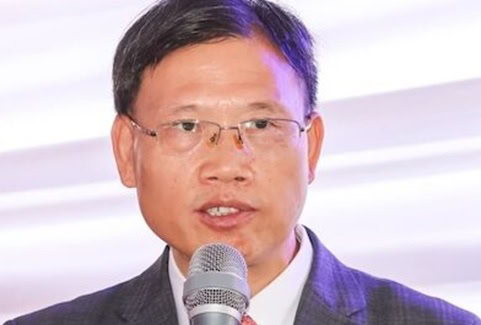
LIBERIA – China’s latest development blueprint is set to reshape not only its national trajectory but also its economic and diplomatic partnerships across the world, including Liberia. In an article published on November 14, 2025, titled “New Journey of China, Opportunities for the World: China’s 15th Five-Year Plan,” Ambassador Yin Chengwu outlined Beijing’s new vision and what it means for the global community. His commentary came on the heels of a major political event in Beijing, where the 20th Central Committee of the Communist Party of China convened its fourth plenary session from October 20 to 23, 2025, adopting a sweeping set of recommendations to guide China’s next phase of development.
Ambassador Yin wrote that the session “deliberated over and adopted the Recommendations of the Central Committee of the CPC for Formulating the 15th Five-Year Plan,” describing the document as the blueprint for China’s socialist modernization drive in the coming five years. According to him, Five-Year Plans remain one of the CPC’s most successful governance tools, enabling China to sequence its reforms and target national development outcomes with precision. He stressed that from the 1950s to today, China has formulated and executed fourteen such plans, each serving as a stepping stone toward national transformation.
The ambassador emphasized that China’s achievements under the 13th and 14th Five-Year Plans were monumental. He pointed out that these efforts enabled the country to “achieve the historic goal of building a moderately prosperous society in all respects,” elevating China’s economic strength, scientific capabilities, and global influence. He argued that China’s unwavering commitment to medium- and long-term planning is “unparalleled globally,” contributing to the distinctive success of socialism with Chinese characteristics.
In his article, Ambassador Yin described the 15th Five-Year Plan as a critical midpoint connecting China’s recent accomplishments with its ambitious target of basically achieving socialist modernization by 2035. He noted that modernization is not an overnight process but requires “the unremitting hard work of one generation after another.” The years ahead, he added, form a decisive stage in reinforcing the foundations laid during the 14th Five-Year Plan.
The ambassador explained that the new plan will focus on strengthening China’s overall development strategy through clear principles, strategic tasks, and targeted reforms. He emphasized that the plan will be guided by Xi Jinping Thought on Socialism with Chinese Characteristics for a New Era. According to him, its core principles include upholding the Party’s leadership, putting people first, pursuing high-quality development, deepening reform, and ensuring national security while expanding opening up.
Ambassador Yin outlined several key objectives that China aims to achieve during the 15th Five-Year Plan period. These include major strides in scientific and technological self-reliance, breakthroughs in reform, enhancements in cultural and ethical development, improvements in public wellbeing, and significant progress toward the Beautiful China Initiative. He stated that China will “build a modernized industrial system,” accelerate agricultural modernization, develop a high-standard socialist market economy, and modernize national defense.
China’s next development cycle, he continued, will also unlock opportunities for the rest of the world. He emphasized that China contributed about 30 percent of global economic growth annually during the 14th Five-Year Plan period, consolidating its role as a major engine of global development. As China moves deeper into high-quality development, it is poised to share the benefits of this growth with global partners.
Ambassador Yin argued that a more modernized China will bring “more stability and positive energy to the world,” while a more open China will expand possibilities for international cooperation. He said Beijing remains committed to high-standard opening up, institutional reforms, and the strengthening of global trade and investment frameworks.
Against this global backdrop, the ambassador dedicated a portion of his article to Liberia, reaffirming China’s commitment to closer cooperation with Monrovia. He noted that China is ready to work with Liberia “to strengthen the synergy between China’s 15th Five-Year Plan and Liberia’s ARREST Agenda for Inclusive Development.” This, he stressed, will help ensure the delivery of commitments made at the Forum on China-Africa Cooperation (FOCAC) Summit.
Ambassador Yin reiterated Beijing’s desire to deepen the China–Liberia strategic partnership, highlighting areas such as infrastructure, agriculture, trade, capacity building, and national security cooperation. He underscored China’s willingness to share development opportunities with Liberia in ways that generate mutual benefit.
China views its partnership with Liberia as part of its broader engagement with Africa, rooted in principles of mutual respect, non-interference, and shared development goals. Ambassador Yin argued that aligning Liberia’s ARREST Agenda with China’s 15th Five-Year Plan will create a framework for sustained cooperation, particularly in economic transformation and social development.
For Liberia, the promise of this alignment lies in access to Chinese expertise, financing, and technology, tools Beijing has used to rapidly transform its own society. From agriculture modernization to industrial development, China believes Liberia can leverage this partnership to accelerate its national agenda.
Ambassador Yin also expressed optimism that China and Liberia will continue to strengthen political trust and people-to-people exchanges. He said these efforts will help solidify the long-term relationship between the two countries, ensuring that cooperation remains stable and productive.
As China embarks on this new chapter, its leaders see the 15th Five-Year Plan as a roadmap to national rejuvenation and global relevance. Ambassador Yin’s message is clear: China is not only preparing for its own future but also opening its doors wider to the world.
Monrovia, like many global capitals, will watch closely as China begins implementing this ambitious blueprint. If Beijing succeeds in aligning its domestic priorities with global cooperation, Liberia may find itself benefitting from a renewed wave of Chinese development commitments.