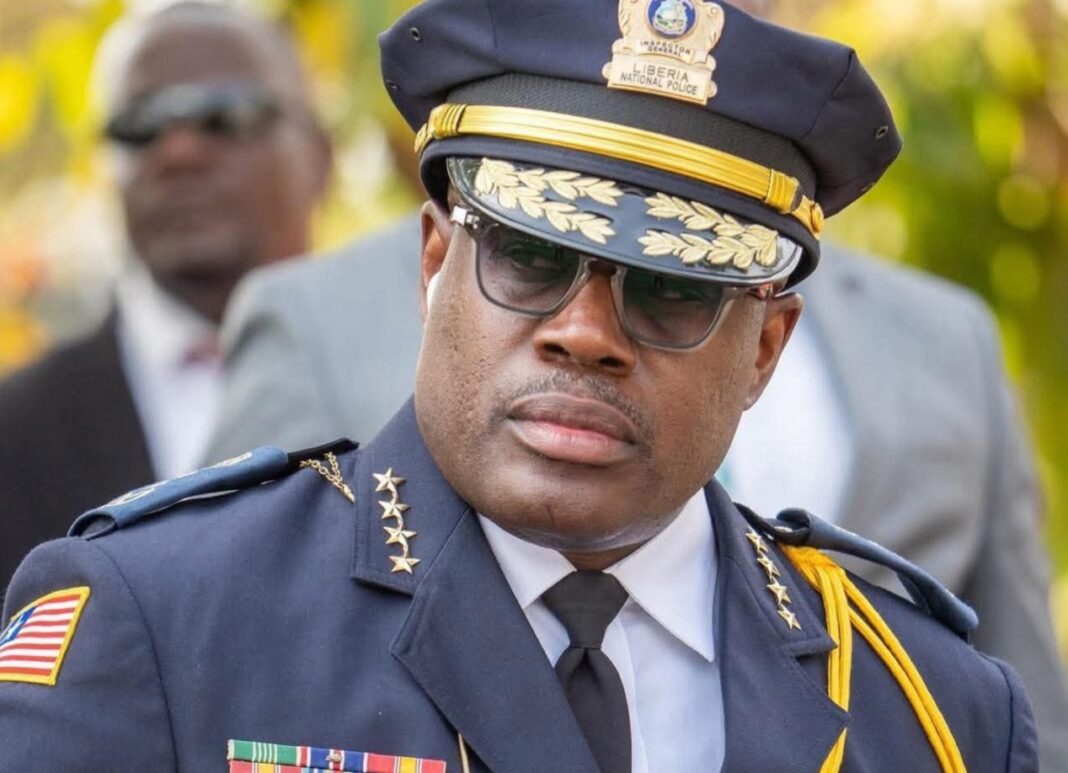
MONROVIA – The sudden resignation of Deputy Commissioner of Police Cecelia G. Clarke as spokesperson of the Liberia National Police has exposed what appears to be a deepening leadership crisis under Inspector General Gregory Coleman. Less than 24 hours after Clarke stepped down, Deputy Commissioner Sam Upriver Collins was officially named as her replacement. The speed of that transition has raised eyebrows and intensified suspicions that Clarke’s exit was neither accidental nor administrative, but orchestrated.
Clarke resigned on Wednesday, February 18, 2026, citing what she described as an unjustified transfer to the Protocol Department, a move that effectively stripped her of her role as police spokesperson. Her resignation letter followed a communication from the police hierarchy informing her of the reassignment. To many observers, the transfer looked less like restructuring and more like sidelining.
What makes the situation even more troubling is the persistent allegation that Collins had been undermining Clarke both privately and publicly in a bid to reclaim the spokesperson position. Sources speaking to Smart News Liberia claim that Inspector General Coleman repeatedly allowed, if not enabled, that internal friction. If that is true, then the issue is no longer about routine transfers. It becomes a question of leadership integrity at the highest level of the police command.
The official statement from the police administration described Collins’ reassignment as part of a strategic effort to enhance efficiency, professionalism, and effective service delivery. But critics are asking: efficiency for whom? Professionalism at what cost? If the goal was improved communication, why remove a spokesperson whose appointment in May 2024 was widely regarded as a progressive step for media engagement?
Clarke, a former staff member of the Liberia Broadcasting System, had replaced Moses Carter in what many saw as a fresh start for police public relations. Her background in journalism was expected to bridge the long-standing trust gap between the police and the media. Instead of building on that progress, the leadership appears to have reversed course.
Meanwhile, Sam Upriver Collins is no stranger to the role. He previously served as police spokesperson during the administration of the Unity Party under former President Ellen Johnson Sirleaf and later worked as Assistant Director of Public Affairs at the Ministry of National Defense during the administration of former President George Weah under the Coalition for Democratic Change. His return to the spokesperson role may signal continuity for some, but for others it represents a troubling pattern of recycling loyal insiders over nurturing institutional stability.
Inspector General Coleman now faces hard questions that cannot be brushed aside with administrative language. Did he approve Clarke’s transfer knowing it would force her resignation? Was there an internal investigation into the alleged undermining she reportedly endured? And why was Collins’ appointment announced with such speed if the process was purely procedural?
Even more concerning is the message this sends to female leaders within the security sector. Clarke’s removal after internal conflict risks reinforcing perceptions that dissent or independence within the ranks will be punished rather than addressed constructively. Is this the culture Coleman wants to institutionalize at the national police?
Public confidence in the police depends not only on crime-fighting statistics but on transparent and credible leadership. When internal disputes spill into public view and appear to benefit one faction over another, trust erodes. The police cannot demand accountability from citizens while avoiding accountability within their own command structure.
The burden now rests squarely on Inspector General Coleman. He must explain, in clear and convincing terms, why Clarke was transferred, whether due process was followed, and whether Collins’ appointment was predetermined. Silence will only fuel speculation. In a country striving for stronger institutions, leadership at the Liberia National Police must be measured not by power consolidation, but by fairness, transparency, and respect for professional integrity.